


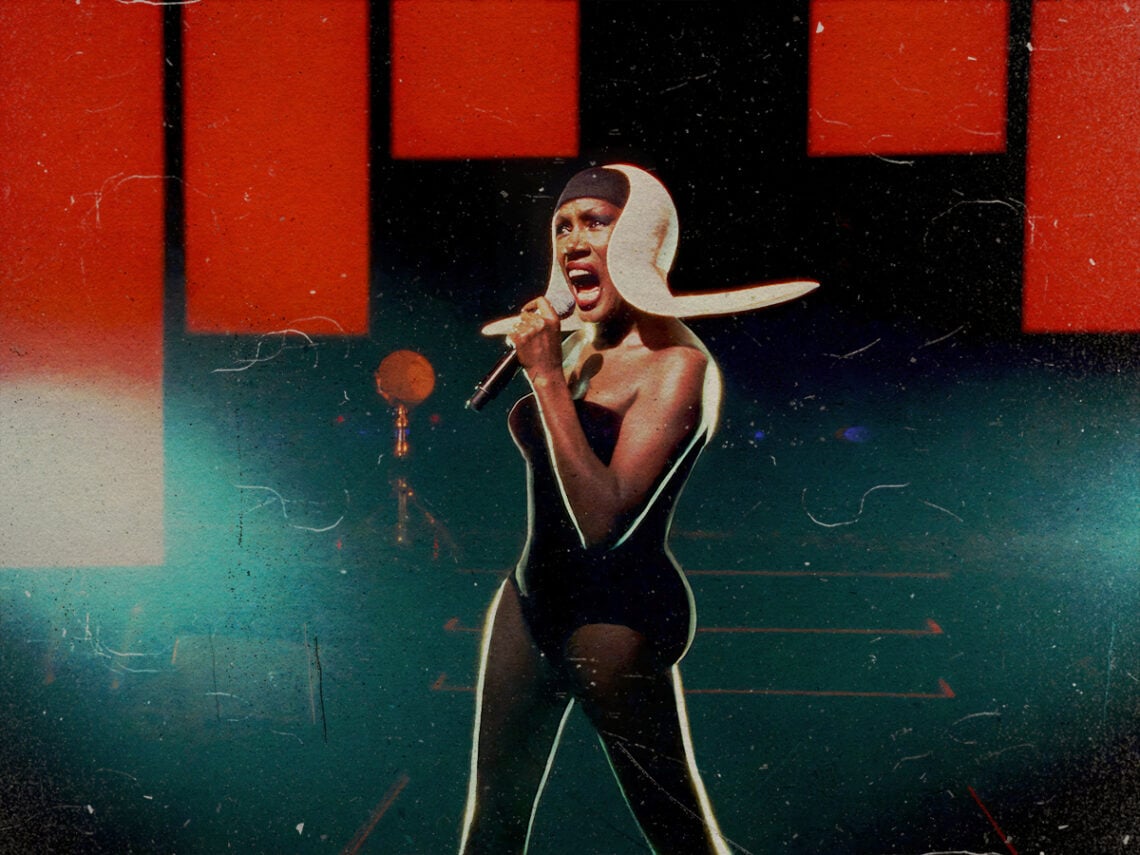
Grace Jones on society’s issue with ageing: “It becomes like a brainwashing for people”

Grace Jones made a monumental mark on the landscape of pop culture throughout the 1970s and 1980s, and yet her profound impact is frequently under-appreciated. With multifaceted talents, she has left an unmatched impression as a model, musician, actor, and iconic style maven. Jones masterfully utilises various mediums to express her artistic vision, fearlessly challenging stereotypes and pushing the boundaries of female artistry.
The influence of Jones can be seen in the personas crafted by numerous contemporary artists, including Janelle Monáe and Rihanna. This multifaceted artist is renowned for her innovative embrace of androgyny, fashioning a distinct appearance that defied traditional gender norms. In interviews, she famously challenges any perceived normative implications posed by interviewers, audiences, or society as a whole, representing otherness in a way that comes across as supremely cool.
Most of all, Jones expresses a firm disregard for the limitations associated with age. “This society dwells too much on that,” she explains. “It becomes like a brainwashing for people”.
Jones added: “If you’re over this [age], you should call your doctor and ask for that.”
Aside from numbers, Jones likens herself to a helicopter, which first occurred during a birthday in Jamaica. “I danced and literally became a helicopter,” she said. Age doesn’t adequately define Jones’ existence, but if asked, “I just say I’m 5,000 years old,” she adds.
Her profound influence as an innovator is compelling enough to make her assertions believable, and her presence aligns with prominent figures such as Debbie Harry and Andy Warhol. Beyond her musical endeavours, she has also ventured into the realm of acting, notably in films like Conan the Destroyer and, most notably, A View to a Kill, where she portrayed a formidable Bond villain, her steely demeanour perfectly suited to the role.
Jones’ resolute persona is admired by many, even during instances like when she was confronted by television presenter Russel Hartley, who made unwarranted rude remarks and disrespected her. According to her autobiography, her outburst was the culmination of a range of things, as Jones wrote: “Bad coke was the last thing I wanted before I went on a live television show. The purest form, maybe, but anything else was not going into my body.”
She continued: “We rehearsed the show in some detail; the three of us politely sat all facing each other in a semicircle. There didn’t seem to be anything to worry about…On the live show, the real thing, it was all very different. There was a live audience, which immediately changed the atmosphere. Things moved very fast, and I wasn’t feeling any better.”
Jones later added: “I was meant to sit next to [Russell] Harty and keep still and quiet. I was all dressed up like an Amazonian seductress and treated like the hired help. I thought, This is no way to treat a guest. This wasn’t at all like what we’d rehearsed. Being stuck there while he ignored me made me feel very uncomfortable. I felt I was provoked. I was feeling exhausted, had no idea where I was, and was coated in pigeon shit; now it seemed I was hallucinating that I was on a live chat show and the host was ignoring me. Pissed off, I poked him in the back.”
However, Jones’ willingness to uphold a principle of self-worth has become one of her most celebrated attributes. She refuses to let others diminish her or treat her as anything less than an equal, and this personal ethos permeates her work and has served as an inspiration to generations of artists.
