


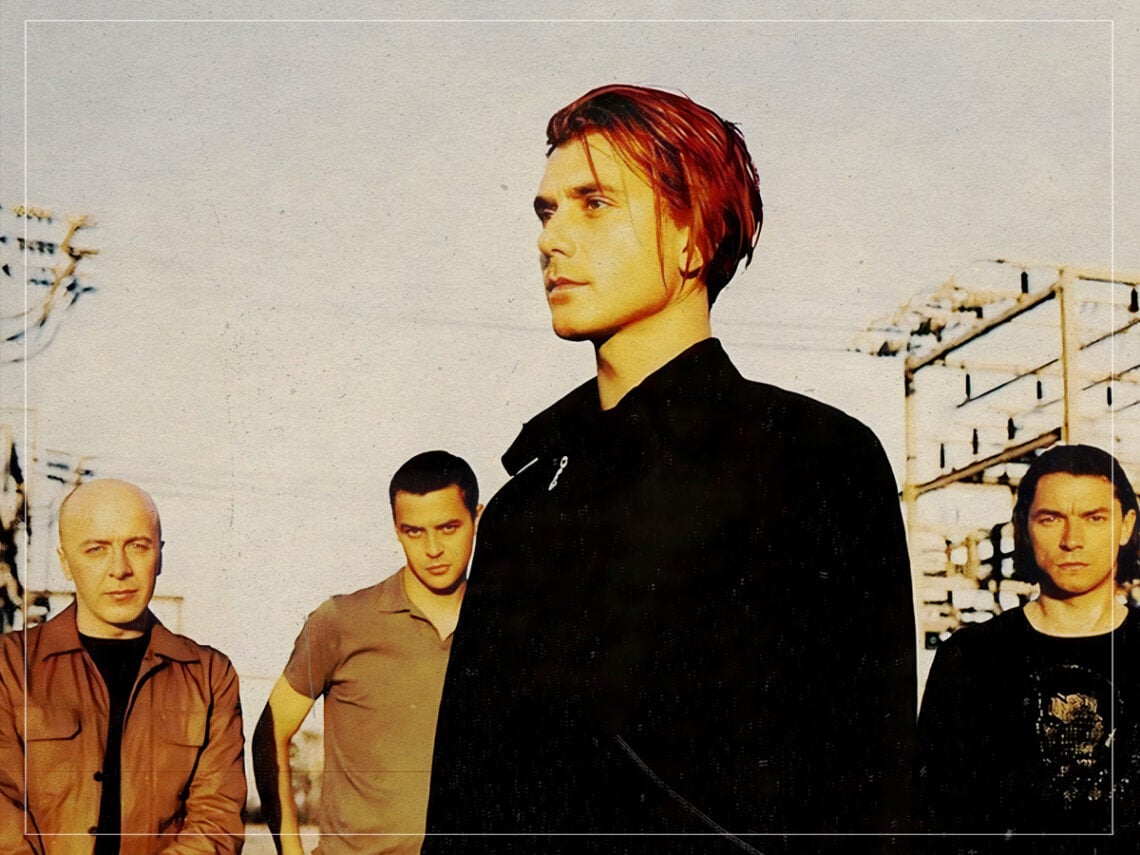
‘Glycerine’: How Bush paid tribute to their favourite Beatles song

London alt-rockers Bush were one of the mid-1990s’ biggest poster boys in America. Led by principal songwriter Gavin Rossdale, their down-tuned guitar attack and strained-throat vocals had Seattle’s fingerprints all over 1994’s Sixteen Stone debut, recorded in London’s Westside studio three months before Nirvana frontman Kurt Cobain’s violent suicide in 1994.
Eventually released in November of that year, Bush’s stylistic proximity to the era’s grunge explosion found the band tagged pioneers of ‘post-grunge’, a label possibly not met with much enthusiasm.
While only ever enjoying lukewarm reception in their home country, in America, Bush was thrust into the commercial echelons of Silverchair and Foo Fighters as a supposed ‘post-grunge‘ cohort that soldiered on through to the 2000s with the Seattle sound’s original distorted-angst but not above embracing high-end production and wider pop-appeal. Bush’s 1996 sophomore Razorblade Suitcase – recorded by Steve Albini – topped the Billboard 200, and Foo Fighters would endure as one of rock’s greatest success stories.
Yet, in crept Nickelback, Creed, and Staind. The slew of Puddle of Mudd-style gritty gym playlist pap is a legacy utterly unmoored from Bush. While not holding a candle to Nevermind or the records from Pearl Jam and Alice in Chains at the time, Sixteen Stone is a perfectly acceptable blast of swirling hard rock with riffs that attack with hooky sting and enough of a raw, energetic strut that inhabits a different universe to the horrors that’d follow.
Sixteen Stone‘s fourth single would endure as a perennial fan favourite. Penned for his then-girlfriend Suze DeMarchi, ‘Glycerine’s fraught terrain of love and the exacerbating pressures of fame sought inspiration from The Beatles’ songbook, reaching into their 1967 psychedelic single ‘Strawberry Fields Forever’ for lyrical guidance: “We live in a wheel where everyone steals / But when we rise it’s like strawberry fields”.
Written primarily by John Lennon and memorable for its Mellotron introduction and lysergic studio production, The Beatles’ surrealist wander through the nostalgic fields of an old Salvation Army grounds next door to Lennon’s childhood home doesn’t share an obvious thematic adjacency with tested romance. Perhaps Rossdale’s lyric pilfering is an idiosyncratic quirk only understood by him, borrowing David Bowie’s ‘Life on Mars?’ on the ‘Everything Zen’ album opener, too.
“In ‘Glycerine’, it’s a cynical world, Gossdale confessed to Fuse. ‘Strawberry Fields’ is a Beatles reference because when people think of that song, it makes them happy: it elevates you and it lifts you up. For me, it’s like a soft pillow. Most of my lyrics and most of the songs that I’ve written are about rising up against struggle and what you do within problems like the human condition. How we can screw up and how we can make up for it and what we can escape from and what we can win”.
It’s true that ‘Strawberry Fields Forever’ floats out the speakers like a colourful cushion, less uplifting and more pensive existential retreat. Ever The Beatles nut, Gossdale was able to partially channel Lennon’s shimmering pop daydream and wrestle out its magic, universal energy.

Never Miss A Beat
The Far Out Beatles Newsletter
All the latest stories about The Beatles from the independent voice of culture.
Straight to your inbox.