


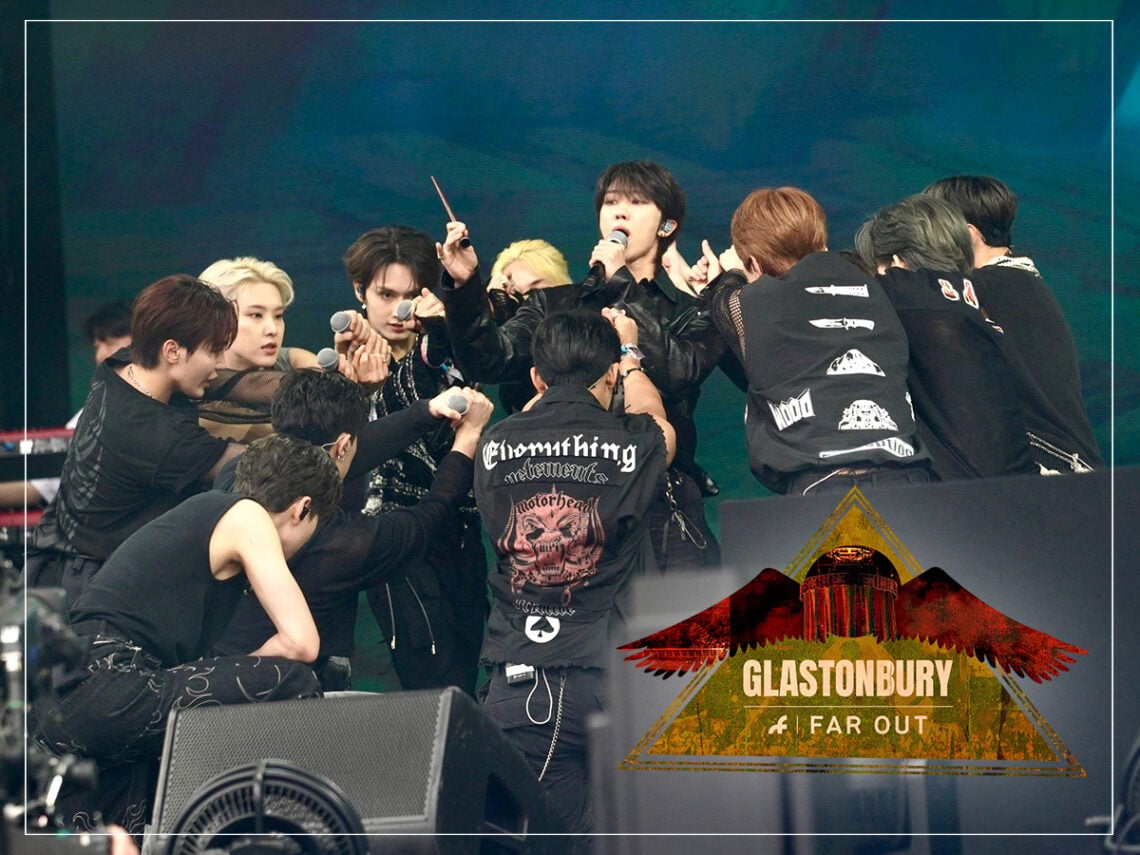
Glastonbury 2024: Seventeen make history by becoming first K-pop act to perform

For the first time in its history, that stretches for over half a century, Glastonbury Festival has welcomed K-pop to its Pyramid Stage. The 13-strong collective made their debut bow sandwiched between Olivia Dean and Paul Heaton as the sun broke through the clouds on a warm, overcast afternoon.
Seventeen are a self-professed ‘K-pop powerhouse’ who formed back in 2015. Despite murmurings from many punters prior to the festival about whether the controversial genre had a place at the most esteemed festival on Earth, the group from Seoul drew a rather sizeable crowd to the main stage, but perhaps sparser than expected.
The sense of historic importance wasn’t lost on the young performers either. They told the BBC in the build-up: “There’s a great sense of responsibility. We’ll keep coming back to that feeling and do our best to prepare, so that we can blow everybody away… Not just our fans, but every other member of the audience.“
With a cult fandom ensuring that they usually play huge venues, a day slot at a festival is not typical for the band. Regarding this, they commented: “The time of day doesn’t really matter to us. It’s actually even better that we’ll be performing in the afternoon because the audience can see us better under sunlight.”
The band were evidently overjoyed when they took to the stage, addressing the crowd in reverent tones in between huge choreographed dance performances while their live band shredded a wide variety of genres as backing. Alas, it was certainly strange and unique to see the band alternate ‘units’ of the collective throughout the show.

So, what is K-pop?
While K-pop literally means simply Korean pop, the fact that locally domestic pop is actually termed gayo is indicative of the other factors tied to the genre. The differentiation between gayo and K-pop has less to do with soon and more to do with the fact that K-pop is linked to the ‘idol industry’. In other words, K-pop is a manufactured brand of pop, aimed at being exportable to a wider market.
Large talent agencies such as SM Entertainment, YG Entertainment, JYP Entertainment, and the HYBE Corporation, helmed by K-pop architect ‘Hitman’ Bang, essentially audition thousands of hopefuls and orchestrate them into commercial acts, filling niches. There are teams of people who then one the bands into shape. Seventeen are among the most successful, renowned for their live shows, but their 6.7million monthly stream pales in comparison to BTS who garner 28.2million.
Why is K-pop controversial?
Well, as Tyler Golsen wrote in Far Out’s report on the genre, because of the pressure placed on performers by the talent agencies, suicides and premature deaths are alarmingly frequent. However, it is also argued that this is tied to wider societal issues. “South Korean author Young-ha Kim kept it blunt during an op-ed for The New York Times in 2014 when he said: ‘Suicide is everywhere’. To see the troubling and tragic public deaths of a number of K-pop artists is to see the broader issues within Korean society that perpetuate success over health, determination over understanding, and hard work over personal emotional management. When it happens to a famous entertainment figure, the world begins to take notice.”
“But there is a much more severe and everyday crisis within Korea that needs to be reckoned with before we off-handedly refer to the dark side of K-pop as something malevolent and intangible. It’s real, and it happens outside the world of K-pop far more frequently than anyone would want to admit,” Golsen concluded.


Never Miss A Beat
The Far Out Music Newsletter
All the latest music news from the independent voice of culture.
Straight to your inbox.