


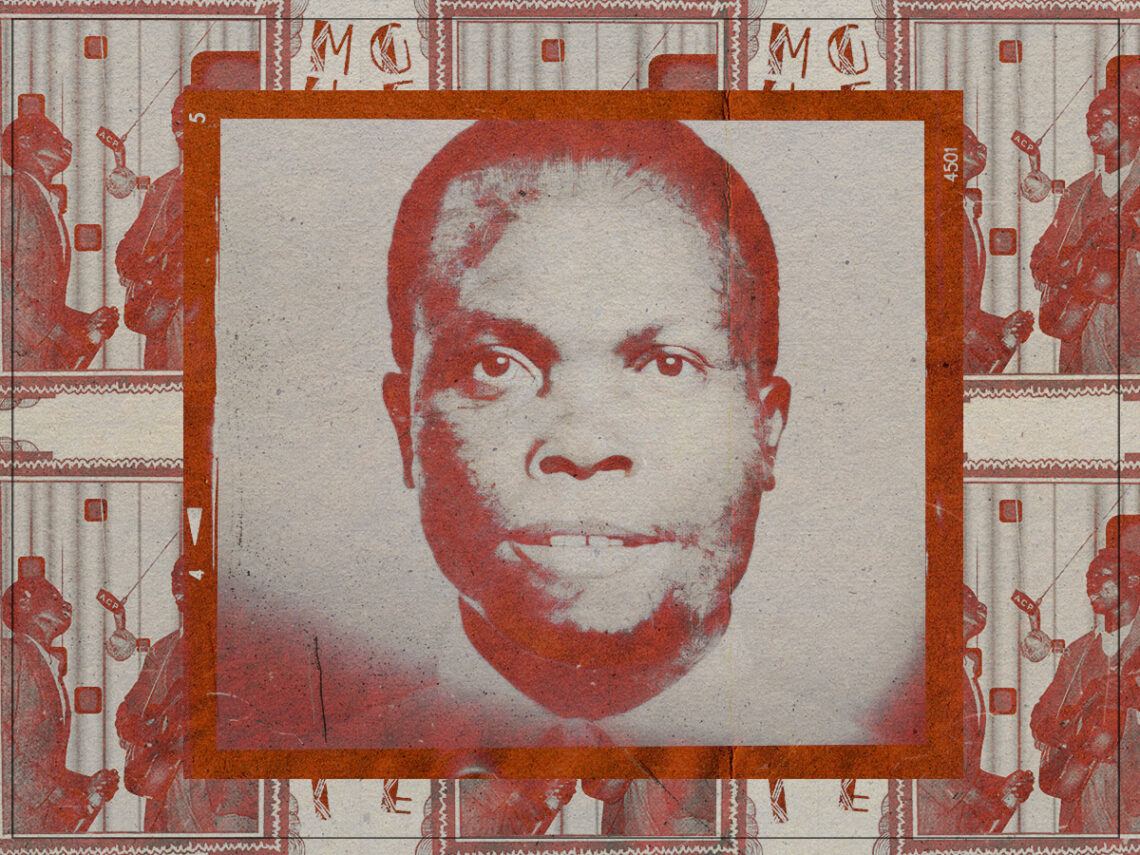
George Mukabi: Africa’s acoustic Jimi Hendrix

The entire idea of a guitar hero tends to be something of a Western-invented concept. While others may marvel at what classical and jazz musicians do in sections of the music world, the silhouette of someone playing a guitar slung low around their waist automatically conjures up images of rock and roll swagger in anyone who sees it. While most people would consider Jimi Hendrix the technique’s inventor, George Mukabi had been doing something similar almost a decade prior.
Then again, the guitar hero concept wasn’t necessarily invented with Hendrix, either. Before the dawn of rock and roll, artists like Muddy Waters and Robert Johnson were paving the way for what the guitar could mean in a blues context. In tracks like ‘Me and the Devil Blues’, Johnson practically calls out for Satan with his guitar, which plays into the mythic story that he sold his soul to the devil for his guitar talent.
In Africa, however, Mukabi had been taking the guitar to new heights no one had ever seen before. Since the guitar had no electric accommodations then, Mukabi got his start on the instrument unplugged. Regardless of what the electric guitar players can attest to, Mukabi had an advantage with the acoustic under his fingers.
With no additional effects in the way of him and the guitar, Mukabi was forced to improvise and develop his unique variations to be heard. While most artists would study the scales and music theory of those before them, Mukabi found his calling getting in tune with the rhythmic aspect of his playing.
Trying to emulate the sounds of the sukuti drum for his playing, the percussive aspect of the instrument gave Mukabi an internal metronome whenever he strapped on his guitar. Combining that with what he thought could emulate the sound of a lyre, Mukabi combined lead and rhythm guitar playing into one singular force, incorporating various fingerstyle methods into his playing that would leave most accomplished folk musicians scratching their heads.
While Mukabi’s lyrics dealt with blues-infused dirges of pain and strife, it didn’t reach anyone in America, leaving him a relatively niche artist until he died in 1963. Regardless of the fame he garnered then, his way of forming a unique approach to guitar is the spitting image of what Hendrix would do a few years later.
Having to take up space in a trio configuration, Hendrix had a similar approach to Mukabi’s, using various double-stops and chord flourishes that combined rhythm and lead guitar playing. There are even a few times where Hendrix strays from the usual sounds of his instrument, trying to make his guitar sound like a piano in spots before his instrument cries out in pain on tracks like ‘Machine Gun’.
Mukabi may be one of the few to squeeze honest emotion out of his instrument without the need for effects. For all of the great fuzz pedals and electronic enhancements that Hendrix brought to the table, Mukabi got every strange sound out of his instrument through technical innovation. Hendrix may have had the chops to pull off superhuman musical feats, but the main strength of Mukabi lay in his hands.
