


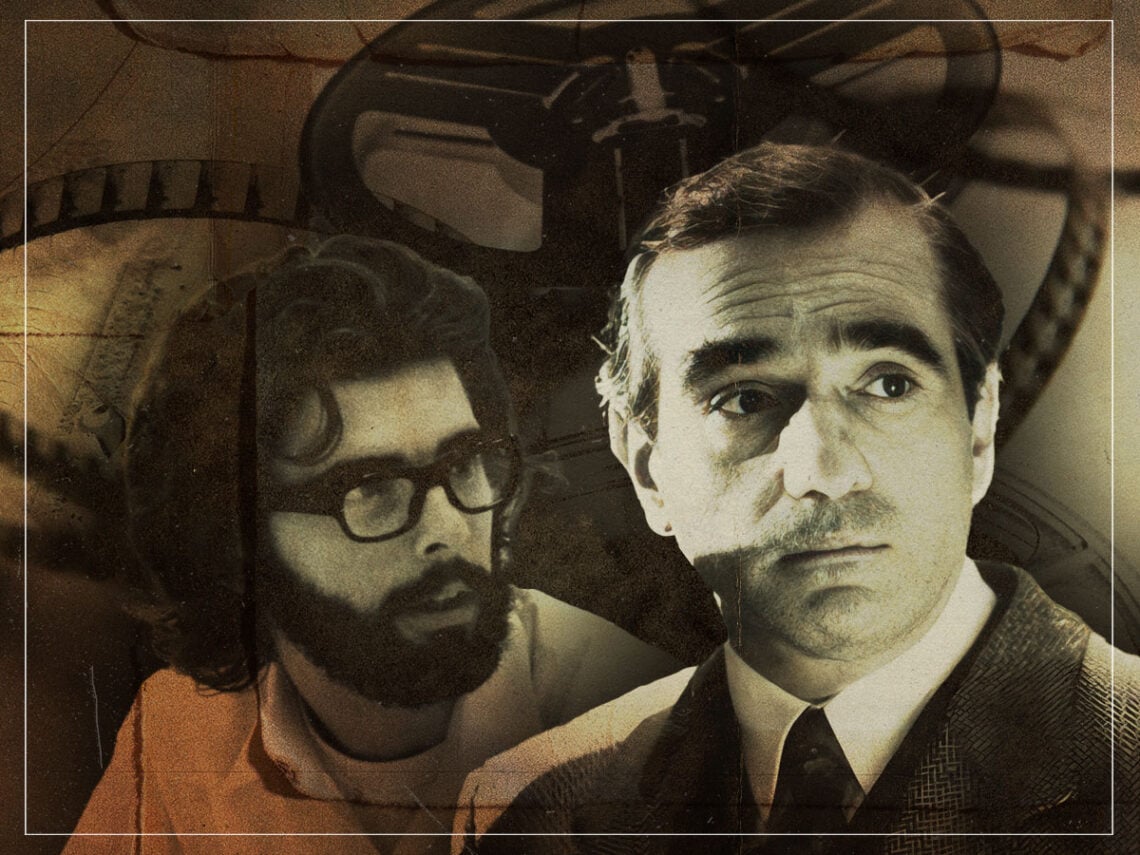
How a disagreement between George Lucas and Martin Scorsese shaped their careers

It’s difficult to think of two filmmakers who have played a more pivotal role in the evolution of modern cinema than George Lucas and Martin Scorsese. Born less than two years apart, both fell in love with the French New Wave and Federico Fellini in their 20s, and both studied film in college – Lucas at the University of Southern California’s School of Cinematic Arts and Scorsese at New York University’s Tisch School of the Arts. They even became friends in the early ‘70s, making up a faction of the so-called “movie brats”, a group of brash young filmmakers including Francis Ford Coppola, Brian De Palma, and Steven Spielberg. They were part of the first cohort of directors to study filmmaking at university, and they were let loose on Hollywood with the energy and encyclopaedic knowledge of film history to forge a brand new kind of cinema.
In the late 1960s, Lucas started a production company with Coppola, American Zoetrope, with the express intention of removing himself from Hollywood’s financial and corporate constraints. Based in San Francisco, the move was literal as much as it was ideological. But while Lucas struggled to produce anything that could connect with audiences in the beginning (his high-concept science fiction feature debut THX 1138 was a spectacular failure in that regard), he hit the mark with American Graffiti, a nostalgic throwback to 1960s America.
With even greater independence in mind, Lucas broke from Zoetrope to found his own company in the early ‘70s, Lucasfilm. His next project would be an even greater swing than THX 1138, a space odyssey so fantastical it required the 33-year-old filmmaker to create his own special effects studio, Industrial Light & Magic. Star Wars, of course, proved to be a pretty good idea, and Lucas was launched into the stratosphere of Hollywood success.
From early in his career, Lucas showed a razor-sharp sense for business. Although it would be unfair and inaccurate to say that money was his main motivator, he sure understood how to maximise it. When he signed on to direct Star Wars, he negotiated a pay cut in exchange for the merchandising rights. Multiple decades and billions of dollars later, it’s clear that this was one of the savviest moves to ever occur in the film industry. Perhaps it would be more accurate to say that Lucas was motivated by a supreme sense of confidence in himself as a filmmaker, which he used against those who had slightly less confidence in him. From separating himself from Zoetrope to taking control of merchandising and franchising from an as-yet untested concept, he took a series of early gambles on himself that paid off big time.
After the first Star Wars movie, he moved into producing, ushering the space franchise through multiple iterations and helping out his pal Steven Spielberg with a little series called Indiana Jones. As one of the wealthiest filmmakers in history whose success is due in large part to never-ending franchises and the development of CGI, Lucas openly embraces the tentpole franchises that have kept Hollywood more or less in the green since Luke Skywalker first wielded a lightsaber.

In this respect, he and Scorsese are in direct opposition. Around the time Lucas was doing a victory lap with American Graffiti and getting Lucasfilm off the ground, Scorsese was deep into a period of intense – even frenetic – cinematic virtuosity. 1973 saw the release of Mean Streets, 1974 saw the release of Alice Doesn’t Live Here Anymore, and in 1976, Taxi Driver hit cinemas. By 1978, Scorsese was almost dead. A combination of drugs, asthma, and exhaustion sent him close to the brink, and although his extended stay in the hospital forced him to slow down for a bit, his frenzied productivity has barely abated since.
Central to these early Scorsese films is confrontation, both emotional and physical. The director was experimenting with camera placement, music, focus, and editing in an explosive way that somehow never superseded his stories or characters. Influenced by everyone from Powell and Pressburger to Italian Neorealism, he laced his films with timeless themes of loneliness, religion, and family. Scorsese was throwing almost everything at the wall from the beginning of his career, and somehow, it worked.
The one thing he wasn’t throwing at the wall then or since (aside from one major exception) was CGI. Despite creating some of the most critically acclaimed and beloved movies across a multi-decade period, Scorsese is not a fan of blockbusters or movies built around special effects. In 2019, he told an interviewer that he couldn’t bring himself to watch a Marvel movie. “I tried, you know?” he said. “But that’s not cinema. Honestly, the closest I can think of them, as well-made as they are, with actors doing the best they can under the circumstances, is theme parks. It isn’t the cinema of human beings trying to convey emotional, psychological experiences to another human being.”
The comment kicked off a frenzy of press coverage (and the requisite MCU fan rage), but the director stuck to his guns, penning an op-ed in the New York Times to defend his remarks. In it, he lamented the way that franchises have altered the financial landscape of the film industry, describing them as corporate-led business ventures rather than art. “The situation, sadly, is that we now have two separate fields,” he wrote. “There’s worldwide audiovisual entertainment, and there’s cinema. They still overlap from time to time, but that’s becoming increasingly rare. And I fear that the financial dominance of one is being used to marginalise and even belittle the existence of the other.”
Lucas had no patience for his friend’s perspective. Referring to Scorsese’s “that’s not cinema” comment, he said, “Look. Cinema is the art of a moving image. So if the image moves, then it’s cinema. I think Marty has kind of changed his mind a little bit.”
Though Lucas and Scorsese began their careers at around the same time, embodied a similar type of ‘70s auteurism, and hold similarly vaunted places in Hollywood, they now represent opposite wings of the industry. Where Lucas found success and wealth through special effects, franchises, and merchandising, Scorsese defied the industry currents by expanding upon the human-driven, human-realised artistry of his cinematic idols. The psychological and physical confrontation in his movies is diametrically opposed to the zero-gravity, multiverse battles that now dominate the box office.
Whether he’s changed his mind on franchises the way Lucas suggested he had, Scorsese has shown no indication that he himself will be altering his approach. If anything, he’s intensified his commitment to artistically driven cinema by teaming up with streaming services that allow him to exercise greater creative freedom (AKA longer running times). Whether this uneasy alliance with a different algorithm-based wing of the industry is simply leading to another form of cinematic cannibalisation is up for debate.
