


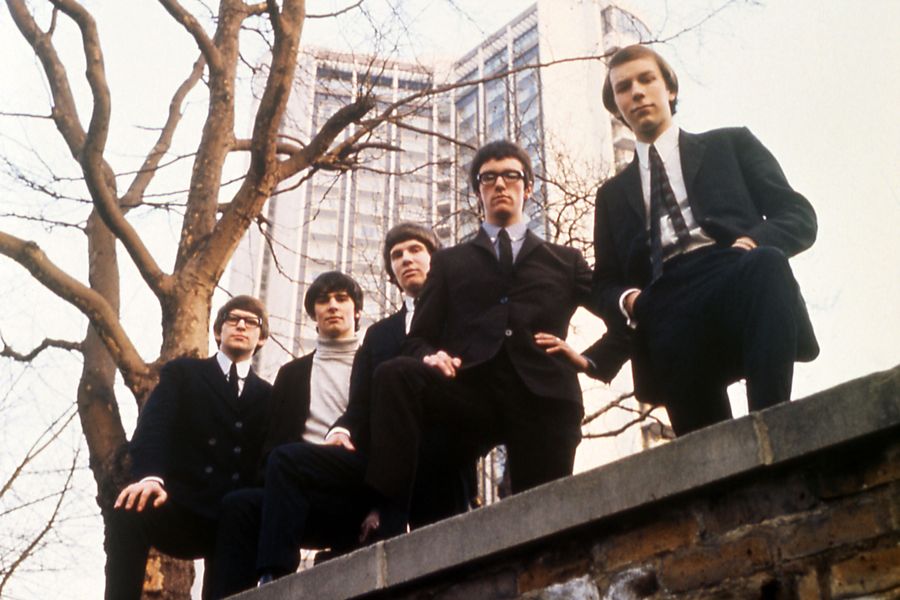
George Gerswhin inspired The Zombies’ biggest hit

Although they are somewhat overlooked in contemporary culture, The Zombies are one of the greatest bands of the 1960s. Together, they achieved as much, if not more, than the likes of The Small Faces or The Sonics with their creatively challenging body of work.
This is a marvellous feat, as, across their career, The Zombies only released three studio albums, with their final effort, 2000’s R.I.P, recorded back in 1968. Their masterpiece, however, is universally hailed as Odessey and Oracle, and from start to finish, the record is a peculiar opus, brimming with authentic beauty and genuinely progressive musical moments.
A blend of psychedelia and chamber pop, Odessey and Oracle makes a bold claim to be one of the most overlooked records in history. It’s a strange case in the sense that it is certainly coveted, but, just like the band who made it, its worth is criminally forgotten in the mainstream. This is in part thanks to the brilliance of other records that were also released in that momentous year, such as Jimi Hendrix’s Electric Ladyland and The Beatles’ White Album.
The splendour of The Zombies’ contemporaries is not the only factor that contributed to Odessey and Oracle being such a fascinating release. Adding to its remarkable mythos is the fact that the band split up before its release, with the already fractured interpersonal problems compounded by a shoestring budget. The first two singles, ‘Care of Cell 44’ and ‘Friends of Mine’, were complete failures, meaning that interest in the band was rapidly shrinking. The band called it a day after a farewell show in December 1967, so by the time the album finally dropped, the former members were already looking to new horizons.
All was not lost for the band, however. They would eventually get back together from 1989 until 1991 and from 2004 until the present. Much of this impetus to reform can be traced back to the track that closes Odessey and Oracle, the mega-hit ‘Time of the Season’, which is ironic, as the recording of the song also put considerable strain on the relationships within the band.
Famous for its iconic bassline, which the song is built around, and the atmospheric “ah” vocal, it is The Zombies’ ultimate offering, which comes complete with one hell of an organ solo. Written by keyboardist Rod Argent, it remains one of the definitive tracks of the countercultural period and has duly featured across popular culture since its release in March 1968.
When The Zombies sat down with The Guardian back in 2008 to discuss the classic status of Odessey and Oracle, Argent revealed that he was inspired by the song ‘Summertime’ by the famous American composer George Gershwin and that ‘Time of the Season’ was the last piece written for the album.
He recalled: “‘Time of the Season’ was the last thing to be written (for the album). I remember thinking it sounded very commercial. One of my favorite records was George Gershwin’s ‘Summertime;’ we used to do a version of it when we started out. The words in the verse – ‘What’s your name? Who’s your daddy? Is he rich like me?’ – were an affectionate nod in that direction.”
Following this, Argent discussed the notorious spelling mistake of the album’s title, saying that the group are eternally embarrassed by it: “The album title’s slightly high-flown, isn’t it? As is the quote from The Tempest on the back. It was a very flowery time in all sorts of ways. Me and Chris (Chris White bassist and co-songwriter) shared a flat with a guy called Terry Quirk who was a very talented artist and he came up with this beautiful, florid cover that we adored. We didn’t notice that the word odyssey was spelt wrongly, to our eternal embarrassment. For years I used to say, ‘Oh that was intentional. It was a play on the word ode.’ But I’m afraid it wasn’t.”
