


How the final scene in ‘Furiosa’ captures the essence of ‘Mad Max’

One of the most significant recurring issues with modern franchise filmmaking is the desire to constantly pick up a trail of breadcrumbs that had been dropped previously, with sequels bending over backwards to tie up or further story points teased years beforehand. Fortunately, Mad Max has never had an interest in such things, and Furiosa wasn’t in the mood to change the habit of a lifetime.
George Miller has taken each film as it comes. While the quintet all takes place against the arid post-apocalyptic backdrop of the Wasteland, thrives on scenes of vehicular carnage, centres on dual protagonists Max Rockatansky and Furiosa, and features a smattering of recurring characters, connectivity and continuity have never been at the forefront of his thinking.
The series has always been rooted in mythology, with each individual Mad Max story feeling like a campfire tale that’s been passed down from generation to generation, leaving the events depicted therein entirely open to the interpretation of the person telling them. As it applies to the final scene in Furiosa, that honour falls to George Shevtsov’s narrator, History Man, and even he admits that many different versions of the tale have been told.
Miller has confirmed that “all the films have no strict chronology,” with his best guess as to where Fury Road falls on the timeline being “probably after Thunderdome,” but not definitely. “I never wrote the story – any of the stories – with a chronological connection,” he reiterated, and it hasn’t done a thing to stop Mad Max from carving out a path of cinematic greatness for 45 years and counting.
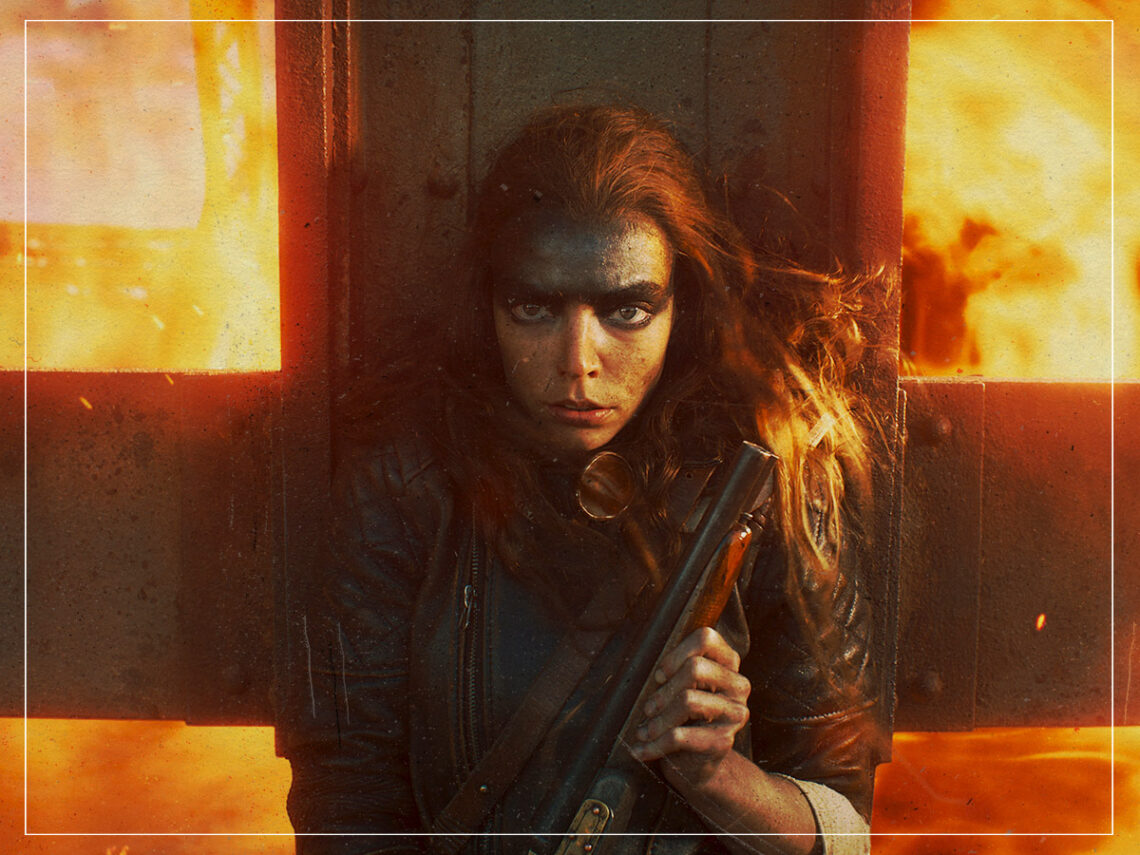
In the final scene of Furiosa, Anya Taylor-Joy’s title character finally exacts her revenge on Chris Hemsworth’s warlord Dementus, who seems surprisingly thrilled to discover the child he stole away from her home after murdering her mother in the most brutal of circumstances turned out to be the one who made his life a misery and ended up serving him his arse on a silver platter.
In an age where sequels, prequels, and spinoffs are desperate to tie themselves together into a sprawling tapestry that lets one chapter feed into the other as a cohesive whole, Miller carries on the proud tradition of Mad Max‘s folkloric roots by having the History Man intone that the ultimate fate suffered by Dementus may not have actually befallen him.
He intones that various rumours have emerged, claiming that the villain was either crucified and set alight to mirror the death of Furiosa’s mother or that he’d been tied to a motorcycle and dragged along the unforgiving ground of the Wasteland to echo the demise of Tom Burke’s Praetorian Jack.
However, History Man intones that he heard from no less of an authority than Furiosa herself that the body of Dementus was squirrelled inside the Citadel and hidden away, where she planted the seed she’d carried since childhood to place the withered, emaciated, and desiccated antagonist in the position of creating new life as he edges closer to his own death.
It’s poetic to a fault, especially when Furiosa plucks a peach from the Dementus/tree hybrid, brings it to the wives of Immortan Joe and leads them to safety to kick off the story of Fury Road. However, it doesn’t go unnoticed that even though he said he’d heard it first-hand, there’s no proof to History Man’s claims, and nor was he present during the final showdown between the hero and villain.
That’s Mad Max at its essence; there’s no desire on Miller’s part to have everything neatly fit together when that’s never been part of his approach. Instead, much like the entire chronology of the five films to date, Furiosa ends on a note that may or may not have happened but has nonetheless been consigned to the history books of the Wasteland.
