


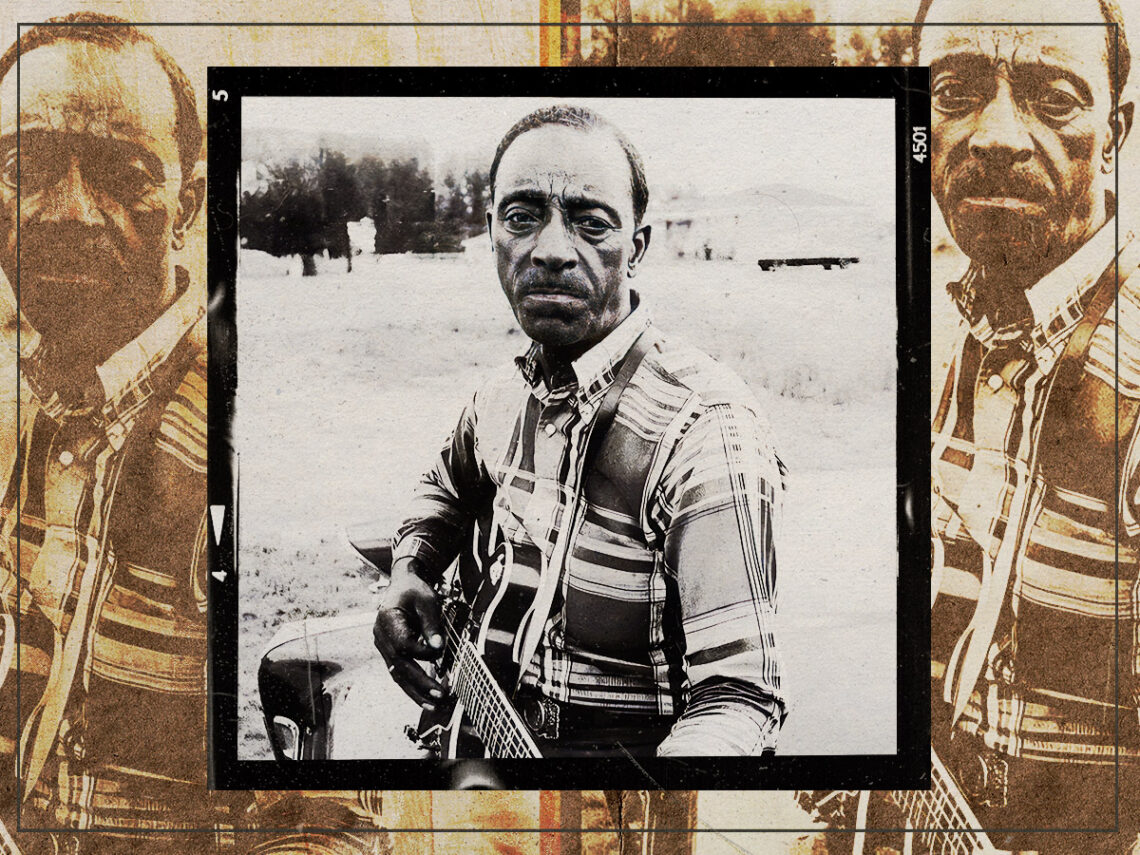
Fred McDowell: The farmer who emerged from the woods and made a masterpiece

Some blues players can get their guitars to tell a story; Fred McDowell could get his to sing an opera akin to a southern Les Mis. “With Fred McDowell, I just love the way he articulates the notes,” fellow blues guitarist Bill Orcutt explains. “I’m hardly unique in that, but there’s just something about that that I love.” He’s not alone in that love either; everyone from Keith Richards to Bonnie Raitt have cited him as a star that they have attempted to emulate.
However, the one element nobody could ever copy was the humble backstory that brought him to the world. Long before he earned the prefix of Mississippi and became a big attraction at juke joints, got swamped backstage at folk festivals, or had his track covered by The Rolling Stones, he was just strumming away to an audience of nearby wildlife on his porch after a long day at work. Occasionally, he’d find himself in a situation where someone might toss him some loose change, but any notion of fame seemed unfamiliar.
But his skills were profound all the same, and fate would drag him towards another American numen on his travels. Alan Lomax was a roving ethnomusicologist, which is a big word for a curious fellow with a portable recording device that could capture the nation’s true folk on the move. One day, during Lomax and Shirley Collins’ great Southern Journey expedition, they rocked up in Como, Mississippi. They were intent on capturing the music at a local dance and the Young brothers’ fife and drum ensemble.
It was 1959, and McDowell was a 54-year-old wondering what his legacy would be beyond the farm he kept. So, without much fanfare and no warning, he decided to pick up his guitar, weave his way through the local woods, and rock up at Lonnie Young’s porch, where the recording was said to be taking place. Lomax and Collins lent him their ears, hit record, and old McDowell began to play.
Half a century later, if you close your eyes while listening to the masterpiece now known as The Alan Lomax Recordings, you can almost see the overalled maestro on the creaking porch ahead of you, hear the rustle of the southern breeze through the lowering tupelo trees, and smell the dancehalls buffer in the air. Of course, some of that is due to the suggestion of the cover art on the Mississippi Records pressing, but what I’m trying to convey is the dogeared sincerity that renders this authentic tape so beguiling.
Even at the time, Lomax and Collins were so flummoxed by the humility and skill of this unknown farmer that they quickly whisked their tapes off to a blues label, and in his autumn years, McDowell became an internationally renowned star, typifying what was best about the blues when the revival movement had somewhat muddied the waters — he was the new (old) find that the kids were craving.
He would soon rub shoulders with the next generation, teaching Raitt how to play slide guitar, touring with the likes of Big Mama Thornton and John Lee Hooker, and embracing the flattery of being covered by rockers despite declaring himself that he did not play rock ‘n’ roll. He left the farm behind and enjoyed a good 13 years of fame until his death in 1972, aged 68, but his old porch was never truly that far from his artistic thoughts, so even beyond the masterful Lomax Recordings, he’s the bluesman who can capture the earthiness of the South with more verity than anyone.
