


The Frankenchrist Obscenity Trial: the moment punk made its legislative mark

When punk rock exploded onto the musical landscape during the mid-1970s, its core aims were largely concerned with disrupting the status quo of a complacent society. Despite what rose-tinted spectacles might tell you, the 1970s was a particularly turbulent time politically, both in the US and the UK, and the widening disparities between different social classes, coupled with a particularly bland period of pop music, stoked the flames of a punk rock revolution. However, for the most part, punk was restricted to the underground scenes of major cities and local music scenes.
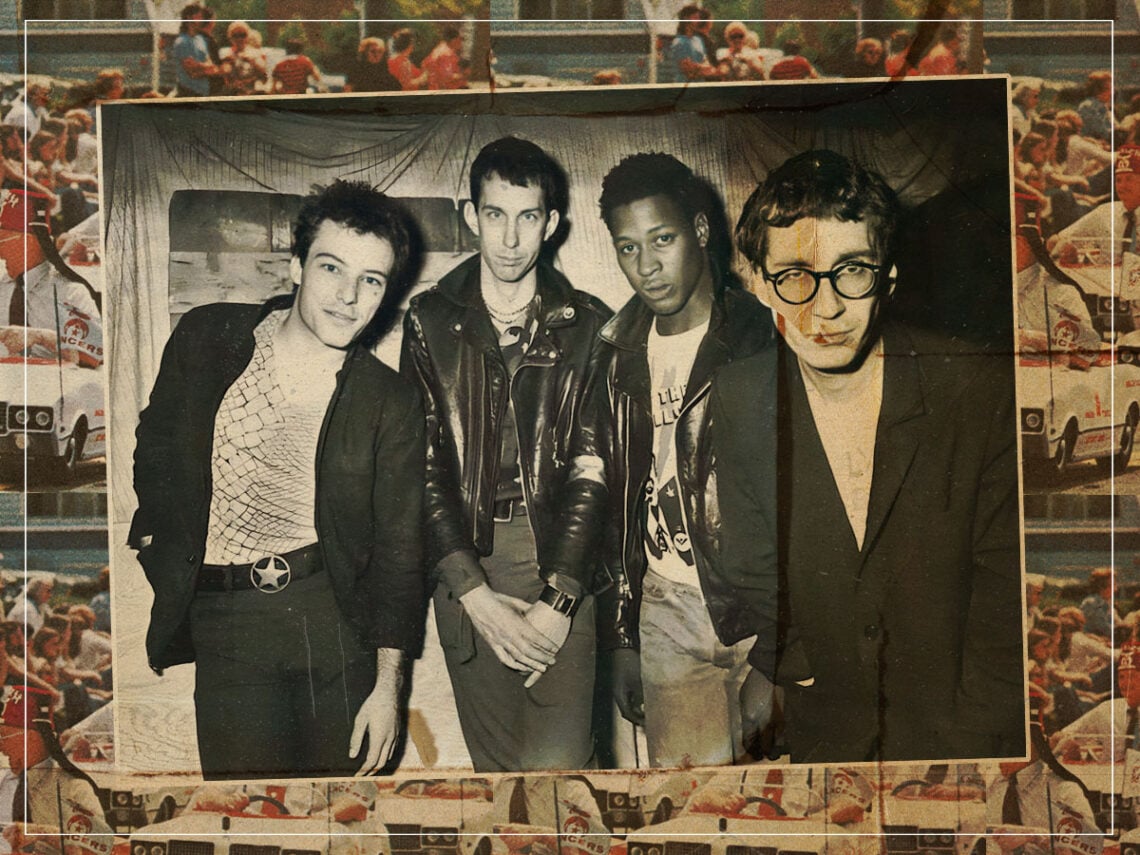
Aside from a few minor instances, like Johnny Rotten swearing on national television, punk rock failed to realise the cultural revolution that it hoped to establish. That is not to say, however, that the powers that be were not threatened by the emergence of this defiant new subculture. Perhaps the best representation of that threat came in 1985 when an album cover by West Coast punks Dead Kennedys became enmeshed in a legal battle.
As their name would suggest, Dead Kennedys were masters of causing shock to mainstream audiences. Their album covers had always been fairly controversial, with 1982’s Plastic Surgery Disasters particularly notable for including an image of a malnourished Ugandan child on the cover. As frontman Jello Biafra once shared, “I’ve always known the value of having a really cool, really provocative album cover that’s gonna make somebody else thumbing through a bin pick it up and say ‘what is this?’”
Biafra took this provocative manifesto to new levels when putting together Dead Kennedys’ third studio album, Frankenchrist. While looking for potential album cover ideas, the songwriter stumbled upon a painting called Landscape #XX by the Swiss surrealist artist H. R. Giger. The painting showed rows of penises entering rows of vulvae, which Biafra thought would make an ideal gatefold sleeve for Frankenchrist.
Giger agreed to let the band use the image for a small fee, but the other band members were not so keen on the idea. Couple that with the logistical issues of having a pornographic album cover, and Landscape #XX seemed more trouble than it was worth. So, in compromise, the band instead used an image of a Shriners parade, including Giger’s controversial artwork as a poster inside the sleeve, along with a warning message that read “some people may find [the poster] shocking, repulsive, or offensive. Life can sometimes be that way.”
However, even including the image as a poster led to some unwanted legal issues for the band. Biafra was brought to trial over the album cover, accused of distributing harmful matter to minors despite the warning sticker included on copies of the album. The court argued that including the poster, along with a warning sticker, would cause more minors to buy the record, thus seeing Giger’s artwork. Although the case eventually fell apart, and Biafra was not found guilty, the lengthy legal battle was detrimental to the finances of Alternative Tentacles – the independent record label run by Biafra.
Ironically, the Shriners album cover image was the cause of some controversy too, as the members pictured on the Frankenchrist album cover eventually sued Biafra and Alternative Tentacles for using the image without their permission. These legal battles wreaked havoc on the band, but they also presented Dead Kennedys as champions of free speech.
Although it is difficult to imagine Biafra was thrilled about having to appear in court and justify his fascination with an image of penises and vulvae, the legal battle was a landmark case, not only for free speech in the United States but for the punk rock movement as a whole. For the first time, there was genuine evidence that the US state was threatened by the existence of these revolutionary new groups.
Dead Kennedys continued for one more record, Bedtime for Democracy, following the chaos that had overshadowed Frankenchrist. Although the legal issues might have signalled the beginning of the end for the group, it also immortalised Dead Kennedys in the pages of punk rock history. The album and its explicit poster insert gave punk rock the opportunity to make a legislative mark on American society, and Biafra certainly seized it.

Never Miss A Beat
The Far Out Punk Newsletter
All the latest Punk content from the independent voice of culture.
Straight to your inbox.