


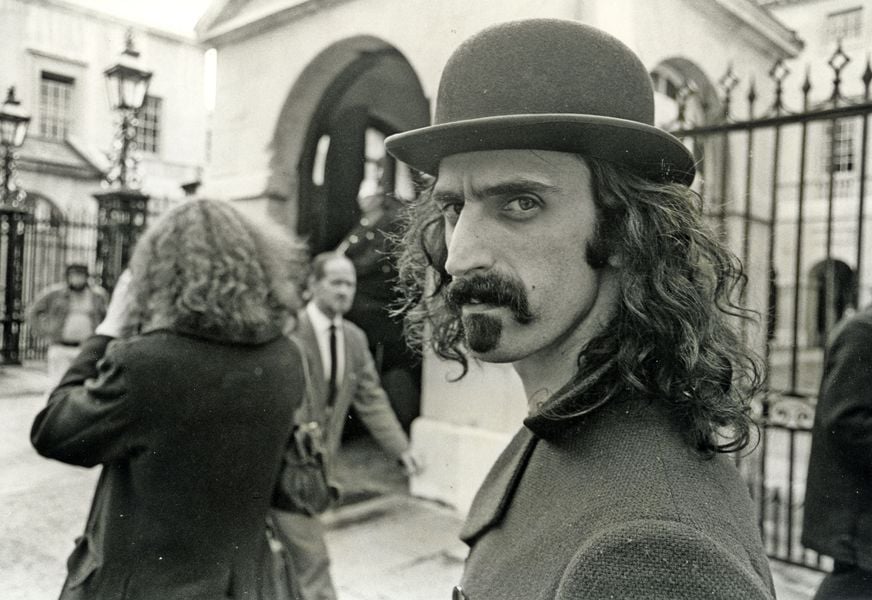
Frank Zappa’s problem with the “Acid Generation”

Despite sitting at the very vanguard of the 1960s psychedelic movement, Frank Zappa was strongly opposed to drug use. Sure, he had a pretty serious addiction to smoking – one that may have hastened his death from prostate cancer at 52 – but he never touched alcohol, cannabis or any other drug for that matter. So why was Zappa – a musician revered by so many members of the countercultural community – so anti-drug use? Here, we examine the rockstar’s problem with the “acid generation”.
The 1960s and ’70s saw no shortage of artists (perhaps indirectly) advocating drug use. Though The Beatles frequently reminded news outlets that it was they, not the rockstars, giving publicity to drugs like LSD, the Fab Four inadvertently infused drugs with a layer of glamour in songs like ‘Got To Get You Into My Life’, ‘She Said, She Said’, and ‘Day Tripper. But The Beatles gave cultural life to LSD through their creative methods as well as their lyrics. Their conceptual and technical experimentations on albums like Revolver and Sgt. Pepper’s Lonely Hearts Club Band’, though not directly informed by drug use, were regarded as examples of creative innovation that LSD had unlocked. It’s more likely that both albums were the product of hard work and a desire to push the boundaries. Still, it’s possible to argue that it was hallucinogens that helped draw The Beatles’ attention to these boundaries in the first place.
The countercultural attitude to drug use was reflective of Timothy Leary’s belief that drugs like LSD could be used to remedy “the emotional or mental problems of the human race, in particular the American people.” In the Harvard psychologist’s view, hallucinogens could be used to explore one’s consciousness in a way that would benefit humanity as a whole. Unfortunately, many hippies took Leary’s call for the young people of the world to “turn on, tune in, and drop out” as an excuse to give up on all constructive activity and give in to purely cerebral pleasures.
Frank Zappa found this deeply troubling. When asked to explain his anti-drug stance, Zappa said: “Well, it’s not just that drugs kill you. It’s that when you take them they turn you into a type of person that I don’t like to hang around with. I mean, people…their personalities just mutate, their value systems change, and generally – this is not a hard and fast rule all over the world – but it has been my observation that when Americans consume drugs they are instantly transformed from regular, normal human beings into raging assholes.”
By 1971, the dark side of hippie hedonism was beginning to rear its ugly head. Jim Morrison, Jimi Hendrix and Janis Joplin had all died from drug-related causes within a year of each other. Suddenly, the mood had changed. That same year, Zappa gave an interview for CBS in which he gave an equally conservative view of drug use. When asked how he thought LSD had affected young Americans, he said: “I think it’s taken away a lot of their ambition. I think we have yet to reap the benefits of the so-called ‘Acid Generation’ as the burnouts begin to turn up more frequently.”
For Zappa, drugs weren’t a catalyst for revolution but a distraction. More than that, they were a tool that governments could use to keep young people in check. He frequently spoke about the CIA’s experiments with LSD as a form of mind control during the cold war, as well as the role FM radio played in publicising drug use. Today, his sceptical stance seems more counterintuitive, not to mention more vital, than ever.

Never Miss A Beat
The Far Out Beatles Newsletter
All the latest stories about The Beatles from the independent voice of culture.
Straight to your inbox.