


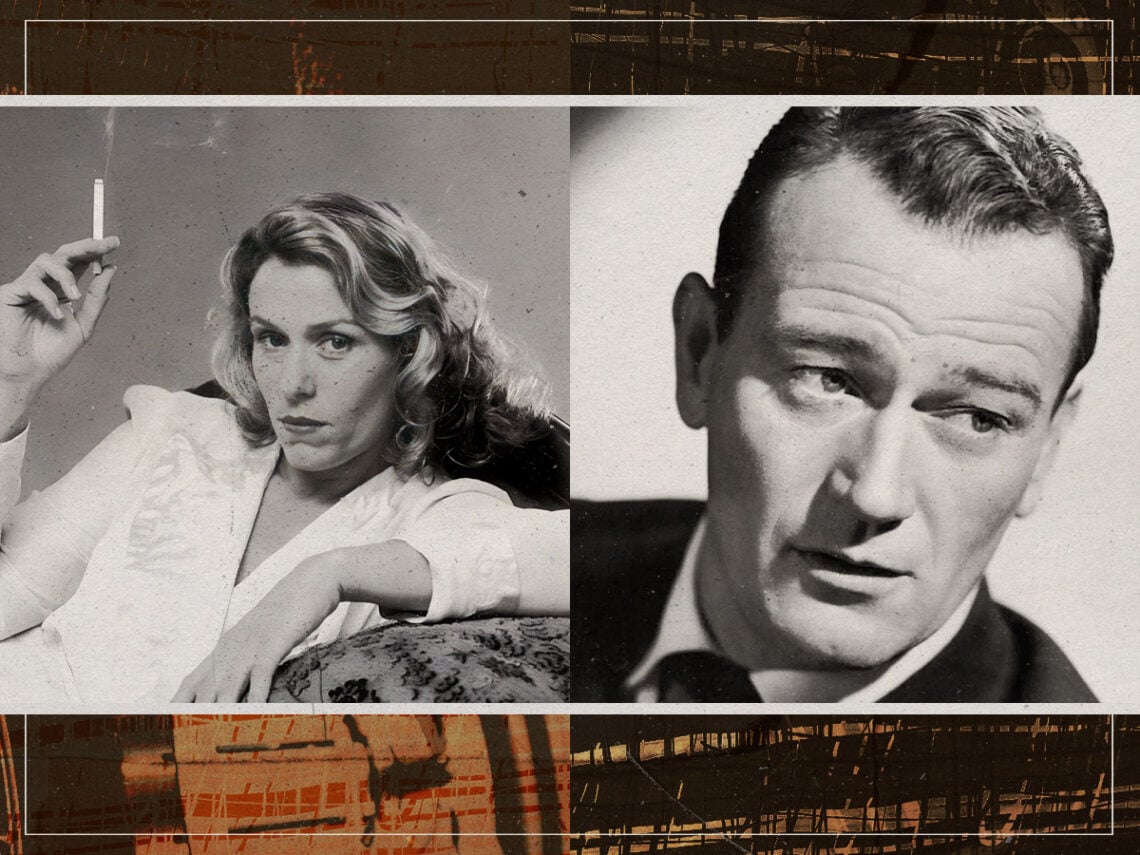
The two Frances McDormand performances inspired by John Wayne

These days, the word ‘nomad’ is often paired with a term that has come to define our era: ‘digital.’ When we think of nomadic life today, we’re likely to imagine well-paid, Birkenstock-wearing tech workers who can afford to rent AirBnBs around the globe for extended periods. This modern vision of nomadism is a far cry from its traditional meaning, reflecting the new ways technology and remote work have reshaped how we perceive mobility and freedom.
However, not all that long ago, nomads were understood to be people on the fringes of society, with limited resources, who moved from one place to the next out of need rather than the desire to travel. Enter Frances McDormand, who plays the working-class nomad Fern in the atmospheric neo-western Nomadland, directed by Chloé Zhao. The characters in the movie are mostly portrayed by real-life nomads, many of whom left behind their lives in towns and cities due to the rising cost of living. Their decision to embrace a more transient lifestyle was often driven by financial necessity, making their stories all the more poignant and authentic on screen.
McDormand’s Fern is an outcast. She lives in a camper van and forms part of a scattered community of nomads who move through rugged terrain from one seasonal job to the next. One month, she might be a warehouse packer, and the next, a farmhand. During an interview with Vogue, McDormand spoke about how Fern has some similarities to John Wayne’s nomadic character in The Searchers: “These men that don’t seem to have a past, only a present, and no future,” she said. “They just arrive fully formed, and they disappear.”
However, McDormand points out that because Fern is female, there are some crucial differences with John Wayne’s character, which is given very little backstory: “Because she’s female, she’s got a lot of stuff with her. She’s got a whole van full of memories. Women don’t necessarily come out of nowhere.”
McDormand has built an impressive career out playing complex female leads and roles usually associated with men, like her iconic performance as Marge in Fargo: a Minnesotan police officer with a keen nose for bullshit. In Three Billboards Outside Ebbing, Missouri, McDormand’s character, Mildred, is stalwart and in search of justice, or better, revenge for her daughter’s rape and murder. Usually, the lead roles in revenge dramas are reserved for men, such as Liam Neeson in Taken or Denzel Washington in Man on Fire.
To prepare for her role in Three Billboards, McDormand turned to the physicality of Wayne, whose very walk asserts dominance. In an interview, she cites Wayne as a source of inspiration for Mildred: “I really latched onto John Wayne in a big way as my physical idea because I really had no female physical icons to go off of for Mildred. She is more in the tradition of the spaghetti western’s mystery man, who comes walking down the centre of the street, guns drawn, and blows everybody away.”
Mildred’s character was arguably smarter than a typical John Wayne character. Her first course of action was with law enforcement. Given the police’s refusal to take her daughter’s case seriously, she took to political activism by renting three billboards to draw attention to the miscarriage of justice. Mildred does not ride a horse. She drives a cheap Sedan. She does not fire guns from her holster: “I think it’s important that the only weapons Mildred ever uses are her wits and a Molotov cocktail. I could see it in her walk and her attitude.”
While McDormand might have drawn on Wayne’s brilliance as a larger-than-life performer, it is important to note that his legacy is controversial. In an interview he gave in 1971, Wayne made bigoted statements against Black people, Native Americans, and the LGBTQ+ community, stating: “I believe in white supremacy until the Blacks are educated to a point of responsibility.”
