


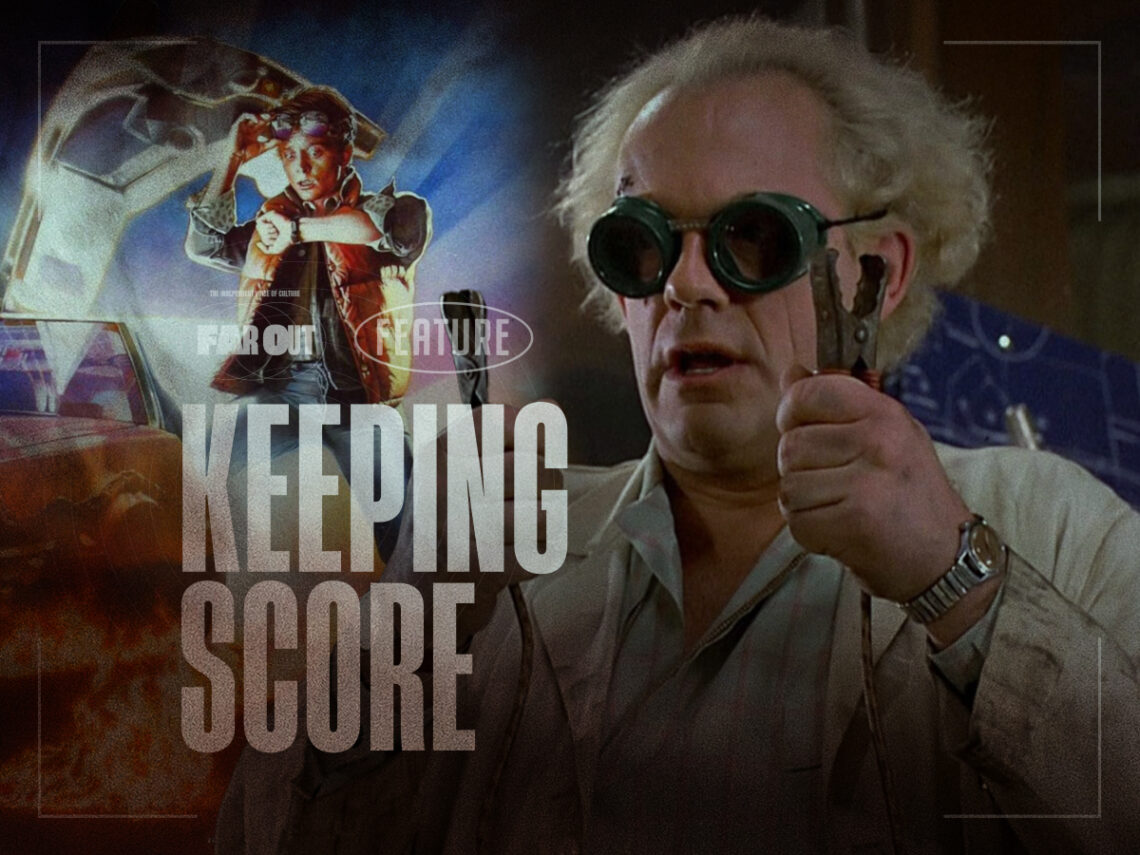
Keeping Score: The forgotten majesty of ‘Back to the Future’

Few film franchises have produced as many great original songs as Back to the Future.
Obviously, the big one is ‘The Power of Love’, Huey Lewis and the News’ effortlessly catchy anthem that appears at the start of the first film. However, there’s also the other song they wrote for the movie, ‘Back in Time’, which appears over the end credits and, in my humble opinion, is far superior. Oh, and don’t forget ZZ Top’s contribution to Back to the Future Part III, with ‘Doubleback’, a banger in its own right too.
With so many excellent tracks from big-name artists, it’s easy to overlook the more traditional elements of the series’ score, which is a crying shame, because it has one of the greatest orchestral themes of all time, a rarity for a movie from this era not scored by a certain Mr John Williams.
The 1980s is considered a golden age for film scores, and yet, this one always seems to fall through the cracks, thus, in honour of 40 years of the first Back to the Future movie (sickening, right?), let’s rectify that oversight.
Musical duties were handled by the great Alan Silvestri, with whom director Robert Zemeckis had worked on his previous film, Romancing the Stone, and had clearly been impressed with the composer’s work. He was so confident in Silvestri’s ability that his only note for this new project’s score was that “it’s got to be big”, and on receiving absolutely zero help from his boss, Silvestri got to work.
Almost immediately, he ran into an issue with Zemeckis’ demands, as Silvestri pointed out in a 2020 interview with Film.Music.Media, Back to the Future is a film comprised almost entirely of tight shots. “Everything was close,” he said, “The whole clock tower event was on a set in the centre of a small town. Where were the big shots? There were none.”
Back to the Future is a big story with big themes and big set pieces, but you wouldn’t be able to tell that through its visuals; hence, Silvestri knew he’d have to bring this sense of scope through the music without contradicting the action on screen, therefore resolving to keep things simple.
The movie’s theme song, which is just called ‘Back to the Future’, isn’t complicated at all, with its refrain following a very simple pattern that the composer describes as “A-A-B-A”, before launching into the same refrain again but in a different key. “You have to have a place where you tell the story,” he described, “Then you have to have a place where you celebrate the story”.
Unfortunately, not everybody could see this simplistic brilliance, and at the 1986 Academy Awards, Back to the Future was nominated in three different audio-themed categories: ‘Best Sound’, ‘Best Original Song’, and ‘Best Sound Effects Editing’, which it won, but Silvestri’s name was left out of the ‘Best Original Score’ category entirely. He would receive a Grammy nomination for his work, but at the biggest night in the movie calendar, he failed to receive his flowers.
It wasn’t all doom and gloom, of course, as Back to the Future cemented the working relationship between Silvestri and Zemeckis, which led to many more great scores over the years. Still, when you consider just how well the original songs from the movie have done, you can’t help but feel a little sorry for the man who played such a big part in making it great.
