


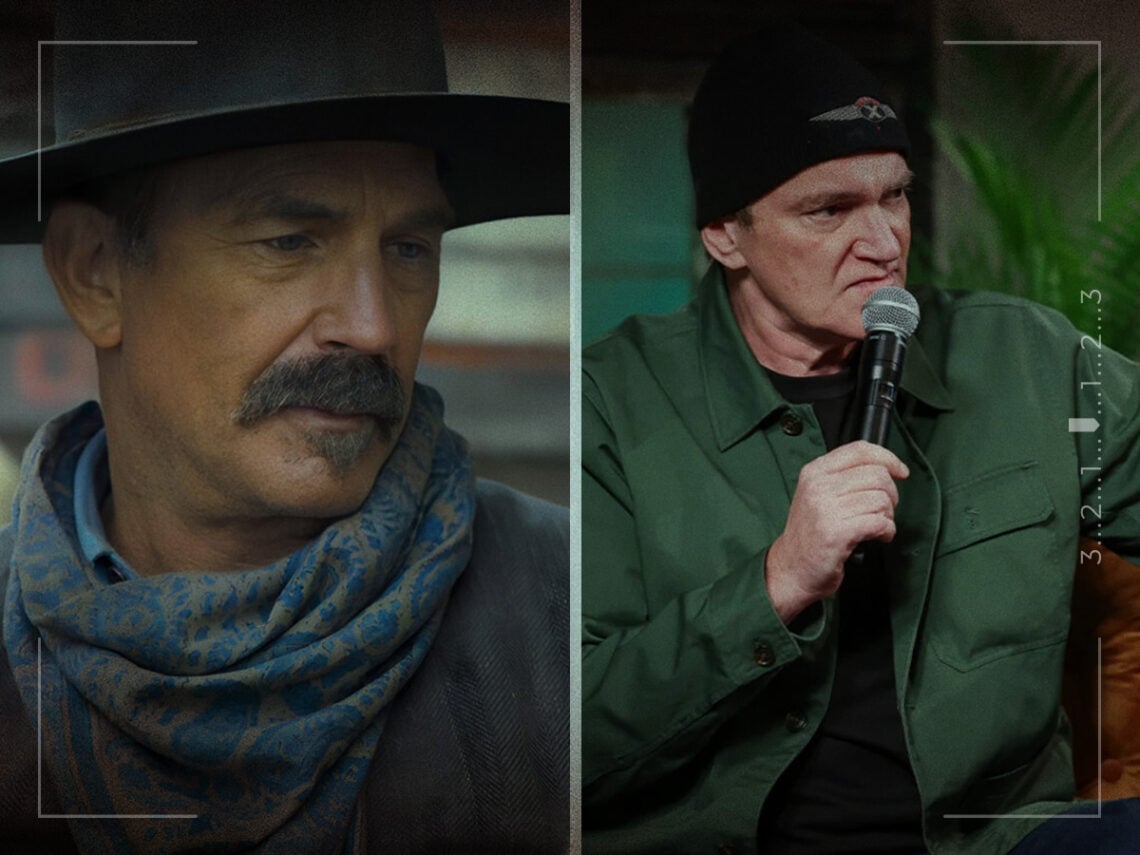
The forgotten Kevin Costner movie that Quentin Tarantino is in awe of: “One of the best directorial debuts in the history of cinema”

It’s no secret that Quentin Tarantino is a cinephile through and through. His first job was in a video store, after all. Over the years, in the long interims between his films, he has spoken at length about the movies he adores, abhors, and emulates, running the gamut from the highest of highbrow options like 2001: A Space Odyssey, to the lowest of lowbrow options like Showgirls.
His love of cinema permeates his work. Most of his films are creative pastiches of established genres, be it spaghetti westerns, martial arts movies, or grindhouse movies. He always makes sure to put his own stylish spin on things, but his reverence for cinema history is a key part of his formula as a director.
As you might have deduced from his reverence for Showgirls, Tarantino’s taste in movies is not always predictable. He has a strange and enduring dislike of François Truffaut, one of the great pioneers of the French New Wave, and has been pretty cutting about the Robert Altman movies he doesn’t enjoy (he famously said that Brewster McCloud was “the cinematic equivalent of a bird shitting on your head”). He also somehow adores the almost universally despised Woody Allen film Anything Else. In other words, he is willing to go out on a limb with his cinematic sentiments, and one of the ways this manifests itself is in his championing of relatively obscure films.
In 1994, around the release of Pulp Fiction, the director spoke to Vanity Fair and revealed that one of his favourite movies of all time is a Kevin Costner movie that was all but forgotten then, and is even more so three decades later. “Fandango is one of the best directorial debuts in the history of cinema,” he declared. “I saw Fandango five times at the movie theatre and it only played for a fucking week, all right? Five times I saw it!”
Directed by Kevin Reynolds, the film is a comedy-drama about a group of college friends in 1971 who go on a final road trip together before the looming threats of adulthood – including the draft for the Vietnam War – engulf them. It stars Costner in his first lead role alongside Sam Robards and Judd Nelson. Steven Spielberg produced the movie, having been impressed by Reynolds’s student film that featured the same story. With an unknown director and unknown cast, however, Warner Bros. dragged its feet about releasing it and ultimately gave it such a limited run that it earned less than $100,000 at the box office.
Like Spielberg, Tarantino was impressed with Reynolds, and even predicted that he was “going to be the Stanley Kubrick of his decade.” Although the director certainly has not reached the heights of the 2001: A Space Odyssey auteur in terms of critical acclaim or name recognition, he has had a successful career thanks in large part to his lengthy working relationship with Costner. He directed Robin Hood: Prince of Thieves and Waterworld in the 1990s, and went on to helm the Emmy-winning limited series Hatfields & McCoys in 2012.
Ironically, this latter collaboration was the reason that Costner dropped out of Tarantino’s Django Unchained. Hopefully, the director was honoured rather than offended to have his former hero steal his star out from under his nose at the eleventh hour.

Never Miss A Take
The Far Out Quentin Tarantino Newsletter
All the latest Quentin Tarantino content from the independent voice of culture.
Straight to your inbox.