


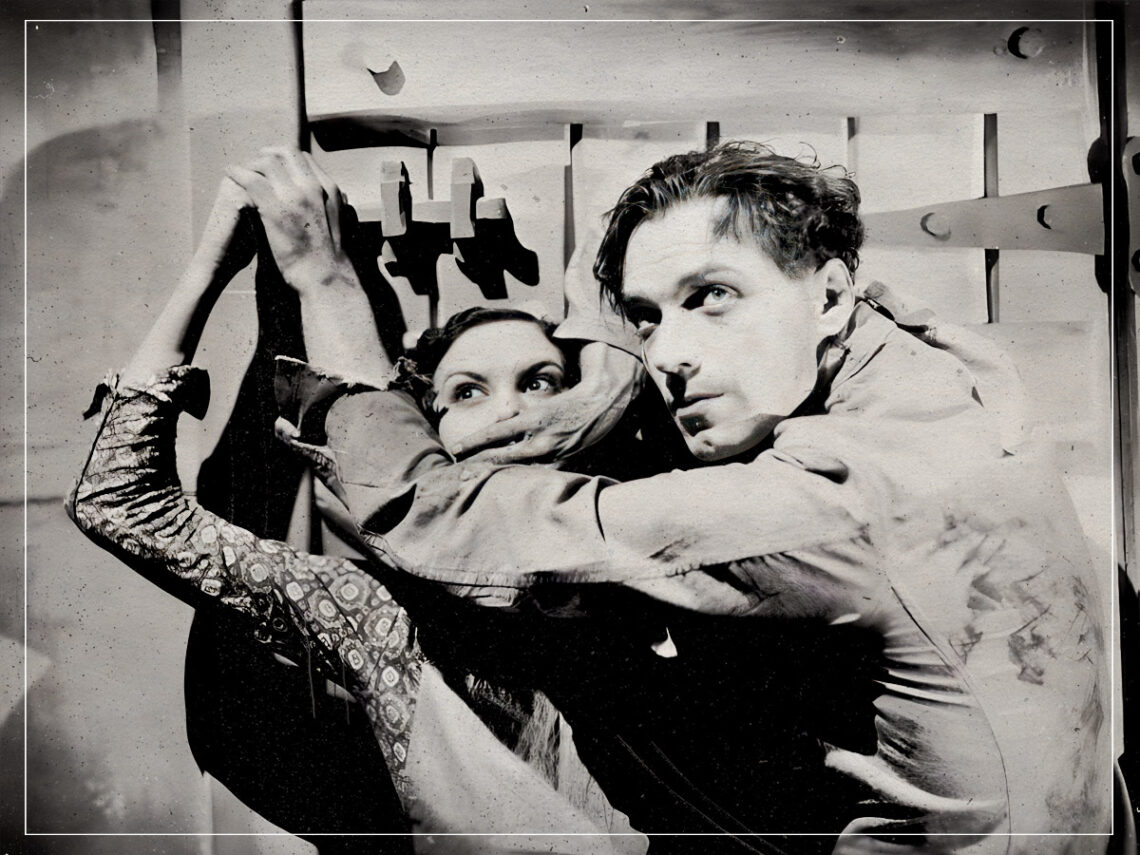
‘A Cottage on Dartmoor’: the forgotten crime flick that bettered Alfred Hitchcock

If anyone was asked to name a British filmmaker who began their career in the 1920s, evolved from silent films into the age of talkies, and then reinvented the concept of what the thriller would be, then there’s a probability of at least 99.9% that Alfred Hitchcock would be the first to roll off the tip of the tongue.
That’s entirely fair and completely understandable when the ‘Master of Suspense’ is deservedly heralded as one of the greatest, most important, and influential directors in the history of cinema, boasting a back catalogue of stone-cold classics stretching across decades that speak to his towering legacy.
However, that exact conversation on the de facto face of the United Kingdom’s genre fare was raging almost a century ago, leaving Anthony Asquith just outside of the spotlight being placed firmly upon Hitchcock. The two were remarkably similar, but as far as the time period of the evolution from silent into verbose cinema unfolded, they were every bit equals.
In 1929, Hitchcock was winning yet more plaudits following the release of Blackmail, credited as the UK’s first feature with synchronised sound. In typical fashion, it’s a twisting crime story following a woman who kills a man in self-defence following an attempted sexual assault, who then becomes the subject of a blackmail plot.
As accomplished and acclaimed as it may have been, one of the side effects was that Asquith’s A Cottage on Dartmoor – which premiered just months later – went largely overlooked. Trapped between two worlds, it was the director’s final film before he transitioned full-time into the talkies, and in a fashion that could even be described as Hitchcockian, it references the sea change with a sly nod.
It’s largely a silent work, but at one stage, Uno Henning’s barbershop worker Joe sneaks into a cinema to sit behind Norah Baring’s Sally and Hans Adalbert Schlettow’s Harry when they’re catching a talkie, referencing how A Cottage on Dartmoor was precariously straddling the divide between what the medium had always been since its inception, and what it was about to become on a permanent basis.
That playful approach was every bit as inventive and seamlessly integrated as the winks that would regularly make their way into Hitchcock’s work, and the plot could just have easily attracted the attentions of the ‘Master of Suspense’ considering it plays to what would become renowned as many of his strengths.
Joe works in the barbershop alongside manicurist Sally and becomes increasingly infatuated with her. Unfortunately, their first—and only—date doesn’t go to plan. Undeterred, his feelings soon snowball into obsession, which takes a turn for the worse when farmer Harry arrives on the scene to sweep her off her feet.
After catching wind of an engagement ring on her finger, a scuffle leads to Harry’s throat being slit by Joe’s cutthroat razor, where Sally’s insistence that it was an intentional attack leads to his arrest on an attempted murder charge. Years later, Joe escapes with revenge on his mind, only to realise the error of his ways before opting to go out in a blaze of bullet-riddled glory.
The recurring themes of increasing paranoia, unrequited lust, the idealised version of domesticity, the looming threat of spiralling violence, creating a voyeuristic experience for the viewer, and the gradual heightening of tension and suspense are all key hallmarks of Hitchcock’s output. However, they were all present and accounted for – in spectacular style – in A Cottage on Dartmoor.
Asquith was every bit as pivotal as his contemporary in dragging British cinema out of its post-World War I doldrums. While Hitchcock had a rocket strapped to his back and went down in the annals of history, it’s been largely overlooked that his peer was arguably doing it better than the maestro before the talkies fully took over.
