


Fordlândia: The nightmare of Henry Ford’s colonialist Amazonian utopia

It’s the late 1920s, deep in the greenery of the Brazilian Amazon, feeling more like Midwest America and not a forest in South America, lay a small town with suburban-looking manicured lawns, bright white homes, a golf course and even a hospital.
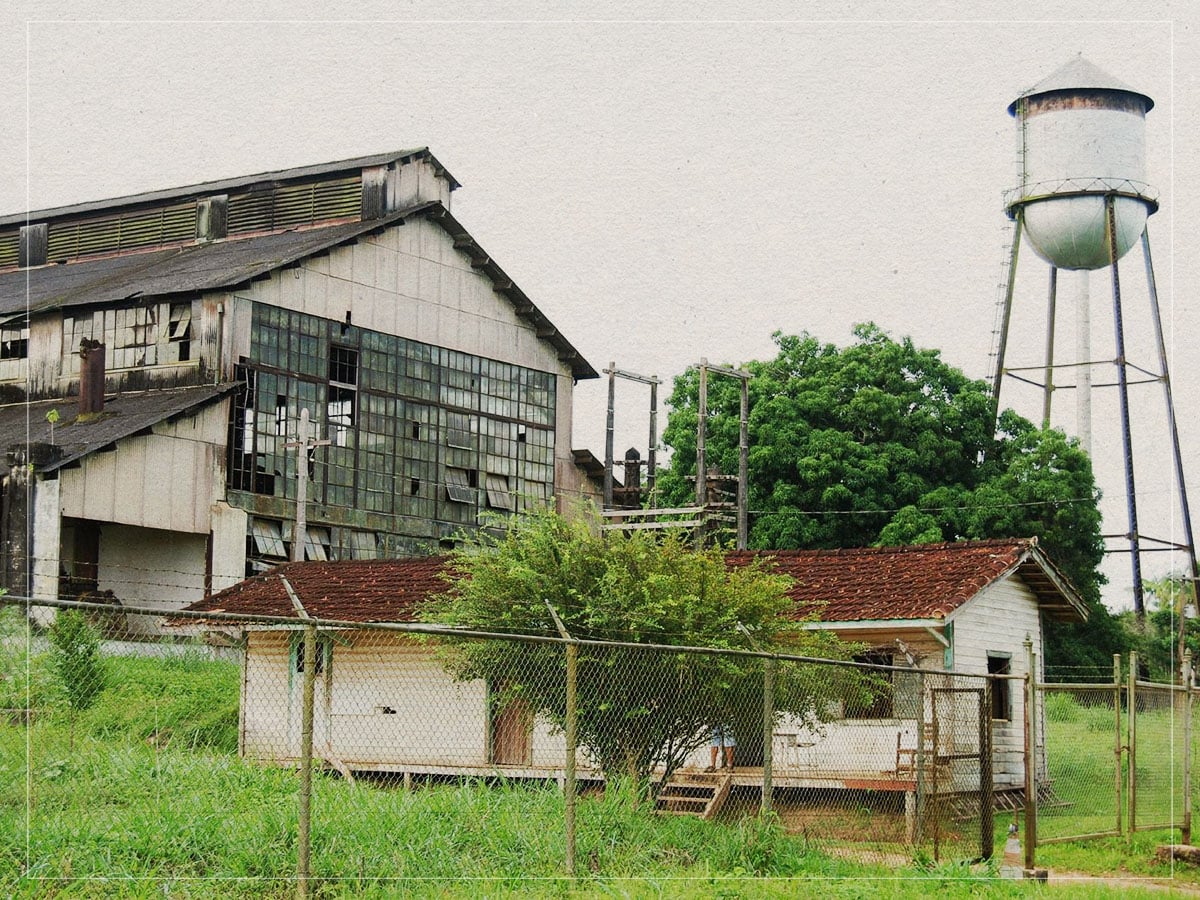
Overlooking it all is the town’s water tower, which casts a shadow, but visible on the side is the name Ford, welcoming you to Fordlândia, a distinctly American outpost that was conceived by Henry Ford as an answer to relying on the global market, but ended up as a failure and a monument to ignorance and colonial attitudes.
At this point, Ford was one of the most influential men on the planet; his Model T had rewritten the rules of transport, and the Ford Motor Company was leading the way in the industrialisation of cars, thanks largely to his innovation of using an assembly line.
The cars were built in Detroit, but Ford had a problem with the rubber needed for tyres being made abroad, as the British Empire dominated the market with their plantations in Southeast Asia, and Ford, wary of foreign powers and price manipulation, wanted independence. His solution was bold, but it was ultimately his undoing, which was deciding to produce the rubber himself.
In 1927, he purchased 2.5million acres of land from the Brazilian government, who were happy to let it go on the belief that it would help develop the state of Para, improving life in the Amazon, except this wasn’t just going to be a plantation, but Ford wanted to turn Fordlândia into his own slice of Midwestern America; the infrastructure echoed what he had grown up with, which might have fine had he left it at that.

His biggest mistake was his arrogant, racist belief that American, and let’s be honest, white, cultural norms were superior. The workers, most of whom were indigenous or had African roots, weren’t treated as equals, with discipline and careful management prescribed by Ford. They were banned from using alcohol, tobacco and practising other Brazilian customs, with Fordlândia acting as a social experiment as much as a plantation.
It was wrong to assume that American ideals and American industry could be transplanted anywhere, regardless of history, climate and culture, but the fundamental misunderstandings didn’t end there, with the managers at Fordlândia deciding to plant the rubber trees in rows, akin to the British in Southeast Asia.
That was a catastrophic mistake, because anyone with ecological knowledge would have known that they need to be grown between the forest and undergrowth because of the unique geography. This led to fungal infections, leaf blight and insects that terrorised the crops every season, with a lack of local knowledge failing to protect the rubber trees.
Workers grew tired of being forced to eat American foods, unable to eat their traditional cuisine, and they were forced to live rigid lives, keeping a strict schedule in the stifling tropical heat. The managers blamed the productivity slowing in the heat on laziness, and with the workers’ customs being questionable, which led to resentment growing on both sides.
The Revolt of the Breaking Pans took place in 1930, with an attempt to enforce stricter cafeteria-style dining on the workers lit a fuse, and so they kicked off, smashed up the equipment and chased their American managers into the jungle, before the Brazilian army managed to restore order.
Rather than reflect on how they approach autonomy and a colonial attitude to culture, the managers doubled down, only continuing to worsen the issues and grievances. Evidence of these failures is clear when you learn that Ford and a lot of his executives never even stepped foot in Fordlândia, which meant decisions were being made on a different continent, by people without expertise in tropical agriculture and who viewed life through the lens of colonisers.
With developments in synthetic rubber and continued negligence at Fordlândia, including not using rust-proof machinery and ignoring flooding risks, the project was a huge failure and not remotely close to achieving Ford’s aims.
In 1945, he sold Fordlândia and another town, Belterra, back to the Brazilian government at a stratospheric loss, with the empty homes, rotting factories and rusting water town still standing today. A few people inhabit Fordlândia, but a lot of the town has been reclaimed by the Amazon, with nature not caring for the town’s Midwestern sensibilities.
Neither American nor Brazilian, what still stands of Fordlândia acts as a cautionary tale about colonialism and arrogance, for its failure wasn’t just in the rubber trees succumbing to fungus but was in misunderstanding the local culture and believing that American values were universal and to be forced on other people. Perhaps now, more than ever, it’s worth considering how American industry interacts with Latin America and whether economic extraction and supposed moral upliftment and freedom can work alongside each other.
