


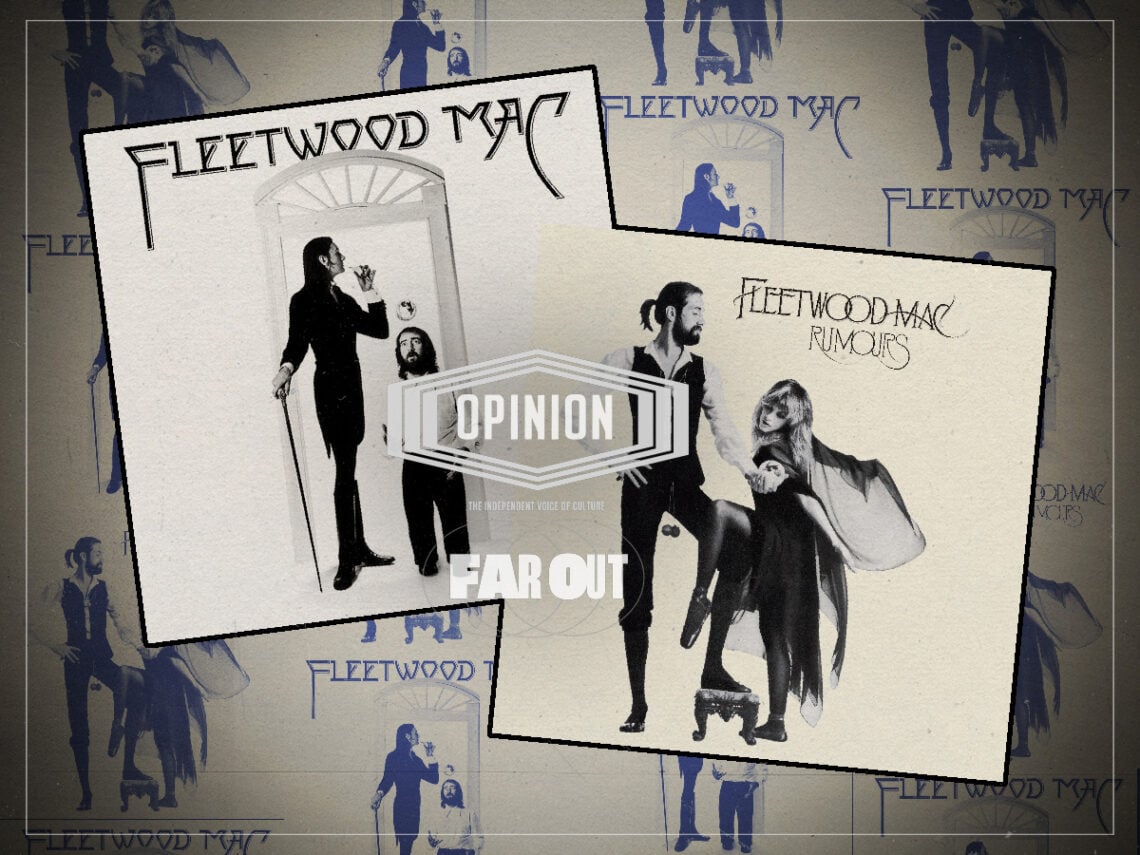
Hear Me Out: Fleetwood Mac’s ‘White Album’ is better than ‘Rumours’

Growing up, I was always told that rumours were best ignored by the very same mother who would play Rumours repeatedly in the kitchen.
Caught between a rock and a hard place, I tried to pay heed to her advice as Lindsey Buckingham opened Fleetwood Mac’s 1977 record with an upbeat, almost irritating rendition of ‘Second Hand News’. But then, Stevie Nicks would descend into ‘Dreams’, and despite my best intentions, I simply couldn’t ignore the power of Rumours any longer.
Naturally, I grew older and developed the ability to tell the difference between the salacious gossip of my day-to-day life that I ought to ignore and the album that shot Fleetwood Mac to fame. With that, my intrigue into this band of soap-opera characters began to intensify, and through their seminal album, I discovered one of the first classic bands I felt as though I could call my own.
But at times, I felt somewhat overwhelmed by the backdrop to this album. The stories of unrelenting betrayal, forbidden love and debauched hedonism fuelled this masterpiece to such an intense degree that personal relationships with the record and its individual songs began to slip away. I wondered if I was a fan of the music or the product.
It was during a deeper dive into the Fleetwood Mac discography that I realised it was the latter. It wasn’t binary, however; there was an undoubted musical chemistry within this band that I was inherently drawn to, and I felt it strongest in the preceding record.

Their 1975 self-titled album, internally known as The White Album, was the first to showcase their mercurial new duo, Lindsey Buckingham and Stevie Nicks. Having fluttered with blues-rock greatness, with Peter Green, the American pair made an unlikely solution to a problem of yet unfulfilled stardom while simultaneously drawing out the undeniable brilliance of Christine McVie.
Her piano playing flourished on this record, with her tracks ‘Sugar Daddy’ and ‘Say You Love Me’ bookmarking the sonic shift for the band. Stripped away were the blues-rock foundations upon which she first joined the band, and in their place was the dream rock that would go on to define the future. But within that, melody came absolutely first and on The White Album, it was as good as it ever sounded.
Then there was Nicks. The musician who is often credited for providing the beating heart of Rumours, but is crucially overlooked for her role in the preceding record. Her lyrics were just as painful and profound, but not marred by the sticky dynamic of sharing a band with Buckingham. Where Rumours forced her gaze inward, The White Album allowed it to purvey something much wider, and in that, what is perhaps her greatest ever track, ‘Landslide’ was born.
But for perhaps the only time in their career, the band were operating as a democracy. From Rumours onwards, Buckingham ruled the band with an iron fist and slowly stifled the great songwriting voices of the band in the process. On The White Album, he hadn’t quite stepped forward into his autocratic shoes and instead shared the duties, thus allowing the individual personalities of each writer to flourish freely and create a more faithful representation of the band in the process. ‘World Turning’ might just be one of their very best songs, and the simple truth is, it would never have existed during the toxic wave of Rumours.
Rumours is undoubtedly brilliant, and the musicality indeed holds up. But where it is the sound of a fractured band, colliding together with intensity, The White Album is the brief sound of harmonic genius, where, without the pollution of interpersonal relationships and recurring soap opera drama, the band could unite through their music and collaborate to stunning effect.
