


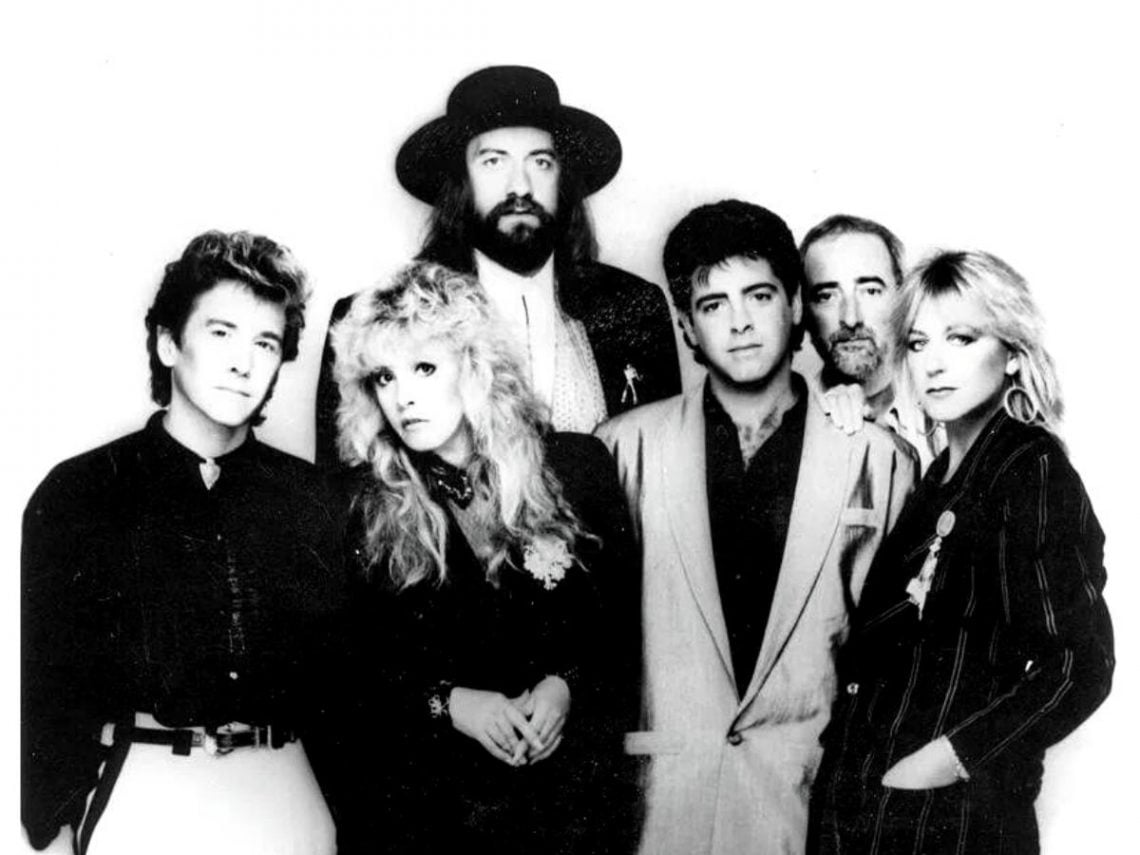
What was Fleetwood Mac’s only number-one hit in the US?

The world of rock ‘n’ roll has given us many storied outfits that come with extensive mythos as famed as their music. Whether it be The Beatles, The Rolling Stones, Nirvana or even The Libertines, the instances of artists being as well-known for other factors than the music are numerous. Whilst there are many notable cases, very few can claim to be as significant and fascinating as rock’s resident warring dynasty, Fleetwood Mac.
The band is an interesting case in the sense that they have experienced metamorphosis many times. They were formed in London in 1967 by frontman Peter Green, guitarist Jeremy Spencer, and drummer Mick Fleetwood before bassist John McVie joined not long after. The band crafted a form of heady blues rock, and in 1968, the prodigal young guitarist Danny Kirwan entered the fold, a factor which gave the band another dynamic string to their bow.
Soon after, Fleetwood Mac experienced a meteoric rise and released a host of classic cuts, including the UK number one ‘Albatross’, ‘Oh Well’, ‘Man of the World’ and the countercultural masterwork, ‘The Green Manalishi’. As it was the age of unfettered excess in music, running concurrently with their commercial and critical success was the hedonism of some band members, in particular Green, Kirwan and Spencer. Their partying was so unrelenting that by 1973 all had left the band, with the latter eventually departing during the middle of a tour in order to join a cult.
In 1970, McVie’s wife, Christine, joined on keyboards and as a vocalist, a factor which helped them to expand their sound and produce classics such as Future Games and Bare Trees, despite various members falling off the horse. Christine’s inclusion helped save the band from existential destruction in the face of such significant lineup changes. By 1974, when the likes of newer members Bob Welch, Bob Weston and Dave Walker had all quit, Fleetwood and the McVie were forced back to the drawing board yet again.
However, a chance meeting between Fleetwood and the folk duo Stevie Nicks and Lindsey Buckingham at a Los Angeles studio gave the band what they had been looking for all along, marketable star quality. The introduction of the pair saw the band embark on their most successful chapter with the release of 1975’s Fleetwood Mac, 1977’s Rumours and 1979’s Tusk.
Despite all the well-known turmoil engulfing the band at the time of recording, Rumours is almost universally hailed as the band’s masterpiece, with practically every song revered in the timeless sense.
‘Go Your Own Way’, ‘Songbird’ and ‘The Chain’ are three prominent highlights, but ‘Dreams’ is arguably the best track. A thrilling, lovelorn piece, the song is noted for Nicks writing it in Sly Stone’s bed as she was coming to terms with her and Buckingham’s break-up after eight years, with it boasting the iconic line: “Thunder only happens when it’s raining / Players only love you when they’re playing”.
The song has a universal appeal as we’ve all known heartbreak to one extent or another, and this, combined with the dream-like quality of the music, made ‘Dreams’ a tremendous success. This was to such a great extent that it became significant to the group in more than a personal way. In the US, it sold more than one million copies as a single and reached the top spot on the Billboard Hot 100, making it their only number one in the states to date.
