


The five times musicians have lampooned other artists: “Just to piss him off”

Musicians always will be funny characters. Often proud individuals, our favourite artists have always been much more than purely writing and recording whizzes, and most of the time, possess razor-sharp wits and a grasp of comedy that affords their story a unique substance. From The Beatles to Nirvana and Oasis, we know this to be true.
The merger of this tendency to be proud, self-confident figures with very fixed worldviews and a deeply comedic personality strand has provided many iconic moments over the years. From John Lennon saying that The Beatles were “more popular than Jesus” – a sardonic quip that ultimately led to his tragic assassination—to Wet Leg taking the mick out of Alex Turner’s 2014 acceptance speech at the 2023 Brit Awards, music and comedy are long-term bedfellows.
As the latter occasion suggests, artists are no strangers to lampooning peers. This has come in an array of formats over the years, from in the studio to on stage and in the media, and has ranged from the lighthearted to the bitter. Musicians are a strange kind, and while it is first and foremost a vehicle for expression, this hasn’t stopped them from using their work for other means, too.
While there are too many examples to name, today we’ve listed the five best times musicians have lampooned other artists. Some are iconic, and some are lesser known, but all show just how funny artists can be. Some might have even crossed the line.
Five times musicians have parodied other artists:
Nirvana doing Morrissey on Top of the Pops
Nirvana were never ones to shy away from taking the piss out of famous figures. You could say that their ironic nature bolstered their fame. In fact, after Eddie Van Halen racially abused their guitarist and punk legend Pat Smear backstage in Los Angeles one night, Cobain even mockingly and righteously imitated one of the metal guitarist’s typical solos on stage, but this was just the tip of the iceberg.
Nirvana’s most iconic moment lampooning another artist came on the BBC’s flagship programme Top of the Pops in 1991. Instead of delivering a vanilla, mimed rendition of their global hit single ‘Smells Like Teen Spirit’, they decided to poke fun at the frankly ridiculous performance format of the programme and Smiths singer Morrissey.
Although the production staff agreed to let Cobain’s vocals be performed live, reneging on tradition, this left bassist Krist Novoselic and drummer Dave Grohl to mime. In doing so, they unwillingly set themselves up for trouble. Novoselic threw his bass ironically behind his head, and Grohl hit the cymbals out of time and threw hilarious looks at the cameras. The drummer actually spent most of the time dancing.
Cobain symbolised the mockery of the show, though. Not only did he change the famous opening line from “load up on guns, bring your friends” to “load up on drugs, kill your friends”, but he also mimicked Morrissey, which was his plan all along, emulating the Mancunian’s deep voice.
In Charles R. Cross’s Kurt Cobain biography, Heavier than Heaven, the journalist confirmed Cobain’s ploy: “Kurt hatched a plan with Novoselic and Grohl to make a mockery of their performance. As the backing track played, Kurt sang the vocals in a slowed-down, almost Vegas-like lounge version; he was attempting, he later claimed, to sound like Morrissey.”
Mr. Bungle going too far
You’re either a fan of Red Hot Chili Peppers or Faith No More; in a musical divide akin to the one between Tottenham and Arsenal in North London. Emerging from California, both bands were at the forefront of the funk metal developments in the 1980s and have a long and complicated history. While there are actually major distinctions between their styles, at one point, some perceived similarities in the madcap, scat-like delivery and stage moves of respective frontmen Anthony Kiedis and Mike Patton.
Kiedis even claims that Patton ripped him off, but it’s contentious, and it fed into the long-running feud between the two men, which is one of the most surreal we’ve ever seen in music. In 1999, after Patton’s other famous band, Mr Bungle, were kicked off festival bills due to Kiedis, their rivalry took on a more severe dimension.
Mr Bungle hit back brutally. When they played a Halloween show in Pontiac, Michigan, they dressed up as the Red Hot Chili Peppers and performed a mangled medley of covers of their songs. Going one step further, they also referenced the band’s history with heroin addiction and pretended to shoot up onstage.
That wasn’t all. Patton impersonated Kiedis by wearing a blonde wig and speaking to the crowd with a lisp. Mocking his rival, he told the crowd at one point: “Don’t you call me Mike, my name is Anthony. How dare you make that mistake. Mike has been ripping me off for many years”.
Arguably, Bungle went too far with this parody. Reportedly, they acted as the ghost of ex-Red Hot Chili Peppers guitarist Hillel Slovak, who died of a heroin overdose at age 26 in 1988. There were also rumours about an alleged comment about the late actor River Phoenix, a friend of the Chili Peppers, who overdosed outside Johnny Depp’s club, the Viper Room, in 1993. That’s certainly one way of going about trashing your rivals.
Jethro Tull’s classic album Thick as a Brick
You might be surprised to see progressive rock legends Jethro Tull on this list, but they’re no stranger to lampooning. Their 1972 masterpiece, Thick as Brick, which has long been hailed as a highlight of the concept album genre, was so subtle and effective that its true message went under the radar.
According to frontman Ian Anderson, while the record is undoubtedly progressive, the music, themes, and packaging were intended as parodies. Of course, his band had a significant hand in making music more extensive, but by 1972, he saw a big difference between progressive groups such as his own and “self-indulgent” prog outfits such as Genesis.
Taking inspiration from Monty Python’s full-bodied and surreal send-ups of society, he sought to do a similar thing to prog on Thick as Brick. He achieved this with flying colours.
Lynyrd Skynyrd’s ‘Sweet Home Alabama’
Neil Young has annoyed a few people over the years, including Southern rock legends, Lynyrd Skynyrd. The Canadian maestro is also a deeply political artist, which fed into his somewhat skewed version of Synyrd’s native Deep South in ‘Southern Man’ on After the Gold Rush.
Tackling the issue of racism in the region by making several references to its historical ties to slavery and the Ku Klux Klan, Young paints a dark picture. However, it was a sweeping generalisation of the area, which pissed off Skynyrd frontman Ronnie Van Zant and many others from the area who weren’t like the stereotype. Due to the backlash, Young tried to defend himself, saying the song was more about the Civil Rights movement than the South itself.
He didn’t help himself, and two years later, Young took another shot at the South when he returned to the same divisive subjects in ‘Alabama’. Like many, Skynyrd were outraged, and Van Zant later told Rolling Stone: “We thought Neil was shooting all the ducks in order to kill one or two. We’re southern rebels, but more than that, we know the difference between right and wrong.”
Using his anger for good, Van Zant then wrote ‘Sweet Home Alabama’, his and the band’s defining anthem, as a riposte to their former hero from North of the border. They even name-checked its inspiration: “I hope Neil Young will remember, a southern man don’t need him around anyhow.”
Years later, in his 2012 autobiography, Waging Heavy Peace, Young apologised for both tracks, and said he deserved the shot Lynyrd Skynyrd sent his way. He said: “They play like they mean it, I’m proud to have my name in a song like theirs.”
Oasis covering The Rolling Stones
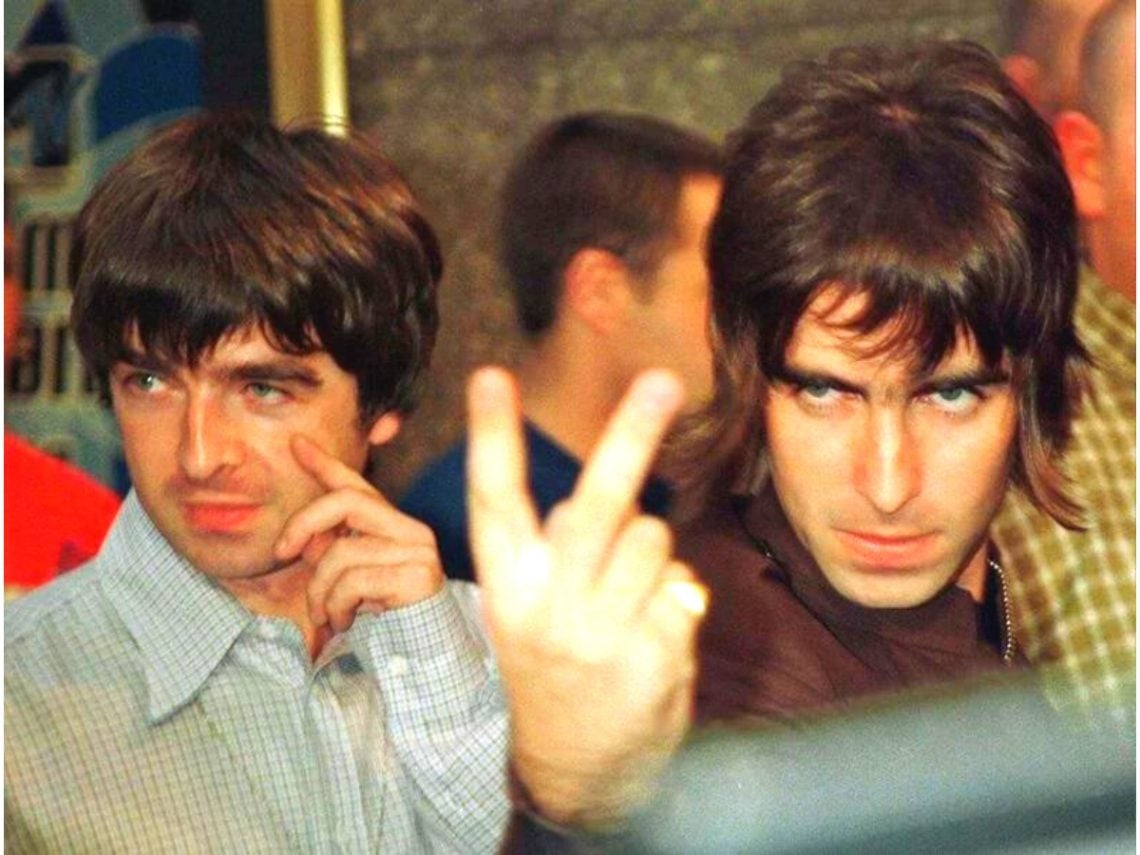
Part of Oasis‘ charm was its brash character. Their no-nonsense anthems and attitude might have earned them many fans, but they also spurned many, including their heroes, such as former Beatle Paul McCartney and Rolling Stones guitarist Keith Richards, who was deemed their spiritual progenitor.
There are several parallels between Richards and Oasis leader and axeman Noel Gallagher in that they are guitar heroes, know how to party, and are brutally outspoken. However, after Richards dismissed the ‘Live Forever’ group as “crap” in a documentary, Oasis stormed onto Radio 1 to make their grievances known, which saw Noel’s brother Liam challenging the older statesmen to a scrap.
Noel has always been more measured than his younger brother and let his anger about Richards and his band stew. Instead of challenging the haggard rocker in person, he decided to cover The Rolling Stones’ ‘Street Fighting Man’ as one of the B-sides of 1998’s ‘All Around the World’.
Later, Noel supposed it was probably recorded to hit back at Richards: “I think at the time Keith Richards was having a go at us in the papers, so we thought we’d like to record one of his songs just to piss him off. He’s going on how bad Oasis are, but when he gets the cheque for about $50,000 from royalties…”
