


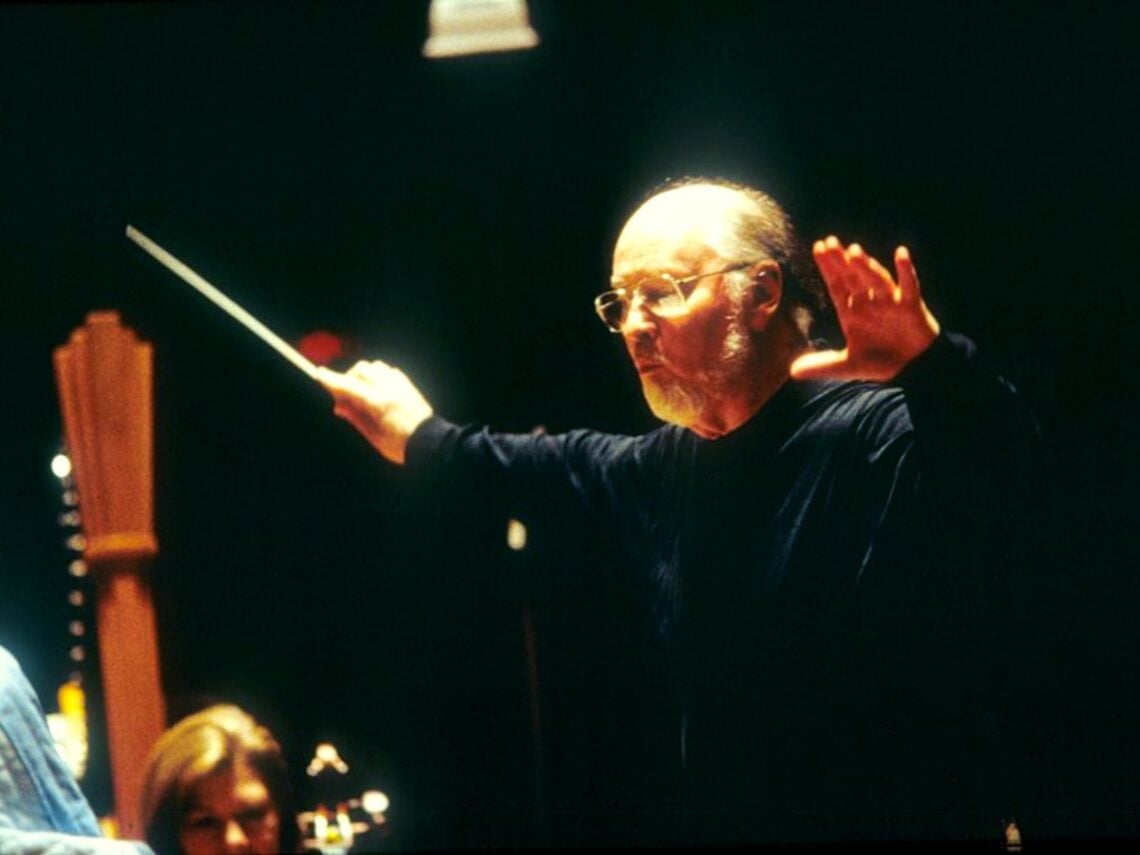
Five times John Williams proved his genius

Standing proud as one of the most influential composers in the rich history of cinema, John Williams has proven his genius on countless occasions by creating some of the most mesmerising and culturally vital pieces of music to accompany many of the film medium’s most significant works.
With an ability to evoke emotion from an audience, transport them to worlds beyond their reckoning, drill home the important facets of a story and capture the thematic essence of a film, Williams is simply a master of sound in a cinematic setting.
Having displayed a remarkable versatility and capability in writing for a wide range of genres and tones, from sprawling adventures and fantasies to quiet and patient dramas, he’s helped to solidify many films’ iconic statuses with themes and compositions that are instantly recognisable.
Composers can only dream of having even a small slice of the career Williams has had, so far-reaching is his impact and brilliance. We’ve compiled a selection of moments through which Williams proved his genius and cemented himself as one of cinema’s all-time greats.
Five-time John Williams proved his genius:
Jurassic Park
Even people who haven’t seen Steven Spielberg’s iconic 1993 science fiction adventure thriller Jurassic Park seem to know William’s stellar score. Tasked with giving the film an air of wonder and amazement, it was a challenge that he undoubtedly accomplished.
The legendary theme for Jurassic Park is easily among Williams’s most memorable moments as a composer. As the camera pans across the park to capture the lanky brontosauri, Williams captures the mesmerisation of Sam Neill and Laura Dern with his strings, while his later tense and thrilling pieces are equally as brilliant.
Memoirs of a Geisha
Rob Marshall’s epic 2005 film Memoirs of a Geisha, starring Zhang Ziyi, Michelle Yeoh and Ken Wanatabe, might not be the first score you think of when it comes to Williams, but the truth is that it proves his sheer versatility as a composer and lent the film an airy sense of mystery.
Trading his trademark Western melodies and composition for a more Japanese-inspired soundscape, Williams shifts between subtle and reflective motifs for Ziyi’s geisha character and the tenser adrenaline-pumping themes to showcase the more tragic moments of her life.
Star Wars
One just can’t talk about John Williams without referring to at least one Star Wars movie, and it’s hard to look beyond the science fiction epic that set the entire franchise into action. While there are brilliant moments in the oft-derided The Phantom Menace and the excellent The Empire Strikes Back, Williams’ work on the 1977 original is easily some of his best.
The opening theme is one of sheer genius, and that eternally echoing brass shout will forever be part of the very fabric that makes up the iconic science fiction film series. That alone ought to prove Williams’s quality but throw into the fact that Star War continues to pulse and soothe on a sonic level throughout its runtime, and Williams’s effort is one of sheer magnificence.
Jaws
Williams would be on hand to assist his dear friend and lifetime collaborator Steven Spielberg time and time again throughout his career, and he was there right when Spielberg became a household name with 1975’s Jaws, giving the aquatic thriller the kind of fear-inducing sound it deserved.
What makes Jaws so special is the fear of what lurks beneath, out of sight and out of reach, and Williams ensured that his score filled out the space when nothing much is happening, but dread is just around the corner. His two-note bass theme has become synonymous with sharks, the dangers of the sea and the very emotion of fear itself.
Superman
It would be easy to fill out this list with pure Spielberg, seeing as pretty much all of Williams’ efforts with the director are of the highest quality. However, Williams’ genius has been on offer to countless directors over the years and in 1978, he proved the score for Richard Donner’s Superman: The Movie with Christopher Reeve in the lead role.
As Reeve makes his entrance as the first significant superhero, Williams delivers the perfect horn intro before leading into a four-note brass section that would be tied to Superman for all his Kryptonite-fearing days. Leaning into military themes, Williams made it abundantly clear that Superman really was here to save the Earth from its many antagonists.
