


Five showstopping rock opera movies to see before you die

On the surface, rock and opera are two diametrically opposed forms of music that wouldn’t appear to have anything in common other than the fact they each play to packed houses comprised of completely different crowds.
That said, smash the two together to combine music, storytelling, and conceptual ideas realised as a cohesive audio experience, and they get along perfectly. For one final flourish, add a dash of cinema into the recipe to layer visuals on top of what’s always capable of being a particularly tasty treat.
The rock opera is a difficult kind of movie to master, and history is littered with failed examples that have tried too hard to give everyone the best of every world and ended up satisfying none of them. On the other hand, when it works, it can work beautifully, as the following five examples can attest.
They may not be everybody’s idea of what constitutes the best rock operas to ever reach the silver screen, but if anyone needs to see five of them before they die and they want everything the subgenre can possibly give them, then it makes for the perfect quintet to scratch every itch.
Five rock opera movies everyone needs to see:
Repo! The Genetic Opera (Darren Lynn Bousman, 2008)
It may not be one of the greatest rock operas ever committed to film, but the reason why anyone with even the slightest interest in the genre needs to see it is an exceedingly simple one; because it’s completely and utterly batshit insane.
After all, where else can anyone see a combination of musical, horror and Gothicism directed by the filmmaker behind four of the Saw flicks with a cast featuring Spy Kids‘ Alexa Vega, Buffy the Vampire Slayer‘s Anthony Stewart Head, Goodfellas veteran Paul Sorvino, Joan Jett, and Paris Hilton? The answer, friends, is nowhere.
Repo! The Genetic Opera is a phantasmagorical fever dream come to life, unfolding in a dystopian future where organs are treated like currency, performed by a preposterous array of unexpected performers, with several surprisingly catchy tracks thrown into the mix. It might not be a classic, but it’s definitely one of a kind.
Tommy (Ken Russell, 1975)
A psychedelic concoction of musical, fantasy, surrealism, and top-of-the-line rock orchestrated by The Who and Ken Russell sounds like a match made in heaven, and for those willing to get on the same wavelength as Tommy, it most certainly is.
Roger Daltry’s title character goes catatonically deaf, dumb, and blind after watching his stepfather murder his dad following an argument over his old dear, leading to the development of a messiah complex as Tommy becomes a cultural sensation and a pinball wizard.
It’s not only the tracks from The Who that make it worth a watch, but contributions from fellow musical heavyweights like Elton John and Tina Turner, not to mention a supporting cast that drafts in legendary hell-raiser Oliver Reed, the inimitable Jack Nicholson and the stupendously sultry Ann-Margret.
The Phantom of the Paradise (Brian De Palma, 1974)
It’s Brian De Palma at his most unhinged, putting his own stylized spin on not only The Phantom of the Opera but also Faustian legend and Oscar Wilde’s The Picture of Dorian Gray. Really, what’s not to love?
Even without the imagery, the soundtrack album is well worth a listen on its lonesome, even if it doesn’t quite hit the same when it doesn’t dovetail with the story of a famed composer who makes a bargain to sell his soul so the woman he’s madly in love with is granted the gift of singing his songs.
It’s distinctively De Palma-esque but also completely unlike anything else he ever made. Unpredictable, deranged, delightful, and enrapturing all at once, The Phantom of the Paradise didn’t deserve to bomb at the box office, even if its reputation has only grown stronger over time.
Pink Floyd – The Wall (Alan Parker, 1982)
Alan Parker? Good. Pink Floyd? Good. Surrealism with a heavy hint of existentialism? Under the correct circumstances? Good. Bob Geldof? Well, that’s another conversation for another time, but don’t let his polarising presence detract from The Wall.
The semi-autobiographical descent into drug-addled madness follows Geldof’s Pink as he reflects on his childhood through a string of flashbacks, hallucinatory asides, and overt symbolism, relying more on its visual language and the music of Pink Floyd’s titular album than such unnecessary trivialities as dialogue and exposition.
A concept album deserved a concept film, and while there can often be an air of portentousness about it, The Wall subverts any expectations by taking viewers on a mind-bending odyssey that plunges them into the exact same mindset as Pink. In addition to the eye-popping aesthetic, there’s plenty of thematic meat to chew on, too.
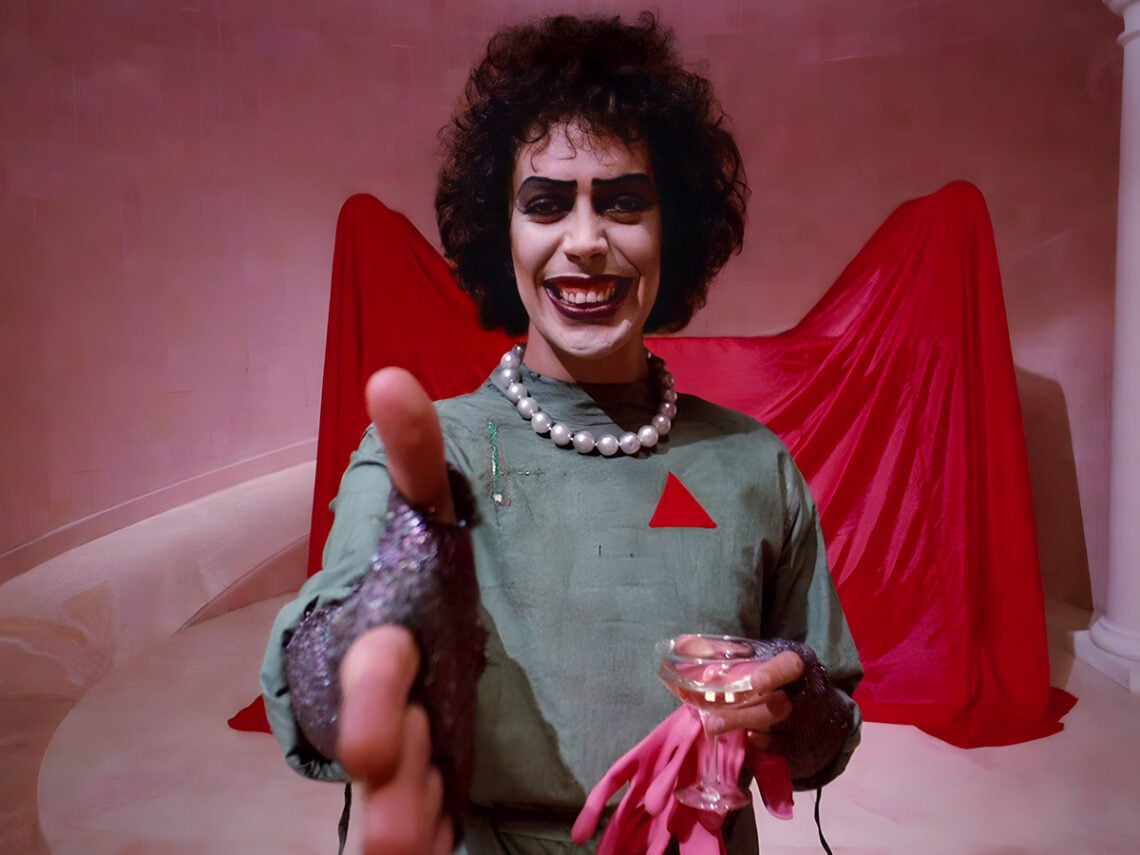
The Rocky Horror Picture Show (Jim Sharman, 1975)
There are cult classic movies, and then there’s The Rocky Horror Picture Show, which has taken on a life of its own to become a cultural touchstone that remains as popular and prevalent as it did almost 50 years ago when it first took the silver screen by storm.
A phenomenon at the time that spent decades playing in cinemas and gave rise to an entire subculture that treats Richard O’Brien’s creation as more of a religious text than a mere motion picture, the message of embracing the outlandish in a society pre-occupied with conformity remains as relevant today as it ever did.
That’s in no way to suggest with an ironclad certainty that The Rocky Horror Picture Show is the single greatest rock opera movie of all time. However, for anyone who needs a crash course in what the genre is all about and the seismic ripples it can create in the collective consciousness, there’s nowhere better to start.
