


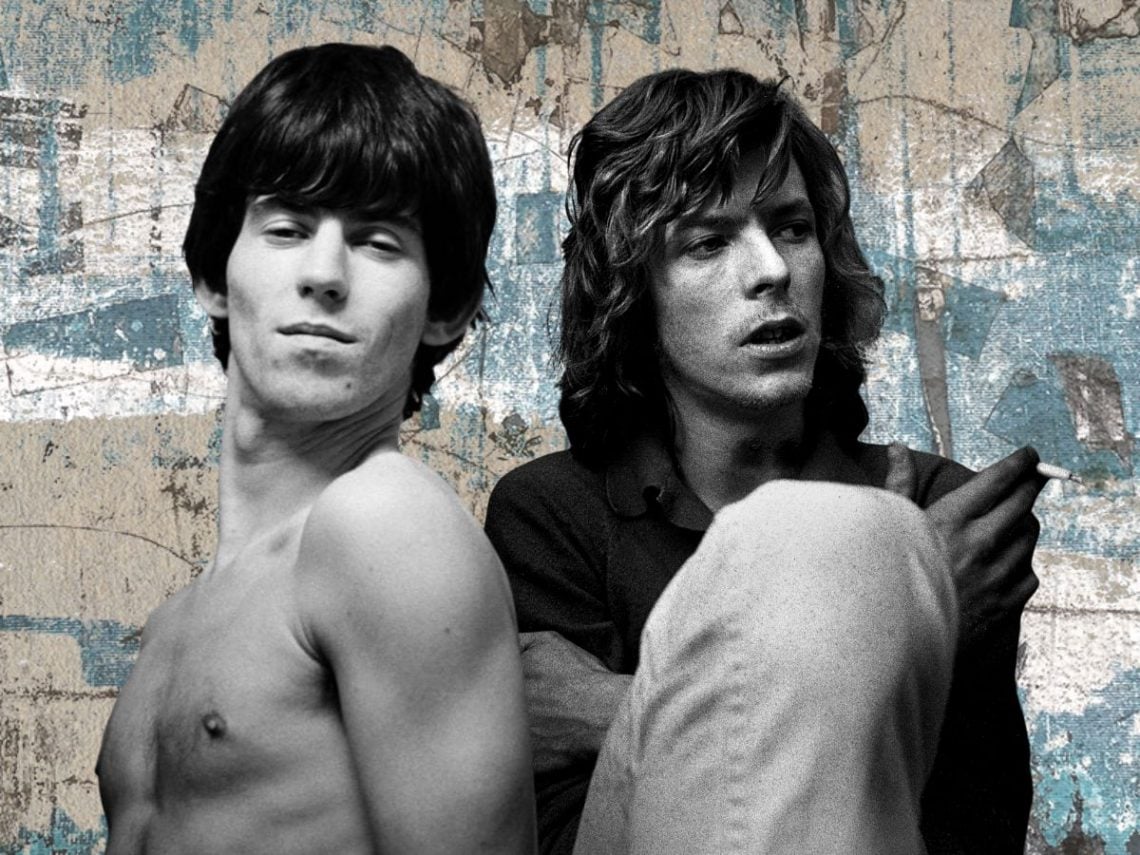
Five rockers on how jazz influenced their work

Rock music’s greatest strength has always been the listening habits of its key players. Though frequently associated with a particular set of creative parameters involving guitar solos, high-calibre vocals and tight leather trousers, this view of rock (the concoction journalists keen to define and thereby categorise one of music’s broadest genres) is very limiting indeed.
At its best, rock music has no boundaries. It is a free-flowing, spongy chimaera of a thing. Hodge podge by nature, rock has plucked the pollen of everything from soul and Motown to reggae, disco, classical and jazz. There’s hardly a mode of musical expression in existence that hasn’t in some way influenced the genre, which is perhaps why it has had such an enduring legacy.
Here, some of the biggest names in rock music talk about the influence of jazz music on their work. Some of the comments below will perhaps surprise some of rock’s more puritanical listeners. In the 1960s, jazz musicians were the very antithesis of everything rock stood for.
Either they were too soft (Louis Armstrong, Frank Sinatra) or too high-brow (Miles Davis, John Coltrane). In contrast, rock was accessible, youthful and rebellious. Of course, as we all know, opposites are bound to attract.
Keith Richards
The strange idea that jazz and rock occupy opposite ends of the spectrum endures to this day. Of course, the best musicians tend to avoid such neat categorisations. For The Rolling Stones’ Keith Richards, for example, jazz was an expansive, exploratory genre worthy of investigation.
Discussing the impact of jazz on his own musical philosophy, the guitarist – who grew up on the sound of Ella Fitzgerald, Nat King Cole and Wes Montgomery – said: “Jazz is something you grow up with, and you realise that there’s a strength in it. I mean, jazz is the best thing America did to the world! When I listen to Charlie Christian, I don’t think, ‘I’m listening to jazz.’ It goes beyond that; to me it’s all just music…Rock ‘n’ roll is a part of jazz, and it’s just a very limited form of it. But sometimes the limitations are the most interesting things.”
David Bowie
David Bowie seems to have shared Richards’ view of jazz and rock as sharing some unspoken relationship. Bowie, an erstwhile saxophonist, was introduced to the Stravinskian jazz of Miles Davis and John Coltrane by his brother Paul: “Jazz was a music that seriously paralleled rock music for me when I was young, between 8 and 12,” he once recalled. “I don’t know why, but I really felt at home with modern jazz. I don’t know whether it was the clothes, but the Modern Jazz Quartet had a huge appeal to me. And because I liked what it looked like, I wanted to understand how it worked.”
Bowie continued: “I think I often approach things like that; my eyes are very sensitive to what they receive and that can often help me make a first assessment. So I liked rock because of the way it looked and I liked jazz because of the way it looked, and from that I was able to sort of get into it. I feel jazz may have set me off on this idea that ‘planned accidents’ are truly wonderful experiences in music.”
Lou Reed
For Lou Reed, the brilliance of jazz lay in its attitude. “Hearing Ornette Coleman [at Manhattan’s Five Spot in 1959] gave me license to kill,” he said. “To tell you the truth, I don’t think I heard the show from in the club. I didn’t have enough money, so I heard it from outside. Having said that, Ornette’s free jazz made me think: ‘What a great thing to do on electric guitar!’ I thought a distorted electric guitar sounded like a sax or a sax section.”
The group’s free-form jazz may even have inspired post-Velvet Underground albums like Metal Machine Music: “There’s something to be said for a free-form thing, where you just follow the feedback,” he continued. “I have a good sense of pitch, and I wasn’t playing the guitar as a normal instrument, but as a feedback instrument. I thought, with a good sense of pitch, there were wonderful things you could do with it. And if you could be loose with it, you could generate a lot of stuff.”
Lars Ulrich
It’s a testament to jazz music that even metalheads like Metallica’s Lars Ulrich have a certain reverence for the genre. “My dad owned a jazz club in Copenhagen in the ’50s and would review jazz for a lot of newspapers. So I grew up in a very musical environment,” he once recalled. “He was always playing records by Miles Davis, Ornette Coleman, John Coltrane and Charlie Parker, and then he started getting into the Doors and Jimi Hendrix. He was very open-minded.”
Ulrich was hesitant to embrace the genre at first, admitting that he was always more enthusiastic about Deep purple’s ‘Ian Paice than Max Roach or Elvin Jones: “My dad would play a lot of jazz for me, which I could respect, and he’d pound these ideas into me, like ‘playing sideways.’ And he’d always say, ‘Don’t be too square in your drumming.’ Because in rock and metal, everything is always in 4/4. And he’d challenge me, when I was learning, to break things up into weird time signatures. And that happened later on with [Metallica] albums like Master of Puppets.
Derek Trucks
For Derek Trucks of The Allman Brothers, jazz was a reminder of why he’d got into music in the first place. “For me, the key is looking back to when it was pure and when it was done for the love of music,” he began. “If you’re serious about music, you have to search back to when it was really honest, whether it’s Delta-blues by Bukka White and Son House, or jazz. You have to go the source. Coltrane was listening to a lot of Indian music at the end; Charlie Christian was trying to play like a horn player. So I try to dig into that.
“There’s something about that whole era of music,” he concluded, “most of the musicians then had such sincerity. When you have people like Barney and Tal Farlow, great things happen. That’s the problem now; there’s not a community of musicians bouncing off each other, like there was back then.”
