


Punk vs The World: Five comical music feuds from the rise of punk

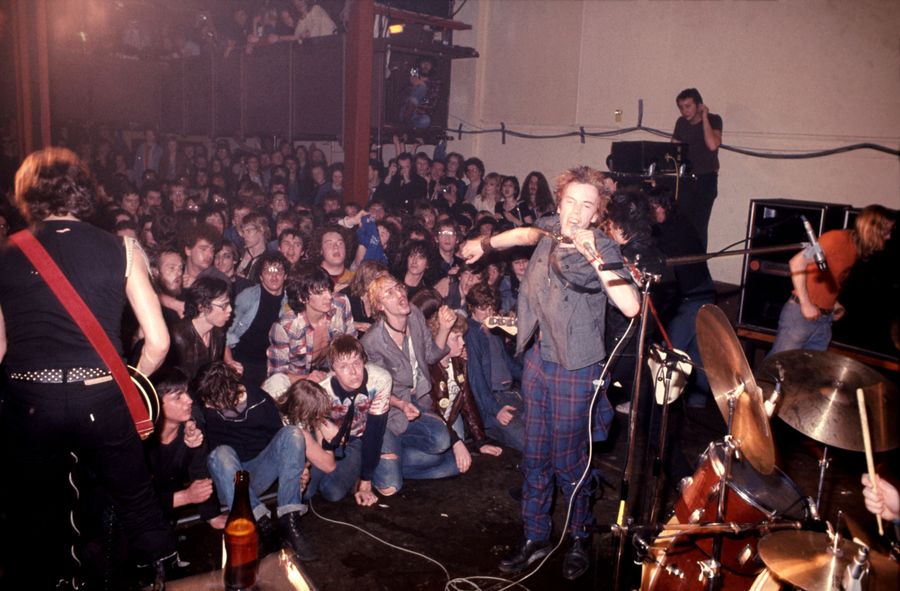
In February 1976, an unknown band named the Sex Pistols took to the stage in Manchester. A French bloke in attendance at the gig yelled out, “You can’t play!” Steve Jones vindictively snarled in response, “So what!” And so it began. Punk might have been born in America, but it wasn’t christened there. As the ever-upbeat Jonathan Richman said of himself and his pals in The Ramones, we just thought we were rock bands. And they weren’t all that fond of the new label to boot.
In the UK, however, ‘punk’ was a badge of honour for the scallies who set about smashing up banality and wreaking the sort of disorder that is usually limited to the top shelf of a dwarf’s fridge. They took the frenzied and revitalised new form of rock ‘n’ roll formed in the societal rubble of a dystopian New York and brandished it as an anarchic weapon. Nobody was safe from these deranged-looking lunatics in bondage pants, least of all themselves.
As Joey Ramone would later judge, this wasn’t what punk was, but it was an interesting sidenote. “For me,” Joey decreed, “punk is about real feelings. It’s not about, ‘Yeah, I am a punk and I’m angry.’ That’s a lot of crap. It’s about loving the things that really matter: passion, heart and soul.” Lovely words Mr Ramone but try telling that the angry bastards propagating it at its peak. There have been arguments that the legacy of punk has been over-intellectualised, and when you consider these tales of beer bottle-smashing hoodlums, then perhaps there is a lot to be said for that.
However, by the same token, you can’t escape its impact. The Dadaists of the 1920s might have dismissed the scholarly deduction that their work reflected the madness of war as an act of philosophising silliness into something more academic than it ever was. But in the broadest sense, the scholars were right, you simply can’t escape the world around you. And punk was the snarling response to stilted, uppity music and a crumbling capitalist society.
Below we have chartered some of the most comical feuds that followed this uprising. From the prog vs punk wars to feminists feuding with a band who couldn’t do right for doing wrong. These are the many quarrels that arose when the so-called underqualified kids took to the stage.
Five comical music feuds from the rise of punk:
The Sex Pistols vs Pink Floyd
Prog seemed at odds with the dilapidation that came at the end of the ‘70s. What use was a seven-minute viola solo by a private school virtuoso encapsulating a recent ayahuasca epiphany to a teen whose only wonder in the world was whether they’d be lucky enough to find a rouge sausage in their tin of beans for tea? So, many of the disavowed this elitism and said genuine expression was more important that fanciful talent—and they went to war with prog.
As the legend goes, John Lydon was recruited by the Sex Pistols when he was spotted sporting a ragged t-shirt with the words, ‘I Hate Pink Floyd’ scribbled across. Thus, it is perhaps no surprise that a feud between the pair blossomed once Lydon quickly began clutching all the available column inches not long later. Roger Waters wasn’t all that fond of his band’s snarling, sneering ways. “The Sex Pistols were just trying to make noise,” he told Rolling Stone. “It was so clearly contrived. You know, they were managed by a bloke who ran a shop selling silly clothes!”
He then rather callously confined their legacy to the immortalising impact of a youthful death. “And then one of them died, so you got that iconic thing that lives on. If somebody dies, that’s always good. Except for him, obviously, and his mom and dad, and [his girlfriend] Nancy; but for everybody else, it’s brilliant,” he stated.
While there are those who say that swipe underplays the impact of punk, his former bandmate David Gilmour more measuredly asserted: “I don’t think we felt alienated by punk, we just didn’t feel it was particularly relevant to us. We weren’t frightened by it.” Adding: “A lot of good things came out of punk, but there were an awful lot of people leaping on it as a bandwagon, who leapt off when they’d got to the top.” The punk, however, argued that the top was all it took to make prog look like pompous silliness itself. As John Cooper Clarke said of The Ramones: “They understood that it was better to have clever lyrics about moronic subjects than the other way round.”

The Stranglers vs Feminists
When The Stranglers played Battersea Park in September 1978, they found themselves castigated as “male chauvinists” for their raunchy lyrics in tracks like ‘Nice ‘N’ Sleazy’ and ‘Peaches’ which, in truth, were more like satirical lampoons of suppressed eroticism. However, Jean-Jacques Burnel said that “the press and the Pistols and Clash” were trying to denigrate them to drum up the promotion of a rivalry. Sadly, this might have been the source of good PR for fellow punks, but it was disastrous for The Stranglers on the end of the skewer.
“When we became the focus of attention, right-on shops such as Rough Trade banned our records, saying they were sexist and misogynist,” Burnel told the Guardian. At the time, Burnel’s girlfriend, Tracey, shared a flat with a stripper named Linda. “She knew us and she thought it was outrageous that we were being accused of sexism,” Burnel said. Thus, a plan was formed to try and remedy their image on this front. They ended up hoisted by their own proverbial petard in such a way that far surpasses the dastardly Matt Hancock having to eat a camel’s spam javelin in a jungle to repent his sins.
“The Battersea Park incident was completely misinterpreted,” he caveats before continuing. “So Linda said: ‘Look, I’ve got some friends who’d love to strip for you – to show we’re in control of our bodies.’ So these girls stripped off on stage at Battersea during ‘Nice ‘N’ Sleazy’ and, of course, everyone thought we were being exploitative.” Male strippers joined them in a bonfire of vanities and even a few fellows down the front row started getting their kit off. The police would’ve been moved to intervene, but something was stopping them. As Jet Black comments: “The police inspector wanted everybody arrested, but he couldn’t find his coppers. They were all in the front row watching the show.”

The Ramones vs The Sex Pistols
Punk bands rarely got on swimmingly. As Joey Ramone, the human Afghan Hound, once recalled on Conan: “When we first met [The Sex Pistols], it was our first tour over there [the UK] and yeah they wanted to come on like they wanted to start something.” Apparently, it would seem that the Ramones were able to diffuse the brattish behaviour of the Pistols and eventually they were seemingly able to shake hands.
However, the Ramones were not going to forget the incident in a hurry, and they had a few tricks up their leather sleeves when they next returned. As Joey Ramone explained with a beaming smile: “We came back in ’77 and we did a tour and Johnny Rotten wanted to come backstage, and a little prank that we pulled on Johnny is that we all kind of pissed in the beer and then Johnny Ramone gave it to Johnny Rotten as our little way of saying hello, our little greeting,” he said, adding: “Although that British beer is pretty bad, he probably didn’t know the difference.”

Paul Weller vs Sid Vicious
When The Jam arrived with their emphatic debut single ‘In The City’ in 1977, they created quite a stir. “I wrote this after I’d seen the Pistols and The Clash, and I was obviously into my Who phrase. I just wanted to capture some of that excitement,” Weller once said. But the admiration didn’t last too long.
Weller did such a good job of capturing that excitement that just a matter of weeks after ‘In The City’ was released, the Sex Pistols replicated the bassline on their track ‘Holidays In The Sun’. Weller wasn’t happy about this, and when he found Vicious he set about some vindication. “Another nick was ‘Holidays In The Sun’,” Glenn Matlock once recalled regarding his Pistols replacement’s sorry encounter.
Continuing: “That song was a complete re-write of The Jam’s ‘In The City’. Apparently, Sid Vicious approached Paul Weller at the Speakeasy Club one night, shortly after its release, and was taking the piss about having nicked one of his songs. Paul wasn’t too happy about it and ended up landing one on Sid, who finished the evening in the casualty department of the local hospital.” Little did Vicious know, Weller was the son of a champion boxer and his old man had taught him a few things over the years in the gym.

Joey Ramone vs Johnny Ramone
The life of Joey doesn’t just mirror the punk rock paradigm that the Ramones proved to be — they are one and the same. Rarely has the life of any artist been so indelibly entwined with their creative output. He imparted a leather-clad sonic overload so paradoxically singular and orchestral it was as though Genghis Khan’s marauding empire of horns, hooves and death chants had been channelled from the ether of history into one weird-looking mutant lovechild of a dentist with shares in a leather emporium and Pepé King Prawn from The Muppets.
This containment of multitudes defined the band, its existence, the lives of its members and the feuds therein. Joey was, by all accounts, a kind-hearted, soppy, liberal romantic. Johnny was the nuclear reverse. He stole Joey’s girlfriend, and the two bandmates barely spoke to each other in the 22 years that they spent occupying the same 10 square feet that a band coinhabit. I mean, stealing your buddy’s girlfriends… is there anything more conservative than planting a flag on the pastures of someone else’s toil and claiming it for your own?
That is near enough what Joey spat at Johnny on the track that they played together ‘The KKK Took My Baby Away’. Johnny happily played along obliviously. He eventually married Joey’s sweetheart Linda Danielle and the feud was solidified. Thereafter, his drinking and cocaine consumption surpassed the roof he had already broken through and journeyed into the sniffing and supping stratosphere. Somehow the band managed to sustain this head-slide up until 1996. In the marauding maelstrom of their listless spleen, they stirred up a slew of contemporaries and steered punk towards something sincerely chaotic and meaningfully manic.


Never Miss A Beat
The Far Out Punk Newsletter
All the latest Punk content from the independent voice of culture.
Straight to your inbox.