



Five movies to watch if you love PJ Harvey

Since PJ Harvey released her debut album Dry in 1992, she has become one of the most important artists in British history, with her honest and evocative lyricism pairing perfectly with her wildly malleable voice, sometimes light and dainty, other times strained and relentless.
Blending raw sexuality and feminine energy with an androgyny that is often soaked in abrasiveness and messiness, Harvey’s discography is full of meditations on what it means to want and to love, and to reckon with the tumultuous waters that you must wade through in life.
Harvey’s songwriting skills are incredibly vivid, and the images she paints are so distinctive, not least because her music videos and her outfits craft a certain atmosphere of grittiness and beauty all blended into one. With such strong visual cues stemming from recurring themes like intense sexual relationships or the destruction of human civility, there are certain films that just feel as though they’d slot right into Harvey’s world.
The violence that clouds much of Harvey’s music can be found in movies like May or Raw, where sexuality comes to a head with brutality and intense feelings of longing. Meanwhile, the folk aspect of her later work can be found in the pastoral world of The Blood on Satan’s Claw, which also explores violence and sexuality through its depiction of fear and suspicion.
So, if you’re a fan of PJ Harvey, perhaps you’ll find enjoyment in one of the five films below, which perfectly encapsulate Harvey’s hypnotising world.
Five movies to watch if you love PJ Harvey:
‘May’ (Lucky McKee, 2002)

A prominent theme often found in Harvey’s work is longing, especially in her debut album Dry. The intensity of wanting another, even if they don’t appreciate you, can be felt in songs like ‘Oh My Lover’, where Harvey sings, “Oh, my lover/ Don’t you know it’s all right?/ You can love her/ And you can love me at the same time.” Meanwhile, on ‘The Letter’ from Uh Huh Her, she expresses a desperate eroticism, singing, “Can’t you see/ In my handwriting/ The curve of my G/The longing?”
Thus, May is the perfect accompaniment to these feelings of wanting to be loved and understood, to be seen by someone for all of your peculiarities and idiosyncrasies. In May, a unique horror film about the true sadness of desiring companionship but struggling to find it, the titular protagonist goes to extremes as she seeks a cure for her loneliness, taking her longing for the object of her affection a little too far. It has the rawness of much of Harvey’s more abrasive work, as well as some of the weirdness that comes with the singer’s more unhinged moments, like her erratic delivery in songs like ‘Pig Will Not’ or ‘To Bring You My Love’.
‘Crash’ (David Cronenberg, 1996)
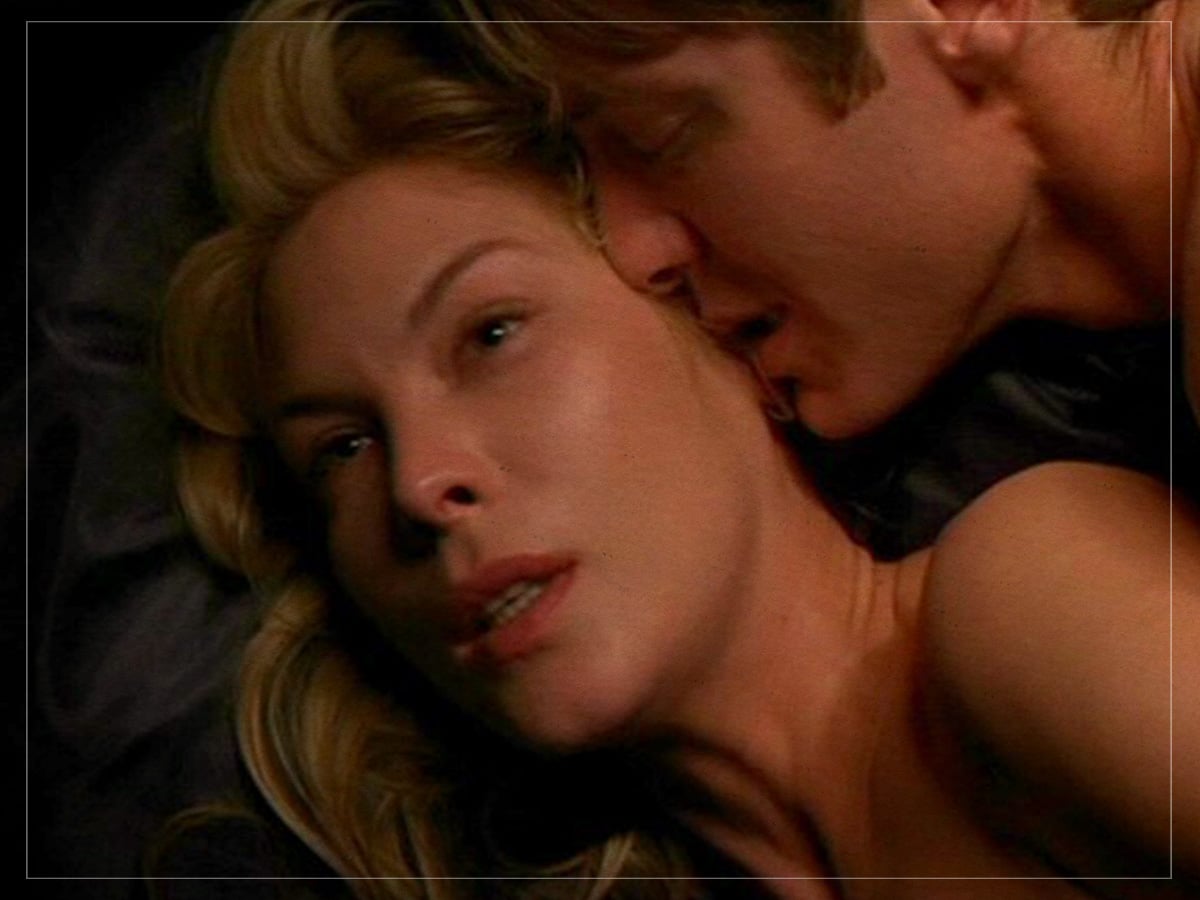
“Is this desire?” Harvey asks us. You could ask the same in regards to the behaviour executed by the characters in David Cronenberg’s Crash, an erotic thriller about the intersection between sex, desire, death, and enlightenment. The film sees the characters getting into life-threatening situations as they find themselves turned on by having sex among car crashes. The thrill of the moment, which could potentially be the end for them, only heightens their sexual response, intensifying their euphoria and fulfilling their quest for ultimate satisfaction.
Alongside the fact that Harvey has many sexy songs, like ‘Working For The Man’ and ‘Rid of Me’, Crash is perfect for those who love the singer’s darker exploration of relationships – the kinds that aren’t picture-perfect and conventional. She sings about desperation, sadomasochistic emotional relationships, and pain and pleasure intertwining. This is at the crux of Crash, and a line from ‘Long Snake Moan’ encapsulates this perfectly: “Die of pleasure.”
‘The Blood on Satan’s Claw’ (Piers Haggard, 1971)
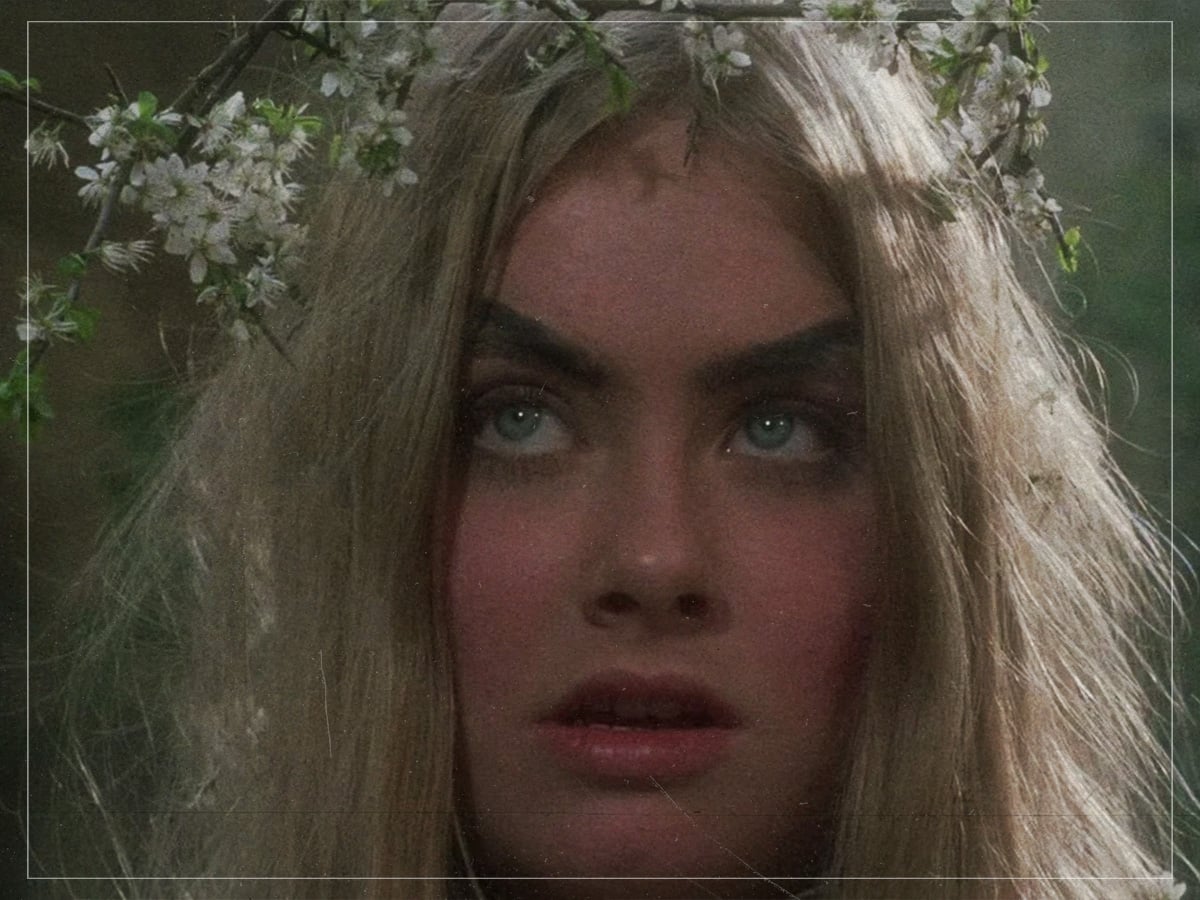
In Harvey’s later works, like Let England Shake and I Inside The Old Year Dying, she places emphasis on the natural world, specifically the landscapes of her native country, using folk instrumentation that demonstrates her endless versatility. In the former, she dissects England’s role in war across the world and the violence that has emerged from the country’s beautiful landscapes. Thus, The Blood on Satan’s Claw might be of interest to Harvey fans, with its exploration of fear and violence in the countryside, where paranoia surrounding the Devil’s influence obscures the real threat – human violence and corruption.
Director Piers Haggard once revealed (via A History of Horror with Mark Gatiss) that the main theme of the film is the “complete breakdown of values,” which is something Harvey is no stranger to exploring, continually highlighting the violence found among humanity in her work. Additionally, female sexuality plays a central role in the film, with the naked, liberated female body seen as a threat, something that Harvey has explored throughout her oeuvre.
‘Raw’ (Julia Ducournau, 2016)

If you enjoy the rawness and viscerality of albums like Rid Of Me and To Bring You My Love then you should watch Raw by Julia Ducournau. The film takes an unconventional look at female sexuality – a key theme in Harvey’s work – by using animalistic and gory imagery. When protagonist Justine starts veterinary school, she develops a taste for flesh, and her turn towards cannibalism and gore reflects her entry into the sexual world.
Ducournau explores how societal pressures and repression can affect the way women view their sexualities and impulses; here, we learn just how detrimental this can be. The intertwining of sex and violence can be found on Harvey songs like ‘Legs’, which seems to have a slight cannibalistic edge: “Did it hurt when you bled?/ Did it, oh, lover boy, oh, fever-head?/ I’ll bet you never thought I’d try/ Your mouth, my love, was open wide.”
‘Secretary’ (Steven Shainberg, 2002)
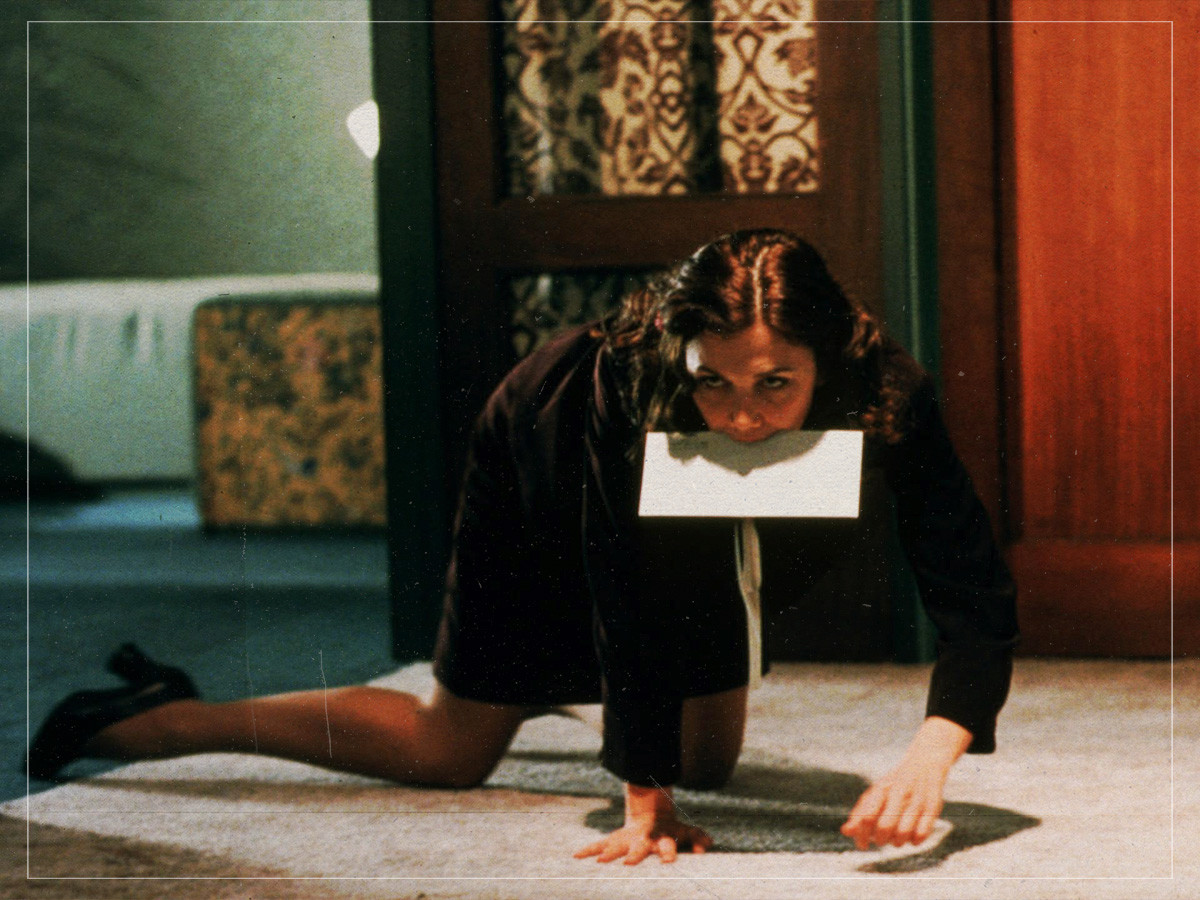
The perversity of Harvey’s work can be found in Steven Shainberg’s 2002 film Secretary, based on the story by Mary Gaitskill. We follow Lee as she begins working for a secretary named Mr Grey, which soon turns into a sadomasochistic relationship (it seems as though Fifty Shades of Grey has some explaining to do…). Yet, while Fifty Shades fails to explore the topic with any complexity, Secretary is a compelling study of a woman whose idea of love is inherently mixed with pain, and just as Harvey explores the intricacies of female sexuality in her music, the film takes a nuanced approach to such a tricky topic.
The performance of femininity, the desire to be loved, raw sensuality, and the inherent violence of the human experience can be found in both Secretary and Harvey’s work, with the film featuring much of the strange energy seen in some of Harvey’s most intense and deranged moments of passion and longing.
