


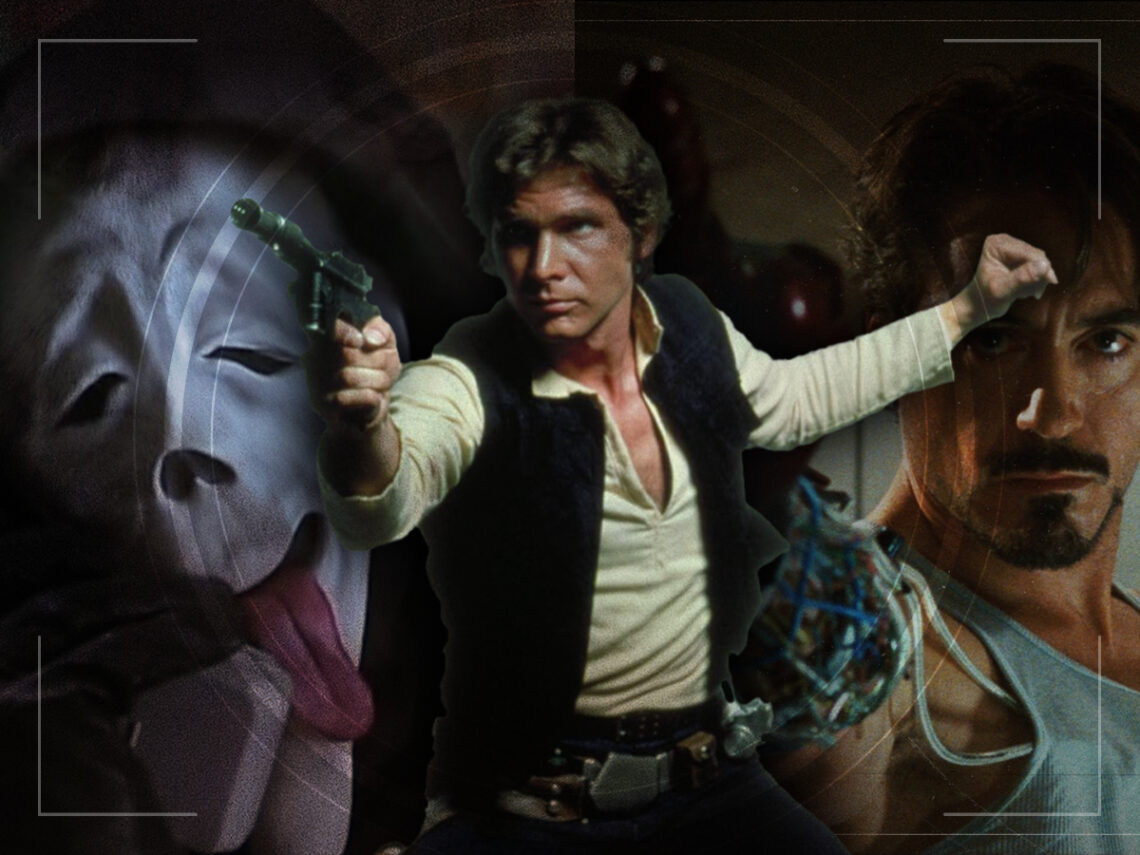
Five movies that accidentally ruined cinema forever

There are many films out there, good and bad, that have inadvertently ruined cinema.
The filmmakers behind them certainly didn’t set out to make a movie that would have potentially negative consequences on the medium, but sometimes these things happen. And happen, they have. Cinema currently looks strikingly different to how it did 50 years ago, and the films on this list might just be the reason why.
During Hollywood’s golden era, many beautifully made films emerged, complete with stunning black-and-white cinematography and astounding performances based on finely crafted character studies. As things shifted, mainstream cinema became more experimental, but the New Hollywood era proved that artistry didn’t have to be sacrificed to create a popular film.
Yet, with the dawn of blockbusters and franchises, everything changed. Now, it seems that Hollywood producers see no good in an idea unless it can be milked into a long-running series or a marketing sensation, which is just incredibly depressing.
So, from Star Wars to Jurassic Park, here are five movies that accidentally ruined cinema forever.
Five movies that accidentally ruined cinema forever:
‘Scary Movie’ (Keenen Ivory Wayans, 2000)

Now, I will defend Scary Movie to a certain degree, because, as a diehard Scream fan, I enjoy the stupid references to the original (and stoner Ghostface). Yet, I can’t ignore the fact that it opened up a gateway for terrible 2000s parody movies and comedies that really knock a few points off your IQ with every watch. Jason Friedberg and Aaron Seltzer worked as co-writers on the movie, and they soon went on to create some of the most offensively bad comedies of the coming years, including Epic Movie and Disaster Movie.
Can you imagine what the original pioneers of cinema would think if they found that their inventions were being used to depict comically large pubic bushes that need to be sheared? Scary Movie might have its unforgettable moments, but its release signalled a dark time for the American comedy genre. Gone were the days of Mel Brooks’ witty spoofs and genuinely meaningful parody movies – Scary Movie ushered in an era of ridiculous teenage humour which involved pushing the boat out in as many grotesque and offensive ways as possible.
‘The Sixth Sense’ (M Night Shyamalan, 1999)

The Oscar-winning psychological thriller film The Sixth Sense featured some great performances from the likes of Toni Colette and a young Haley Joel Osment, but M Night Shyamalan’s need to put a dramatic twist ending into the film only started a trend that has never really stopped. The filmmaker loves a big twist ending, but it’s the kind that feels specifically designed to trick audiences and earn a buzz rather than having true artistic meaning.
Ever since The Sixth Sense became a rare Oscar winner in its genre, Hollywood cottoned on to how to attract widespread audiences to these kinds of movies. A huge twist moment is all you really need to get people to come to the cinema, but as a result, countless predictable horror and thriller movies with twists you can see coming a mile off have infected the industry. We really don’t need any more.
‘Jurassic Park’ (Steven Spielberg, 1993)

You have to hand it to Steven Spielberg for creating two massive movies in 1993 – Schindler’s List and Jurassic Park. How he was able to find the mental energy to do both at the same time is certainly impressive, but perhaps he should’ve just focused on the former, because his dinosaur movie completely changed cinema for the worse. It’s a spectacle-driven film with so much emphasis on huge, murderous dinosaurs that you wonder how Spielberg was able to concurrently make Schindler’s List.
The excessive use of CGI might have been called groundbreaking at the time, but it only served to change the way many people viewed blockbusters. Before Jurassic Park, special effects were not used as extensively, but since its release, it seems as though a blockbuster isn’t complete without copious amounts of CGI, which, when used too much, only serves to remove a certain layer of humanity from a film.
‘Iron Man’ (Jon Favreau, 2008)

Jon Favreau, you have done irreversible damage to cinema, and you should pay for your crimes. I’m not inherently against a superhero movie – Tim Burton approached his with creativity and style, while Christopher Nolan delivered an incredibly well-acted trilogy – but the genre is, for some reason, most popular in the form of the Marvel Cinematic Universe. Like Star Wars, it’s a franchise that seems to have no end, and boy, does it need one.
Iron Man was the first instalment in the MCU, and it fared quite well with critics. Yet, since its release in 2008, viewers have been bombarded with a barrage of cheesy superhero flicks that clearly only exist to garner insane amounts of profit and keep audiences satisfied. They’re not remotely challenging or well-made, and you have to wonder if the actors who sign up for them see anything other than dollar signs when they write their names on the contract.
‘Star Wars’ (George Lucas, 1977)

I’m not here to slate what is, for many, probably a childhood classic. Or perhaps I am. Star Wars emerged during a pivotal moment in cinema history, with Jaws – the first proper summer blockbuster – coming just two years prior. It tapped into this newfound market for big-budget movies with widespread appeal and subsequently became a phenomenon, spawning an endless franchise that has shaped the way Hollywood approaches the sequel.
Hollywood can’t let a good film be just that – a good film. No, it has to turn into a huge franchise, with every form of merchandise imaginable, theme park rides, and an incredible amount of spin-off movies and television shows. Star Wars feels like a tremendous money-making machine, and while A New Hope might have marked a big moment for sci-fi cinema, it also cemented the end of the creatively fulfilling New Hollywood era.
