


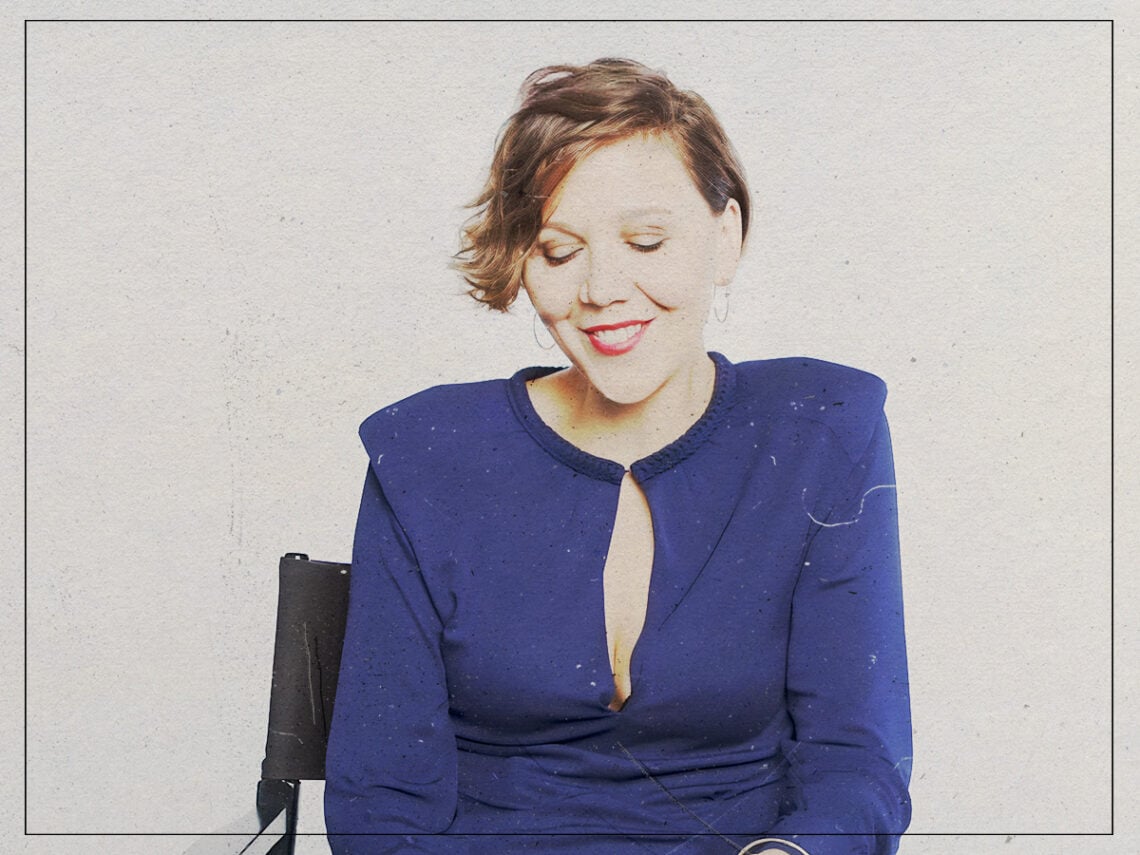
Five movies that inspired Maggie Gyllenhaal to become a director

As the daughter of two filmmakers who made her on-screen debut at the age of just 14 in her father’s 1992 drama Waterland, perhaps the most surprising aspect of Maggie Gyllenhaal moving into directing was the fact it was almost 30 years into her career before she made her feature-length debut.
When she did, Netflix’s psychological drama The Lost Daughter immediately marked her out as a formidable talent, with her first film earning three Academy Award nominations – including one for Gyllenhaal in the ‘Best Adapted Screenplay’ category, as well as a Golden Globe not for ‘Best Director’.
Given its hard-hitting narrative and thematic subject matter, the five formative movies Gyllenhaal named to A.Frame as being the ones to inspire the next evolution of her Hollywood odyssey make perfect sense based on their own complexities, heft, and resonance.
Biopic Silkwood is described by Gyllenhaal as “a movie where I can tell that Mike Nichols loves his actors, and that he takes care of them.” Expanding on how not just the film but its director was a major inspiration, she remembered that when they collaborated on a play, “he gave me one note the whole time, which was ‘she’s feral,'” calling it “such an incredible note, because it basically says any instinct you have, it’s OK with me.”
When reflecting on Jane Campion’s The Piano, Gyllenhaal remembers that “it was like I was hearing it on an unconscious level.” Pointing to her belief that men and women make art in distinctly different ways, the Oscar-winning drama was interpreted as being in a “different cinematic language than I had ever seen”. Not only that but Campion was singled out as “a real inspiration to me for most of my adult life, even before I was a director.”
Lucrecia Martel’s first film marked her as a force to be reckoned with, something Gyllenhaal experienced when she helmed her maiden feature. With that in mind, La Ciénaga instantly appealed to the actor not only because the storytelling is non-literal but also in the way Martel “expresses herself honestly, and it’s in a different language,” although she isn’t being entirely literal: “Well, it’s literally in Spanish, but it’s also in a different cinematic language.”
Having discussed Phantom Thread at great length with friend Kirsten Dunst, Gyllenhaal has no issues anointing it as her favourite of Paul Thomas Anderson’s films: “In order to follow the narrative of that movie, it’s not about the words – even though the words are excellent – it’s about something unconscious,” she said. “It’s about understanding a different kind of language between people. And also about being brave enough to acknowledge that love is not maybe what we fantasize it would be. It’s something much more complicated.”
A favourite of Akira Kurosawa, too, Where Is the Friend’s House was a crash course for Gyllenhaal prior to her own directorial debut, although she did drastically undersell its merits: “What I learned from it was that how you create something that’s narratively compelling is really not about explosions and titties. It’s really not. I mean, not for me.” That being said, it did teach her “to trust my own sense of what I think is narratively compelling,” with repetition and familiarity hardly destined to become synonymous with mundanity.
Five movies that inspired Maggie Gyllenhaal:
- Silkwood (Mike Nichols, 1983)
- The Piano (Jane Campion, 1993)
- La Ciénaga (Lucrecia Martel, 2001)
- Phantom Thread (Paul Thomas Anderson, 2007)
- Where Is the Friend’s House? (Abbas Kiarostami, 1987)
