


Five modern blockbusters that utilise the beauty of the UK

When you think of blockbusters, you rightly think of Hollywood, Los Angeles, the place where cinematic dreams come true, and wannabe actors become world-renowned superstars. Though, in recent years, more and more movie productions are making their way abroad, with a large handful of blockbusters taking the opportunity to capture the beauty of the UK, including some of the biggest films of the last decade.
Of course, the UK has always thrived in the realms of film production, with Pinewood Studios in Iver Heath, Buckinghamshire, England, playing host to hundreds of films each year. In 2022 alone, the likes of the new Star Wars series Andor, Universal’s Jurassic World: Dominion, Netflix’s Sandman and the action movie Beast starring Idris Elba, have each used the multinational film and television studio.
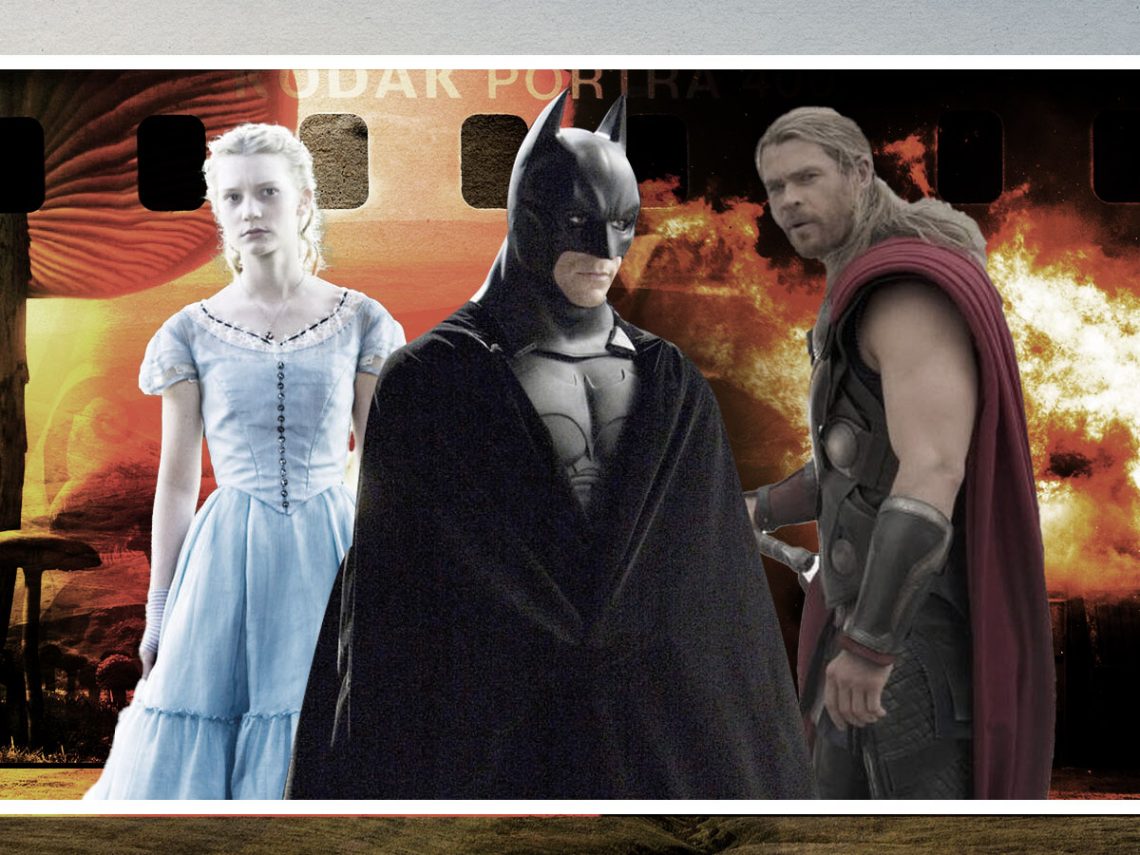
Looking back at some of recent most significant fantasy movies, helmed by filmmakers such as Tim Burton, Christopher Nolan, Justin Kurzel and more.
Five modern films that utilise the beauty of the UK:
Alice in Wonderland (2010) – Cornwall
Just across the water from Plymouth is Anthony House in Cornwall, a grand 18th-century house built between 1718 and 1724 that was used as the backdrop for Tim Burton’s remake of Alice in Wonderland. Chosen from a list of 30 prospective properties, the house fit Burton’s desired description of being a “perfect, pocket-sized mansion”. Appearing throughout the film, the house is the perfect choice for the 2010 film.
The film is a fan favourite, starring Johnny Depp, Mia Wasikowska, Helena Bonham Carter, Matt Lucas, Alan Rickman and Anne Hathaway.
Avengers: Age of Ultron (2015) – Hampshire
The release of Avengers: Age of Ultron in 2015 feels like worlds away, considering the current state of the Marvel Cinematic Universe. Whilst the movie isn’t exactly loved by fans, the film’s greatest scene is still considered to be one of the very best of the franchise. Set in the winter woods of Hampshire, the opening battle scene was made using fake snow as well as a temporary bunker.
The cast and crew transformed the area, with large tanks rolled in and special effects teams dressing the area in green screen.
The Dark Knight Rises (2012) – Brecon Beacons, Wales
No, unfortunately, the fictional city of Gotham was not captured in a bustling UK city, even if Christopher Nolan did capture much of the movie at Studios Leavesden, Hertfordshire. Even though the exterior city shots were not captured in the UK, Henrhyd Falls in the Brecon Beacons was used to make up the allure and mysticism of the Batcave in the final instalment of his superhero trilogy.
Batman’s underground HQ is surrounded by murky wet rocks and a dazzling waterfall at the entrance, no doubt Henrhyd Falls.
Macbeth (2015) – Quiraing, Isle of Skye
Whilst many of the films on this list only dabbled in stunning UK locations, Justin Kurzel’s 2015 Shakespeare adaptation of Macbeth captured much of its action in Quiraing, Isle of Skye. Starring Michael Fassbender and Marion Cotillard, the film, which received middling critical reviews, was largely shot on the dynamic landscape of the Isle of Skye, utilising its rolling hills and flat plains.
Many shots make good use of Skye, but the moment we love is when Kurzel uses the woodland overlooking the Cuillin ridge when Banquo is killed by the order of Macbeth. Kurzel recently made a strong comeback to the fold with his modern Australian crime film Nitram.
The Legend of Tarzan (2016) – Snowdonia, Wales
Even though the 2016 movie The Legend of Tarzan might be pretty forgettable, the lengths it went to create a luscious jungle landscape were pretty remarkable. The diverse landscape also called for a mining village, which is where Dinorwig Slate Quarry in Snowdonia, Wales, came in handy. With stunning views, intriguing old buildings and unique machinery, the location is perfect for the movie’s vision.
Starring Alexander Skarsgård, Christoph Waltz, Margot Robbie and Samuel L. Jackson, the film is made all the better by its remarkable use of the location.
