


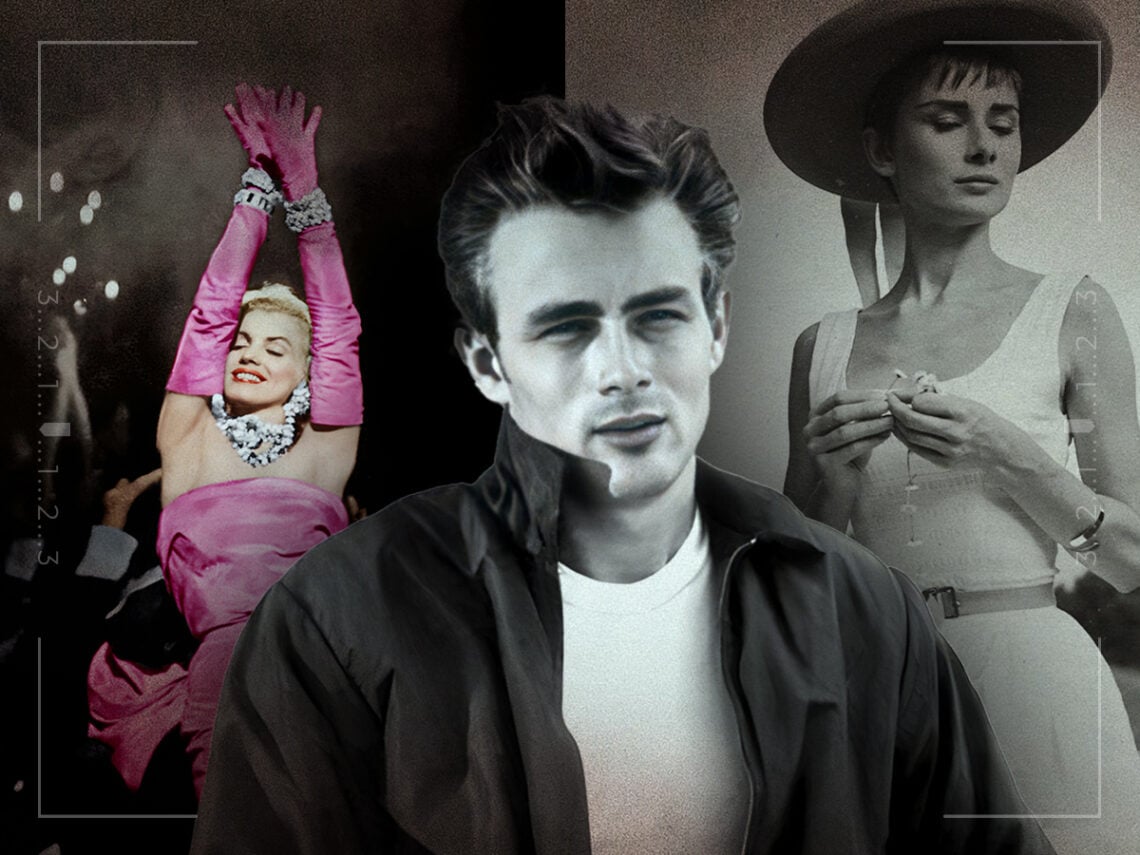
Five Hollywood icons who were brought back from the dead to sell a product

Selling out is a crucial step in an artist’s evolution, and whether it’s Kiss selling lunchboxes or Orson Welles selling board games, relinquishing all creative idealism in the name of cold, hard cash is par for the course.
In Welles’s case, at least, there was some integrity behind it: the man was desperate to make movies the way he wanted to make them, and that required a lot of no-strings-attached capital. And besides, no one can say that he didn’t earn his keep, as each and every one of those many, many ad appearances was a masterclass in overacting.
These days, celebrities are even more brazen, where it makes sense that a reality star like Kim Kardashian would be a shill for pubic hair thongs and anti-wrinkle face bandages, but what in the name of the Oscars was Matt Damon doing selling crypto, and why, for the love of God, is Brad Pitt selling luxury skincare?
All of this is pretty tasteless, but it pales in comparison to the instances when deceased celebrities have been resurrected from beyond the grave to endorse a product. Even the ones whose estates are tightly controlled by their children are not safe from the clutches of greed, tackiness, and horrendous CGI, and of the examples listed here, only one feels remotely respectful of the person whose celebrity it is trading on, and that person, ironically, had no family members to guard her legacy.
Some of these affiliations make sense, at least from a marketing standpoint, but most of them are wildly off-base, with people out there being callous enough to use James Dean’s untimely death as an opportunity to sell investment banking. One wonders how many lapses in judgment are required for a commercial featuring a long-dead Fred Astaire and a broom to make it to air, and while I can’t claim to have the answers to these questions, perhaps a little more information will lead you to your own conclusions.
Five Hollywood icons revived for adverts:
Marilyn Monroe and Chanel No 5

The least offensive of all these offences is a perfume ad featuring the one and only Marilyn Monroe, who, when asked by a reporter back in the day about what she wore to bed, said simply, “Chanel No 5, of course”. Referencing the brand’s signature perfume frequently throughout her life, she’s even been photographed in bed with a bottle of it on the table next to her in a 1953 photoshoot for Modern Screen.
So using her own words to sell the product more than five decades after her death isn’t as insensitive as it could have been. The 2014 commercial, lasting only 30 seconds, uses archival footage of the star leaving her car, waving to fans, and posing for photographers, and is backed by the audio from a 1960 interview in which she discussed her love of the scent.
When Monroe died in 1962 at the age of 36, she left no spouse or children to handle her estate, instead leaving the majority of her assets to her acting coach, Lee Strasberg. In 2011, his third wife, Anna Strasberg, sold everything to Authentic Brands Group, a firm that trades in intellectual property, so it’s not the most wholesome of estate holders, but at least it didn’t sell Monroe’s soul to a broom company.
Humphrey Bogart, Louis Armstrong, James Cagney and Diet Coke
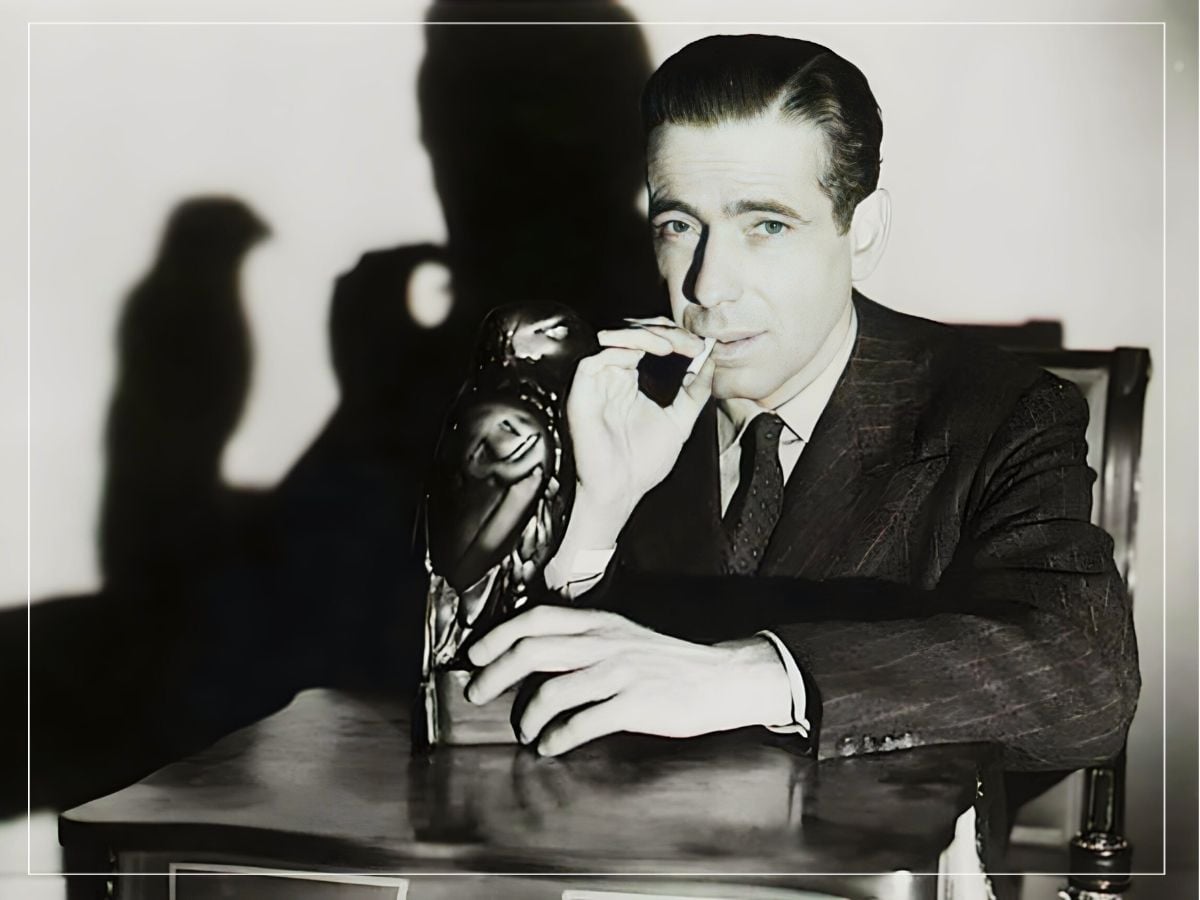
In 1957, Humphrey Bogart died of oesophageal cancer, and 34 years later, he was on TV selling Diet Coke. The ad features a living Elton John on the piano in a bar, where patrons, including the very dead Bogart, similarly dead James Cagney, and also dead Louis Armstrong, do their darnedest to make Diet Coke look appealing. Fortunately, Coca-Cola didn’t try to recreate the stars with CGI, using colourised archival footage and inserting it into their own. The films they chose were 1942’s All Through the Night for Bogart, 1954’s High Society for Armstrong, and 1931’s Public Enemy and 1939’s The Roaring Twenties for Cagney, such that the results are a bit disjointed, with Bogart looking a little lost and Cagney looking just past the woman he is supposed to be talking to.
The company can be congratulated for not trying to do too much, but with that small concession aside, the ad reeks of too much money and absolutely zero decency. To quote one of Hollywood’s greatest films, “[they] were so preoccupied with whether or not they could, they didn’t stop to think if they should”.
Coca-Cola threw its billions around, and the heirs and copyright holders caved, and while they didn’t show anyone dancing with a bottle of Diet Coke or caressing it lovingly, they also did precisely nothing to convince anyone that, had these legends of the entertainment industry been alive, they would deign to even glance at the stuff, let alone drink it or even vouch for it publicly. Elton John, on the other hand, was apparently all in.
Fred Astaire and the Dirt Devil broom

If you were trying to sell a Hoover, what would be your first instinct for a mascot? Well, if your mind did not instantly go to the iconic actor and dancer Fred Astaire, congratulations on not being a bad person, but the same cannot be said of the people behind some 1997 Dirt Devil ads, which aired during the Super Bowl and featured the dead star dancing with a broom and a Hoover.
The only saving grace about it is that the effects were actually pretty decent, especially considering that it was the ‘90s. To achieve a lifelike-ish appearance, the creators used footage of Astaire from Easter Parade and Royal Wedding, in which he danced with a mop and a coat rack, respectively.
It was the actor’s widow, Robyn Smith, who signed off on the project and defended it from the swift backlash, but Astaire’s daughter, Ava Astaire McKenzie, did not. She was so appalled by it that she wrote an open letter to Dirt Devil, revealing that she and her husband had returned the Hoover that they purchased from the company and calling the adverts paltry, unconscionable, and “the antithesis of everything my lovely, gentle father represented”. Way to suck the air out of the room.
Audrey Hepburn and Galaxy Chocolate

Audrey Hepburn was an Egot-winner, a philanthropist and activist, a fashion icon, and by all accounts, a gentle and endlessly enchanting soul, who might have enjoyed eating chocolate (who doesn’t?), probably a fan of the luxury type rather than supermarket milk chocolate. And yet, in 2013, two decades after her death, Hepburn starred in an ad for Galaxy Chocolate, or, to be more precise, a horrendous CGI approximation did, where the 60-second clip showed a young Hepburn-ish avatar on a bus in Italy that breaks down just in time for her to hitch a ride with a hunky local in a shiny convertible, and they drive off along the coast as she caresses a chocolate bar.
In a press release, Hepburn’s sons, who control her estate, defended themselves by insisting, somewhat vaguely, that their mother enjoyed a bit of chocolate now and then and that it “lifted her spirits”, declining to reveal how much money they’d received from Galaxy for signing off on the ad.
It’s offensive on multiple levels, the first being that Hepburn deserved a better brand, and the second is that the ad itself is trash. Why couldn’t they have simply gone the Chanel route and used archival footage of her instead of creating an eerie, puppet-like replica that barely looks like her? Not surprisingly, the ad was a one-off.
James Dean and Allan Gray Investment Banking

James Dean’s death is almost as famous as his life. After rocketing to dizzying heights of stardom, he was killed in a car accident in 1955 at just 24 years old, a loss for Hollywood and movie fans that still reverberates. Like Monroe, he too died without a spouse or children to leave his estate to, but he also hadn’t made plans for an alternative. His mother died when he was young, and while he was estranged from his father, he assumed all of Dean’s assets and not the aunt and uncle who raised him.
All of this is to say that when a South African investment firm came knocking, there was no one to tell them to eff off, but were instead apparently met with an open door and a routing number. Released in 2009, the bizarre Allan Gray ad depicts an alternate world in which the Rebel Without a Cause star lived to be a Renaissance man with a ranch and an aversion to the Vietnam War. We see him driving race cars, directing a movie, and accepting an Oscar in old age; in other words, he was Paul Newman. Then, it shows a recreation of the crash that killed him and urges viewers to invest their money with Allan Gray…
It’s a dumb idea that was strangely well-received by the 2009 press, and while it’s true that they managed to find an actor who was the spitting image of Dean (a Cape Town-based mechanic named Des Erasmus), no amount of good casting could account for the appalling lack of taste.
