


Five fractious movie sets where everyone hated each other’s guts

Whether you have a budget of $200million or $200,000, making a film is a stressful enterprise. All you have to do is watch the credits at the end of any movie to appreciate just how much work and collaboration goes into production, from the actors and directors to the caterers, production managers, and animal wranglers. It takes more than a proverbial village. It takes a city of people, often working in different parts of the world, to get a movie over the line.
Not surprisingly, this can cause tension. For the most part, all petty grievances and rivalries are kept under wraps or simply never make headlines because they aren’t deemed dramatic enough to turn heads. Actors might clash briefly over their differing styles of preparation, and directors might butt heads with producers over the budget, but all of that is baked into any project.
Every once in a while, a film will come along that is rife with controversy. Sometimes, the chaos has more to do with logistics than personalities. Terry Gilliam’s attempts to make a movie about Don Quixote were plagued with natural disasters, planes, and illnesses for years. Kevin Reynold’s Waterworld was beset with a constant stream of water-related setbacks, including sinking sets and choppy seas.
Sometimes, however, it’s the people who pose the problem. From a director who hated his star so much he almost committed murder to a movie set so full of rancour that it overshadowed a flashy press tour, these are some of the most fraught movie productions of all time. In some cases, tension clearly affected the outcome of the film. In others, it merely added to the mythology of a revered classic.
Five brutally turbulent movie sets:
1. A Countess from Hong Kong (Charlie Chaplin, 1967)
Whenever you hear about a difficult production that involved Marlon Brando, chances are, he was responsible for the tension. He was a notoriously fussy method actor who, later in life, never bothered to learn lines, making movies like The Island of Dr Moreau a nightmare. But the behind-the-scenes strife on the set of the romantic romp A Countess from Hong Kong was more multi-faceted. The story centres on an American diplomat (Brando) who falls for a Russian woman (Sophia Loren) who stows away in his cabin, and it turned out to be Chaplin’s final film.
Brando and the director clashed from the outset when Chaplin insisted on acting out his star’s scenes to show him what he wanted. This upset Brando’s ego and created a rift that was only exacerbated by Chaplin’s businesslike attitude on set. In his memoir, Brando called the legendary filmmaker “an egotistical tyrant” and “the most sadistic man I’d ever met”.
According to Loren, however, Brando himself was no angel. In her memoir, the Italian actor recalled an incident in which her co-star groped her on set, and although he recoiled as soon as she told him in no uncertain terms to never touch her again, she understandably found it is galling to continue working with him.
2. Fitzcarraldo (Werner Herzog, 1982)
Following his harrowing experience making Aguirre, the Wrath of God in the Peruvian rainforest less than ten years earlier, Werner Herzog should have known better than to return for Fitzcarraldo. In true Herzog fashion, however, he not only returned to the same location, but he brought actor Klaus Kinski, who had shot off an extra’s finger during the production of Aguirre and who Herzog had threatened to shoot if he quit the movie. Fitzcarraldo stars Kinski as an Irishman in Peru who tries to move a steamship over the Andes to build an opera house. Today, it’s considered one of Herzog’s best films, but it probably wasn’t worth the strife that went into making it.
The set was fraught from the start. Kinski was his usual erratic self, berating the production manager and terrorising everyone in sight. Herzog later said that he plotted to murder his star on multiple occasions and even claimed that one of the local extras offered to kill the actor for him. “Klaus was one of the greatest actors of the century, but he was also a monster and a great pestilence,” Herzog said. “Every single day I had to think of new ways of domesticating the beast.”
But Herzog was a problem in his own right. He was criticised for exploiting labour from the local population and overseeing several accidents that led to at least one death, one case of paralysis, and one amputation. At one point, a local tribe became so enraged with the production that they burnt the set to the ground, setting the film back by months.
3. It Ends With Us (Justin Baldoni, 2024)
Every so often, a real-life drama about Hollywood A-listers steals the news cycle and doesn’t let go. The trial between Johnny Depp and Amber Heard is perhaps the most dramatic in recent years, but on its coattails is the lawsuit-slinging that has surrounded the production of It Ends With Us. The is an film adaptation of a novel about a woman played by Blake Lively who finds herself in an abusive relationship with a man played by Justin Baldoni. It was a box office hit when it was released, but fans quickly noticed that Lively and Baldoni were conspicuously avoiding each other on the red carpet, and rumours about their on-set warfare promptly followed.
Things came to a head when Lively filed a lawsuit against her director and co-star, alleging that he had sexually harassed her on set and embarked on a coordinated effort to ruin her reputation with the help of a crisis PR manager after it became clear that she was going to make her accusations public. Several cast members came forward to support her claims, and Baldoni was quickly fired by his agency (which also represents Lively). Shortly thereafter, however, yet more rumours swirled that the agency had been pressured into doing so by Lively’s husband, the actor and producer Ryan Reynolds. Although the cases are still pending, there was clearly about as much drama off-screen as there was on.
4. Apocalypse Now (Francis Ford Coppola, 1979)
Where to begin with Apocalypse Now? If it hadn’t turned out to be such a masterpiece, the production would almost certainly have ended Francis Ford Coppola’s career and possibly his life as well since he claimed to have contemplated suicide at one point. The director’s groundbreaking film about the Vietnam War was a loose adaptation of Joseph Conrad’s Heart of Darkness, and the experience of the cast and crew mirrored the harrowing tale told on screen.
Harvey Keitel was pissed off at Marlon Brando for keeping everyone waiting, and Coppola was, in turn, pissed off at Keitel. Eventually, the actor walked off the film and was replaced by Martin Sheen, who nearly died of a heart attack on set, became extremely intoxicated to get into character, and sliced his hand open on broken glass.
Brando refused to be on the set at the same time as Dennis Hopper, who played one of his obsessive fans in the film. For his part, Hopper was so focused on satiating his cocaine habit that he probably didn’t notice that he’d earned the enmity of his famous co-star. Meanwhile, Sam Bottoms, who played the minor role of surfer Lance B. Johnson, admitted that he was dropping acid during filming. By comparison, the typhoon that tore through the production at one point seems insignificant.
5. Don’t Worry Darling (Olivia Wilde, 2022)
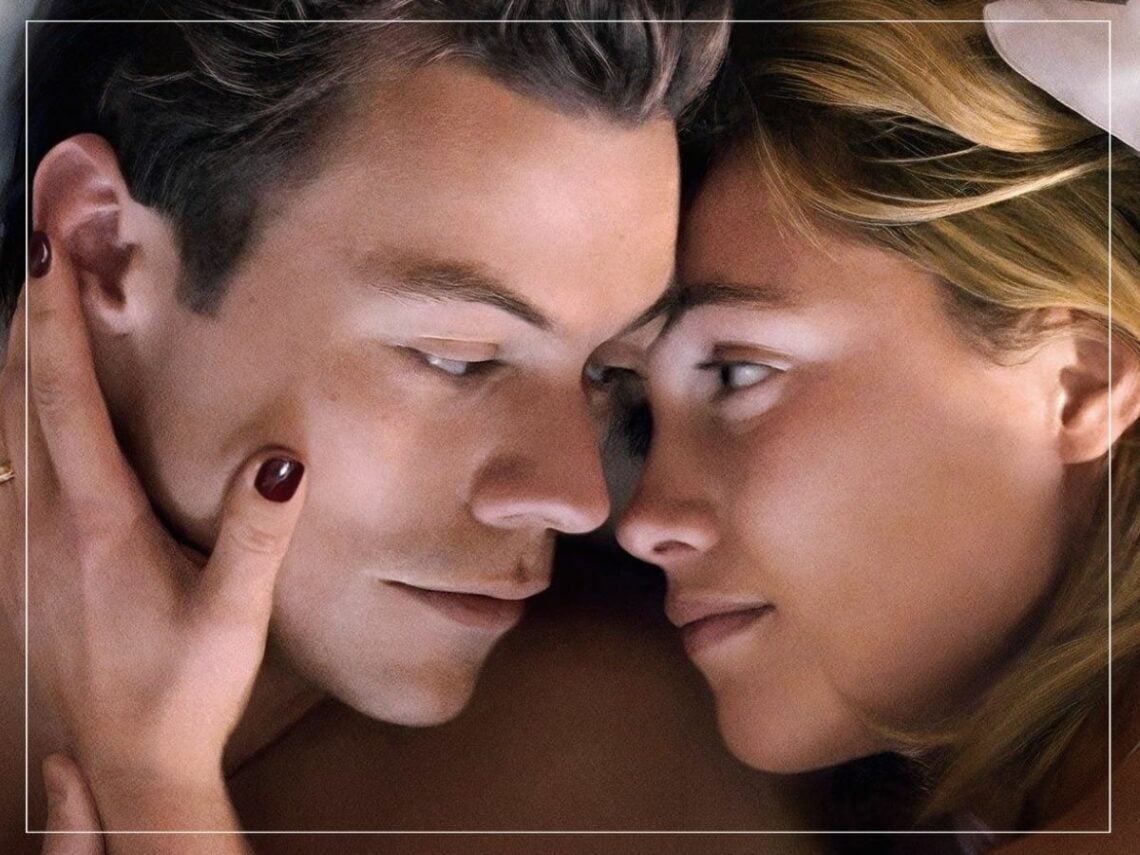
Olivia Wilde’s first feature as a director, Book Smart, was met with rapturous reviews, but even before her second movie was released, the project was mired in negativity. Don’t Worry Darling stars Florence Pugh as a woman in a picture-perfect suburban neighbourhood in the 1950s who discovers that her husband (Harry Styles) and community are not what they seem. It’s an unimaginative knock-off of The Stepford Wives, and if it hadn’t been for the controversy behind the scenes, it would probably have barely registered upon its release. Instead, it became tabloid fodder for months.
The first inklings of trouble began when actor Shia LaBeouf left partway through filming. Whether Wilde fired him over his conflicts with Pugh and other members of the cast and crew or he left over his own frustrations is still up for debate. There were also rumours of tension between Pugh and Wilde after the director replaced LaBeouf with her then-boyfriend, Styles.
Then, there was the press tour, in which fans and the media obsessed over body language, who stood next to whom on the red carpet, and the compliments that went unsaid between Pugh and Wilde. The drama was capped off by the decade’s own version of the white or blue dress when fans were certain that Harry Styles spat on co-star Chris Pine at the Venice Film Festival. It was an appropriate denouement.
