


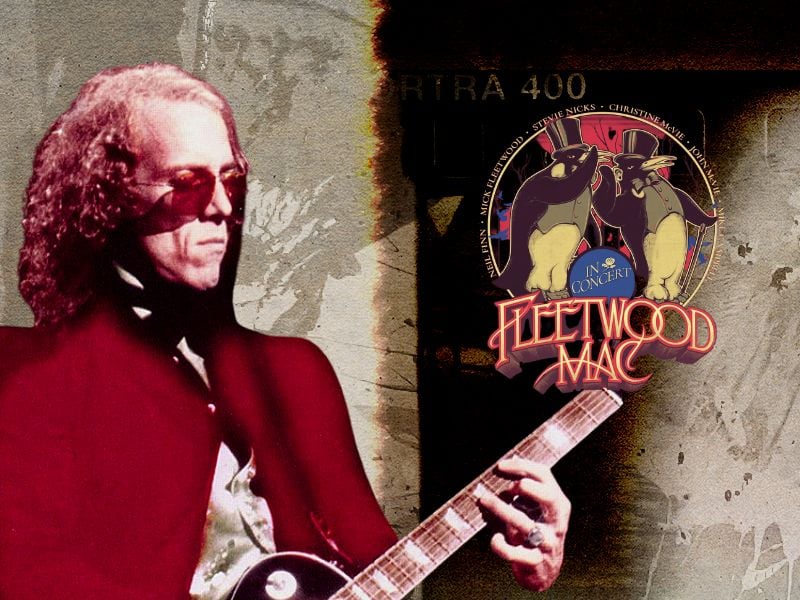
Five Fleetwood Mac songs that prove Bob Welch was a genius

Among knowledgable classic rock fans and Fleetwood Mac faithful, the importance of Bob Welch was never in question. Initially hired as a replacement for guitarist Jeremy Spencer, Welch went on to be the band’s second-great leader after founding guitarist Peter Green. Although the Mac was going through a shift in their identity throughout his tenure, Welch was the anchor and guide that kept the band from falling apart during its whirlwind of personnel changes.
Starting with 1971’s Future Games, Welch began his tenure in Fleetwood Mac as an accompanist to Danny Kirwan. Welch continued his supporting role on 1972’s Bare Trees and engaged in a three-man fight for control of the band on 1973’s Penguin. Later, Welch began to assert himself as the group’s leader on 1973’s Mystery to Me, alternating with Christine McVie as the band’s lead vocalist. His final album, 1974’s Heroes Are Hard to Find, found Welch as the dominant singer and songwriter.
By that point, Welch had experienced creative burnout with Fleetwood Mac and no longer felt connected with his bandmates. Compounded by marital problems and a desire to start a solo career, Welch left the band on relatively good terms at the end of 1974 and was replaced by Lindsay Buckingham in early 1975. Welch would stay connected to the Mac, opening for the band and having members appear on his albums as his solo career continued to be managed by Mick Fleetwood.
Welch’s first two solo albums, 1977’s French Kiss and 1979’s Three Hearts, gave him an identity and level of success outside of his association with Fleetwood Mac. By the 1980s, however, his commercial fortunes had declined as Welch increasingly medicated himself with drugs and alcohol. To add insult to injury, when Fleetwood Mac was inducted into the Rock and Roll Hall of Fame in 1998, Welch was left off the list of inductees.
Welch eventually managed to mend his relationship with the Mac and even got some appreciation for his role in the band in his later years, but debilitating health issues caused Welch to take his own life in 2012 at the age of 66. In the decade since his death, Welch’s status as an integral part of the Fleetwood Mac legacy continues to grow. If you’re looking for some of his best work with the band, check out these five classic cuts from Bob Welch.
Five Fleetwood Mac songs that prove Bob Welch was a genius
5. ‘Hypnotized’
Fleetwood Mac weren’t exactly a hits band during Welch’s tenure, and their cover of The Yardbirds’ ‘For Your Love’ didn’t do much to change those fortunes. But on the B-side of that single was an album cut from Mystery to Me that would continue to get FM radio play for decades to come: ‘Hypnotized.’
A languid minor key track featuring some of Mick Fleetwood’s most metronomic drumming, ‘Hypnotized’ finally gave Welch’s version of the Mac something they had been searching for: an identity. Even in the years after Welch’s departure, Lindsay Buckingham would often sing ‘Hypnotized’ to placate fans who were expecting the song.
4. ‘Emerald Eyes’
Mystery to Me was Bob Welch’s coming out party in Fleetwood Mac. After two albums of playing sidekick to Danny Kirwan and a battle between himself, Bob Weston, and Dave Walker for control of the band on Penguin, Welch finally established himself as the main creative voice in the band.
Welch brought with him a keen ear for intricate progressive rock and a sympathetic heart for melodic ballads. Both sides of his songwriting personality can be heard on ‘Emerald Eyes’, the catchy album cut that alternates between sinister guitar runs and heavenly vocal harmonies.
3. ‘Future Games’
Fleetwood Mac were in experimental mode on 1971’s Future Games. Trying to find the chemistry between Bob Welch and Danny Kirwan, the album also finds the Mac drifting away from their blues roots and towards a softer and more progressive sound. With two strong-headed guitarists who could both handle lead guitar, how was the band going to balance itself out?
The answer came in the form of the album’s title track, ‘Future Games’. With Welch at the microphone and Kirwan taking on the nominal lead guitar role, ‘Future Games’ actually finds the two guitarists chasing each other across eight minutes of increasingly complex jazz-rock. It’s one of the more ambitious songs ever performed by the Mac, establishing Welch as a creative juggernaut within the group.
2. ‘Bermuda Triangle’
By 1974’s Heroes Are Hard to Find, Bob Welch was already on his way out of Fleetwood Mac. Having largely led the band for the past half-decade, Welch was now sole guitarist and carried the lion’s share of songwriting duties. Still, he was restricted by the managerial control of Fleetwood and found himself at a distance from the McVie’s. It was time for Welch to go out on his own, but not before a few confusing turns on Heroes Are Hard to Find.
The most successful track from Welch on the album is ‘Bermuda Triangle’, a song that practically invents yacht rock a few years prior to its mainstream explosion. Taking on the same mystical narrative style as ‘Hypnotized’, Welch unfurls a tale of intrigue as the band pump in slick soft rock behind him.
1. ‘Sentimental Lady’
Welch was still green when Fleetwood Mac were recording 1972’s Bare Trees. He only contributed two songs to the album, but one of the compositions would become Welch’s signature song. The best-known version of ‘Sentimental Lady’ is Welch’s solo version, but the superior recording may very well be Welch’s take on the track with the Mac.
Featuring an intact second verse that is absent on the solo version, Welch’s impassioned and slightly goofy delivery makes the Mac version of ‘Sentimental Lady’ an endearing classic ballad. It was also the first sign that Welch was about to take over Fleetwood Mac for the foreseeable future.

Never Miss A Tale
The Far Out Classic Rock Newsletter
All the latest Classic Rock content from the independent voice of culture.
Straight to your inbox.