


Five movies that were almost ruined by marketing

Like any industry, Hollywood harbours its own peculiarities and idiosyncrasies. Sat in a dark theatre, watching the latest Mission Impossible, it’s easy to forget that the finished product of a film is only one of several interlinking factors. Such is the magic of moviemaking. But in order for Ethan Hunt’s latest escapade to reach the screen, hundreds of thousands worth of dollars have been spent on something you may not have considered before: marketing.
Think that a movie’s lifespan rests on the quality of the movie alone? Think again. Movies live and die (financially) by the double-edged sword of marketing, and what’s worse is that it’s a delicate, precarious balancing act that can topple over at any second. What’s the good in having a superb feature, or even an average one, if you can’t guarantee that there’s going to be bums on seats?
Often, the production of a film will be partly financed by the hypothetical future sales of tickets – the belief in a project’s sellability will convince investors to fund it. There are some cases, however, in which the marketing could have done a whole lot better. Either unsure of how to sell their product or outright deceptive in their attempts to pitch it as something else entirely, marketing teams have been known to fumble the bag and thus derail the entire trajectory of a movie. Often, they’re excellent movies, too.
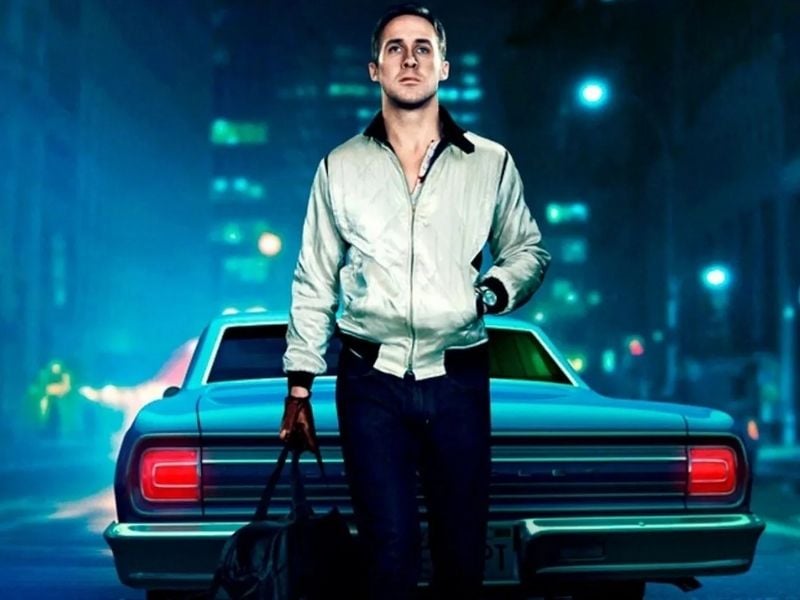
Consider Nicolas Winding Refn’s 2011 Drive. A stylish neo-noir action thriller, it broke the mould of standard Hollywood fare with its arthouse aesthetics, iconic synth-driven soundtrack, Ryan Gosling’s smouldering intensity and an intriguing neo-noir narrative. Yet the film’s marketing campaign, which presented it as a heart-pumping adrenaline ride more aligned with the Fast & Furious series, led to severe confusion in the auditorium when they were presented with a slow-burning, meditative commentary on violence and identity in a hazy Los Angeles. Word of mouth eventually got out on the excellence of Drive, but it very nearly crumbled before it found momentum.
Similarly, Darren Aronofsky’s 2017 Mother! fell prey to a marketing fiasco. Despite Jennifer Lawrence’s enigmatic presence and Aronofsky’s ambitious storytelling, the film’s marketing projected it as a straightforward horror-thriller that could attract the jump-scare crowd. The real movie, however, was rife with biblical allegories and absurdist overtones, causing a more-than-jarring rift between expectation and delivery. It was a bad miscalculation, as reflected in the work’s seriously lukewarm box-office performance. Luckily, six years later and in the wake of The Whale, critics have realised the merit behind the film.
Another 2017 release, Trey Edward Shults’ It Comes at Night, echoed the same pattern of misrepresentation. Marketed as a conventional horror film filled with supernatural dread and jump scares, it severely disappointed audiences seeking those sorts of cheap thrills. In reality, the movie was a psychological post-apocalyptic drama emphasising human paranoia and the lengths people go to survive. In other words, it couldn’t have been further from what the trailers and posters suggested.
The debut feature from acclaimed director Martin McDonagh, 2008’s In Bruges cleverly interwove humour with violence, tragedy and existential angst. However, its promotional campaign focused predominantly on the comedic aspect, alluding to an outright caper revolving around dimwitted Irish hitmen. Whilst the final film undoubtedly had hilarious moments, its themes of suicide and subplot involving the accidental murder of a five-year-old boy weren’t so funny. Audiences weren’t expecting anything nearly so dark, and McDonagh’s career nearly toppled before it even got started.
Perhaps the most classic case is Gabor Csupo’s 2007 work Bridge to Terabithia. Those who’ve seen it will know this film was not the magical adventure promised by its marketing material. Instead of the Harry Potter or Narnia-like narrative, audiences were met with a poignant exploration of grief, loss, and the transformative power of imagination – as well as an ending that had one of the main children drowning in a river.
