


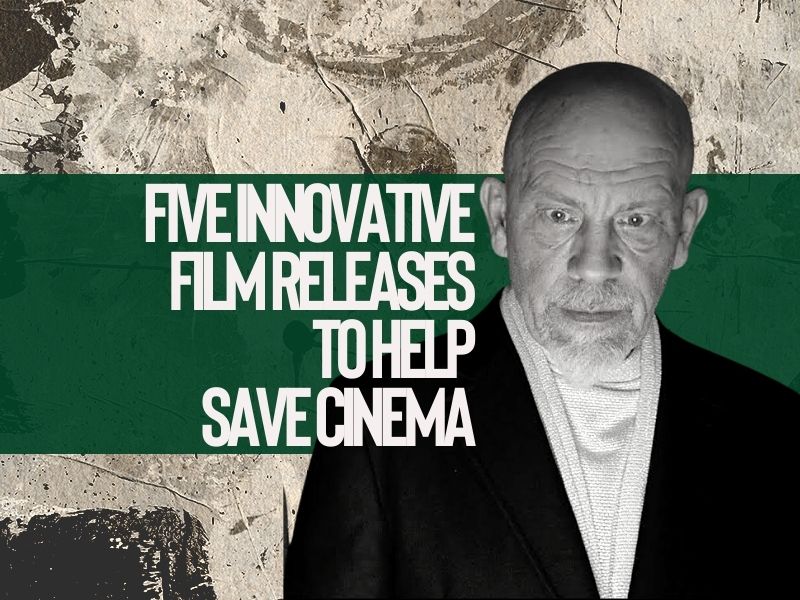
Five innovative film releases to help save cinema

Cineworld’s recent bankruptcy announcement didn’t quite send shockwaves through the world, but it was a wake-up call to the realisation that many cinemas are struggling to stay open. Back in 1946, roughly 60% of the American population went to the cinema once a week. Now, the figure pales in comparison and these sacred institutions are feeling the pinch.
Earlier in the week, we dived into the whys and wherefores of this small tragedy, and now we’re looking at some of the innovative moves that movies have made to try and save them. With streaming offering a cheap and easy alternative, cinema needs to wrestle back its prominence of othering up thrills that you simply can’t get at home. The ‘same old’ simply isn’t going to cut it anymore, the lure needs to be fresh to excite people back out of their homes and in front of the big screen.
Below we have curated five clever ways that films have achieved this in recent times. From the inherent excitement of a once-in-a-lifetime live movie, to John Malkovich’s secret project and other quirky ideas. The proof will always be in the pudding when it comes to movies and ultimately the success of a film resides in whether people like it, however, with streaming here to stay, the success of whether they like it at home or at the cinema is another question. Hopefully, a few creative tweaks can ensure the big screen survives.
Five innovative film releases to help save cinema:
Lost in London
Back in 2017, Woody Harrelson shot and live screened the movie Lost in London. It was the first time ever that a film was live broadcast into theatres; for the most part, it has been the last time too. Woody Harrelson bravely ventured down the road less travelled and nobody has followed suit. The portent presented by Cineworld’s bankruptcy shows that they need to.
One thing that is surely amiss in modern culture is the old water cooler moments thrust upon us by everyone watching the same thing unfurl at the same time—the entertainment equivalent of a sporting triumph. These have largely been lost in the age of streaming and recording where things lose their immediacy. As a result, this sort of ‘Oh, I’ll watch it later’ apathy has even had an impact on the number of people who attend the cinema. The other factor that people often tout for declining box office sales is a lack of originality. Live films tick both of those boxes with an air of assured vitality.
Everything Everywhere All At Once
Like many movies the release of Everything Everywhere All At Once was sweetened by the lure of a Q&A with those involved after the picture. It’s a simple and effective way to make opening night a little bit more unmissable. In an age where the ephemeral nature of film is gone and the worst thing that happens if you miss a movie’s run is that you have to wait a few months to watch it on a streaming service, this added draw is essential.
Naturally, it might not work as well with huge releases, however, it can certainly add some pep to the opening night of an indie film which gives it the box office boost it needs to hit headlines, trend in algorithms and get a surge of word-of-mouth going. If you’re paying for a relatively pricey ticket then the prospect of posing a question to the director makes it all the more worthwhile.
100 Years
100 Years is a film made by John Malkovich which is set for release in 2115 with the content remaining secret and locked in a bulletproof timelock. Dubbed with the tagline, “The movie you will never see,” this release might not offer up an immediate boost to struggling cinemas but keeping the plot entirely secret is maybe the sort of mystery that might dangle a carrot to the masses. It’s mad and borderline pretentious, but it’s the sort of break from the same old that might keep things fresh if similar principles are applied to the present.
After all, how many times are you recommended something whereby your friend tells you just to go into it blind? Some of my favourite cinematic experiences have come when the premise has been kept away from me. Naturally, it’s hard to convince a studio to go along with it, but somehow Malkovich managed to get funding for a film 100 years in advance so it’s possible. After all, if our current trends tell you anything, it’s that we love a mystery—so why not keep the plot elusive and create a mystery within a mystery?
Paranormal Activity
Paranormal Activity might not have been the greatest horror outing by any stretch of the imagination, but it did make more than $193 million at the box office from a budget of just $15,000. It achieved this gargantuan feat through one of the greatest movie marketing campaigns ever.
You see, back in the past when 60% of Americans went to the cinema weekly, you had startled folks diving out of the way of footage of oncoming trains. The yelps and the screens were as much part of the night out as the movie. With a trailer showing night vision footage from inside the cinema of people watching the film and being scared out of their wits by it, you had people saying, ‘I want to be part of that’ and suddenly cinema seemed immersive and interactive. This, quintessentially, made the draw of the film the process of going to the cinema rather than the quality of the film itself.
Mommy
Martin Scorsese once said, “Cinema is a matter of what’s in the frame and what’s out.” For Mommy, Xavier Dolan took that to the extreme by shooting the film in a square aspect ratio and then having characters actively stretch the screen for fitting moments of the story. It was a move that was made for the cinema.
This is a notion that has also been upheld in a less dramatic fashion by directors who have insisted on movies being shown on film rather than digital and making sure certain aspect ratios are shown. This sense of cinema exclusivity helps to stop people from simply waiting to watch it at home. In fact, it goes back to the old adage that it’s better on the big screen.
