


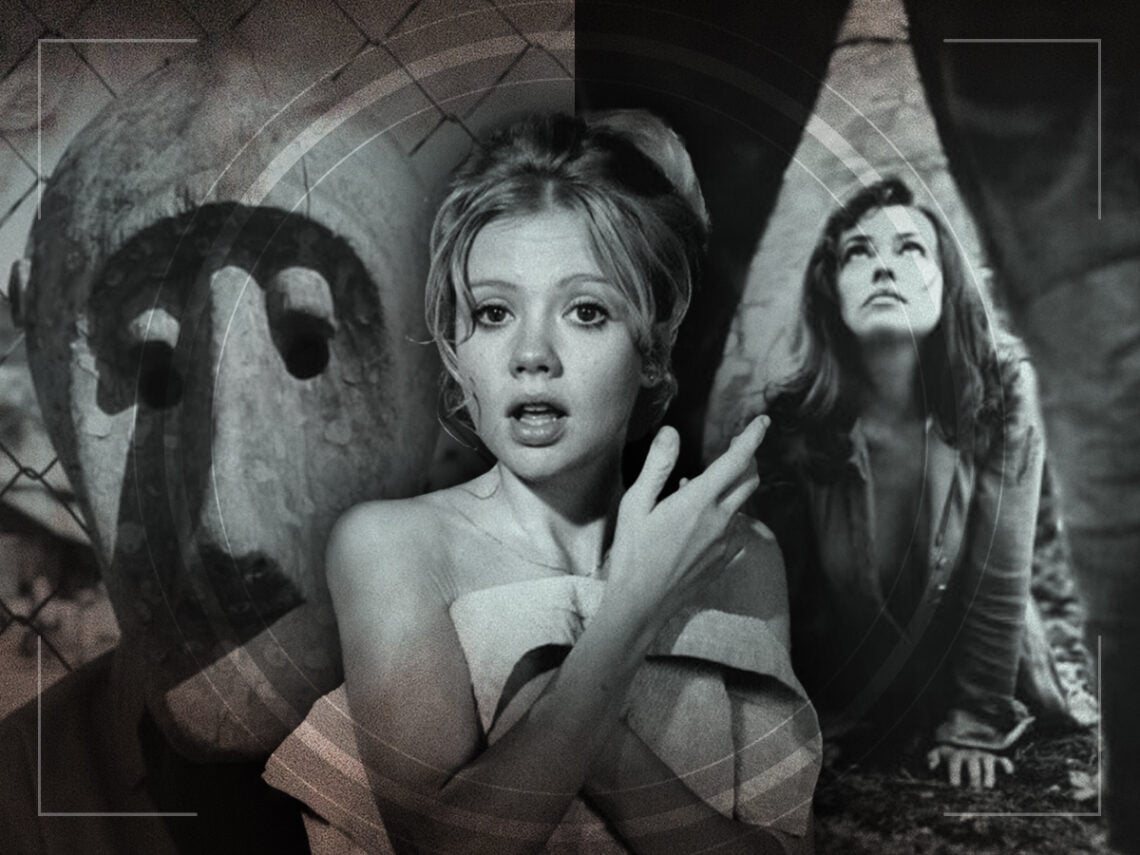
The five best movies from the 1960s that nobody remembers

The 1960s were a revolutionary time in many ways, from the political and social advancements that were made to the increased creative expression and experimentation found in all facets of art and culture. Fashion was becoming more playful and daring, music was getting louder and heavier, and cinema was developing into something different entirely.
With the influence of movements like the French New Wave and arthouse filmmakers, as well as the decline in censorship and rigid societal attitudes, Hollywood became much more varied, while other countries’ film industries were also thriving in ways they hadn’t before, like the United Kingdom. Filmmaking became more accessible, and the market soon flooded with new titles and innovations, with everything from gory horror movies to gritty social realist dramas and powerful satires finding a place for themselves on screens.
Yet, as the industry became saturated with new movies, many were inevitably left under the radar, seen by few people despite their brilliance. That’s the sad reality of such a large and competitive industry; some great movies simply fade into the cinematic ether.
Thus, we’ve picked out five movies from the 1960s that are truly fantastic, yet they’ve never gotten as much credit as they deserve, like Black Girl and The Family Way.
The five best overlooked movies from the 1960s:
‘The Family Way’ (Roy Boulting, John Boulting, 1966)

Released in 1966, Roy and John Boulting’s The Family Way deserves way more credit for the emotional gut punch it delivers in the form of a flawless performance from John Mills. Playing the father of a newlywed son, he soon grapples with his own marriage and his position as a parent, while Mills’ Disney star daughter, Hayley Mills, appears as his daughter-in-law. Alongside Hywel Bennett, the pair play a couple, Arthur and Jenny, plagued by issues in the bedroom, not helped by the fact that they have to move into the former’s cramped family house.
While the premise might sound a little mundane, The Family Way is an incredibly unassuming film that creeps up on you and takes you by surprise. On the surface, it looks like it’s going to be a somewhat forgettable British drama, but the film reveals a complex study of class, societal pressures, gendered expectations, and family dynamics. Moreover, it’s soundtracked by a great Paul McCartney score that somehow remains unknown even to many big Beatles fans.
‘Mademoiselle’ (Tony Richardson, 1966)

Sometimes, we do strange things when we fancy someone. Jeanne Moreau’s titular character in Tony Richardson’s Mademoiselle takes it a step too far, though, causing chaos in a small French village out of an extreme perverseness. By expressing her desires, she soon reveals herself to have psychopathic tendencies, unbothered by the damage she is responsible for, which affects the villagers, the local animals, and even results in tragedy.
Not only is Mademoiselle a sizzling tale of seduction and primal eroticism, but it is also a study on xenophobia, class, and community, with the Italian logger Manou, the object of Mademoiselle’s affection, facing the wrath of the French villagers who see him as an outsider. Despite an incredible performance from Moreau and a tense and at times claustrophobic atmosphere, the film seems to have faded into relative obscurity.
‘Privilege’ (Peter Watkins, 1967)

While Elvis Presley inspired devoted fan mania in the 1950s, the following decade saw Beatlemania rise to unprecedented levels, and this phenomenon of intense fan worship and making celebrities into god-like idols has continued ever since. Peter Watkins captured the dystopian nature of such behaviour in his film Privilege, which starred Paul Jones as a musician used by the country’s political parties as a way to keep people entertained and less likely to revolt. Steven Shorter becomes the face of Britain, but, of course, behind the scenes, he can’t stand the treatment he is put through, finding a connection with painter Vanessa, played by Jean Shrimpton.
The movie satirises the ridiculousness of blind fan worship and the concept of using an ordinary person as a puppet for the masses, and it feels infinitely ahead of its time. The movie was so controversial upon its release that it was withdrawn from many cinemas, thus making it a rare gem, albeit one that is definitely worth watching. Bold and fearless, the movie goes as far as to use some Nazi allusions to depict a version of British society highly controlled and lacking in freedom of thought.
‘Our Mother’s House’ (Jack Clayton, 1967)

Before the incestual horrors of The Cement Garden, another tale of children fending for themselves in the wake of their parents’ deaths came with Our Mother’s House. Directed by Jack Clayton, the film sees Dirk Bogarde play the estranged father of seven children, who live an unusual life shielded from the outside world following the death of their mother, which they cover up. Intending to live independently for as long as possible, events turn incredibly messy, and eventually, tragic, as time passes.
Clayton is better known for directing The Innocents and Room at the Top, but Our Mother’s House is a woefully underrated thriller that reveals a dark side to British family life, with great performances from the child actors, including a pre-Oliver! Mark Lester. A powerful study of childhood and the corrosion of innocence, Clayton’s film deserves to be much more widely appreciated.
‘Black Girl’ (Ousmane Sembène, 1966)

Ousmane Sembène’s 1966 film Black Girl is just over an hour long, but it’s not one you’ll forget in a hurry. Bleak and unflinching, the film confronts us with the horrors of postcolonialism and racism by depicting the objectification and dehumanisation of Diouana, a Senegalese woman who begins working for a well-off French couple. Her new home is strikingly different from what she is familiar with, and she feels incredibly isolated by the lack of consideration given by the couple or their friends for her humanity.
Sembène refuses to sugar coat the matters at hand, depicting various key events in Diouana’s new life where she is forced to confront prejudice. It took many years for Black Girl to be recognised for its moving and harrowing qualities, but really, this is essential viewing that acts as a harsh reminder of the irreversible damages of colonialism in France.
