


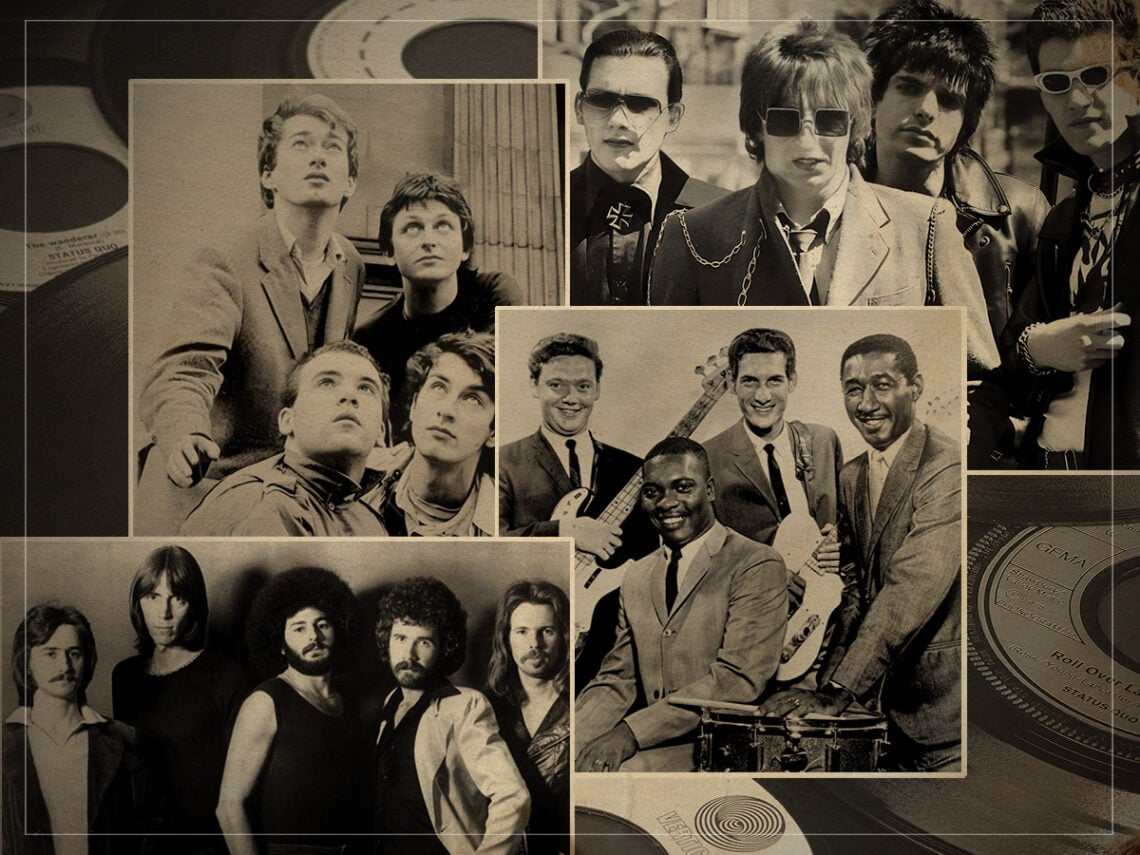
Five bands that peaked with their very first single

There’s beauty in a stunning debut single or album. Some of the big names in the pantheon of greats have come out all guns blazing to stamp their authority on the landscape of music. Oasis, The Strokes, and Kate Bush are but a few artists to shake the world’s hand with musical fury, announcing their eternal impact on the world.
There’s a rawness to a debut that can’t be replicated. It’s a one-time opportunity to operate with perhaps a creative freedom and intuition that may not repeat itself. But conversely, it can be an albatross around the neck, a yardstick by which all future endeavours will unfairly be measured. Because unless you’re The Beatles and have an unlimited tap of creativity at your disposal, you’ll soon learn there’s no real rhyme or reason to the commercial success of a song. In many cases, a zeitgeist was simply captured and repeating that feat feels like shooting at continuously moving goalposts.
Songs that subconsciously soundtrack everyday moments of life have been created by artists whose names elude us, as we try to place that opening note with the unknown question of “who wrote this one again?”. It poses an important question for artists to tackle upon the infancy of their endeavours, something to be considered before losing oneself to the bright lights of commercial success. Is one breakout hit that defines your legacy more important than a steady stream of authentic, albeit less successful output?
Well, if you ever bump into these next five artists in the street, maybe it’s a question you can ask for I wholeheartedly believe that their lightning bolt debut singles carved a path that was simply too hard to follow. Since their release, we never quite saw the follow up.
Five bands that peaked with their very first single:
Gang Of Four – ‘Damaged Goods’

OK, Gang Of Four fans, allow me to explain. In composing this list, I wrestled with the idea that a single “peaking” meant all that came after was terrible. In the case of this band and this particular song, it’s far from the truth. It was the lead single for a revolutionary album that lives long in the canon of post-punk fans. So ‘Damaged Goods’ is simply included as an example of a single that eclipsed the greatness that came after, and defined the sound of an oncoming classic.
Lineup changes, internal conflicts, and an uncompromising focus on their live performances brought what should have been a lengthy career of greatness to an end. While their impact is everlasting for their influence on modern greats, ‘Damaged Goods’ acts as their peak simply on their own accord. In fact, it’s less of a peak and more of a defining moment. They were staunchly authentic and refused to sell out, and if that meant ‘Damaged Goods’ acts as a standalone hit for part-time fans, then so be it.
The Damned – ‘New Rose’

When it comes to an albatross around the neck, the title of the UK’s first punk single is as heavy as it gets. The essence of punk had lived in the sweaty walls of pubs and clubs until that point, speaking directly to disenfranchised youth who desperately craved a sense of community and understanding in a broken world. But that connection was yet to be celebrated in the walls of their own home.
So when The Damned released ‘New Rose’ and officially pressed the first ever punk single, it brought the urgency, sweat and honesty to a wider audience. The Damned didn’t peak with this single because everything that came after was rubbish, they peaked because they opened the doors for gamechanging innovators to follow.
Royal Blood – ‘Out Of The Black’

Upon the release of this track, I was brimming with excitement. I thought the upcoming decade and relatively dreary era of 2010s alternative had just found its saving band. The two-man lineup, the monochromatic palette upon which their art was presented, and the relentless power of the drumming felt like a new dawn of rock. And the self-titled album that followed in its wake was worthy of the hype. A tour-de-force that cut a crack through the plastic-covered indie-pop that we were all drowning in, in 2014.
But boy, everything that has followed has been nothing short of disappointing. The “mystery pedal setup” they so proudly boasted during the promotion for the first album flattered to deceive in the second and third records, as the band offering nothing more than a repackaged product of the previously winning formula. Music fans are smarter than that and wilted attempts of innovation quickly fall flat on their face.
Booker T and the MG’s – ‘Green Onions’

Simply put, this is one of the most influential soul instrumentals ever arranged. The opening bar is as recognisable as it gets and nods to a band brimming with compositional ideas. But it was a track that truly embodied the idea of capturing an unknown zeitgeist, for its instrumental style that hinged on repetitive verses and muted chorus parts resembled nothing of a commercial hit. So when it came to experiencing such success, it was hard to know how to repeat it.
It’s even more baffling when you consider the band wrote it simply to fill a B-side, ‘Behave Yourself’. After it initially failed to chart in the UK, its inclusion on the film Quadrophenia thrust it into the ears of rebellious kids, and it went on to become a cult classic. It was a song that defined the idea of taking on a life of its own, without any commercial architecture, and for that reason, became an albatross not just around their neck, but one that flew off into the musical stratosphere.
Boston – ‘More Than A Feeling’

While I’m open to discussion about the validity of all my choices I simply can’t accept a rebuttal on this one. The mere sight of the title written on the page instantly provokes a recital of the chorus line for it has been included on every euphoric feel-good film and glossy car advert in the last twenty years.
And it’s a suitably reductive reputation for an artist that offered so much more than a one hit wonder and speaks to the very crippling experience of creating something that exists beyond your own legacy. Tom Scholz was an innovative musician, and this track in particular set out a brand of expansive stadium rock that future artists could follow. But it was almost too big, too grand and too inspiring, leaving a gaping and unfillable void for the band to follow.
