


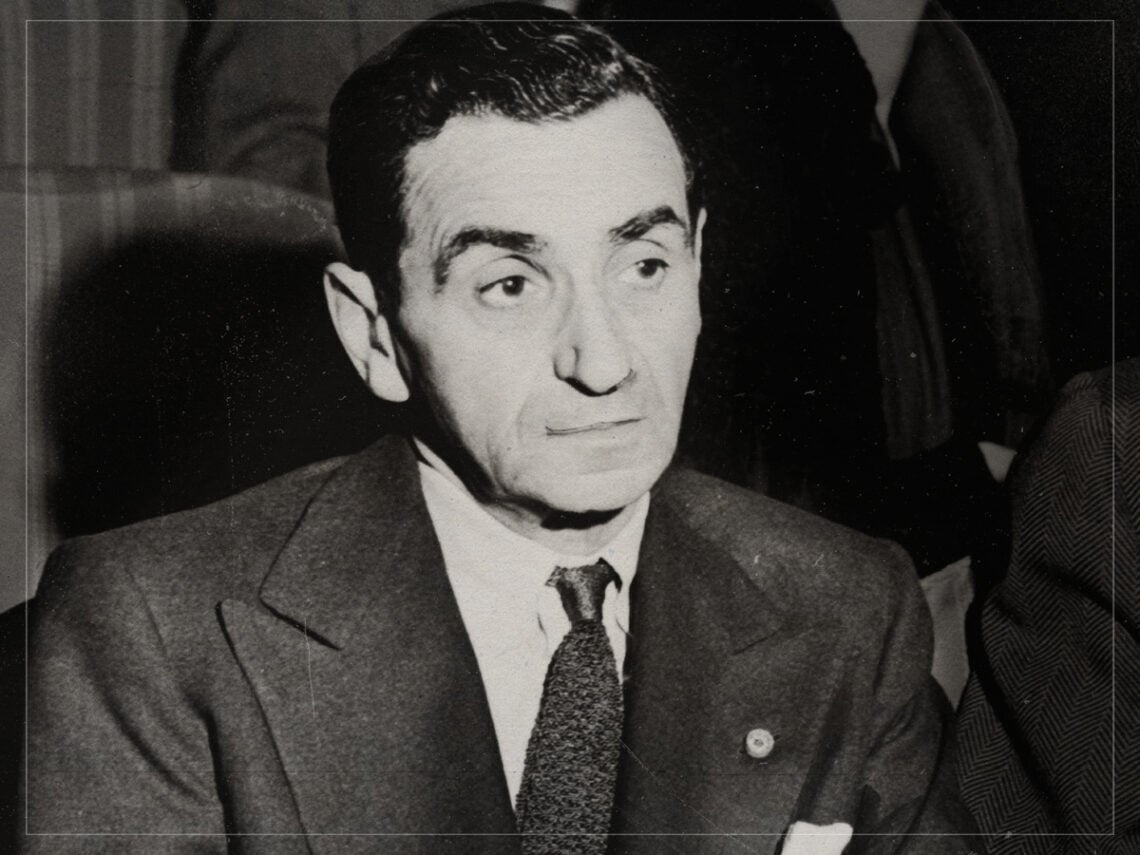
The first showcase of great lyricism in pop, according to Irving Berlin: “It’s timeless”

How do you approach a good lyric? What are the parameters of good lyrics? It’s pretty hard to say with any certainty.
In the modern age, the lyric often loses its way, as a lot of artists view them as a necessity rather than as something which can truly elevate a song. They will put together a great piece of music, which doesn’t need words in order to be recognised as great, but they will throw some haphazard vocals together because they don’t believe a song can be complete without them. Those subsequent lyrics don’t resonate with listeners as much as other songs do.
Then, you have some modern bands who churn out nonsense, knowing full well that’s what they’re doing. You see this quite a lot within the world of shoegaze, as bands try to create huge soundscapes and use lyrics as another layer of music rather than as something that should be considered in isolation. Subsequently, the lyrics don’t need to make loads of sense, as the way they sound is more important than what’s being said. Take a band like Cocteau Twins, for instance; half the time, listeners can’t understand what’s been said, but they don’t care because it sounds great.
When we jump back a century, when lyrics were included in a song, that’s because the writer saw their inclusion as an absolute necessity. You should keep in mind that a lot of pop songs from the 1920s onwards were taken from musicals, and therefore, it was important for people to include some kind of narrative in the song. The lyrics didn’t just need to resonate, but they needed to make sense.
There are a lot of lyricists who understood the power that words were supposed to have within this kind of music, but arguably, one of the best was Lorenz Hart. One of his biggest songs was ‘My Funny Valentine’, originally written for the show Babes in Arms but subsequently covered by the likes of Frank Sinatra.
The song captures the hopelessness and sentiment of love better than tracks today can. When speaking about the song, Irving Berlin, another respected songwriter, highlighted how wonderful some of these words truly were.
“As someone who has been around for a long time, longer than many, and seen many lyric writers and songwriters come up over the years, my opinion is that Larry Hart was the first of the so-called sophisticated lyric writers. But he also wrote words. There is a very important distinction,” said Berlin before quoting ‘My Funny Valentine’. “‘Your looks are laughable, unphotographable’. That was a clever rhyme, but it tells a story about what he was trying to say about this girl. I’m not splitting hairs, and it’s not semantics.”
While he was a big fan of the song ‘My Funny Valentine’, Berlin said that there was an earlier example of Hart’s genius, which was one of the early examples of sophistication within pop lyrics. He credited this to the song ‘Manhattan’, which was written in 1925 for the revue Garrick Gaieties. He loved this song because he felt like it captured the heart of the city better than any other songwriter was able to convey. Before Bob Dylan, Lou Reed, and Joan Baez, you had writers like Lorenz Hart, moving people with the power of lyrics.
“The important thing, in my opinion, and that goes for all songwriters and for so-called composers, is, how long do they last?” Berlin concluded. “Go back to `Manhattan,’ which was written over fifty years ago. They still play it. It’s better today. It’s timeless, because there’s still a Manhattan. Larry wrote about Manhattan the way other people are still trying to write about New York. They don’t do it as well.”
