


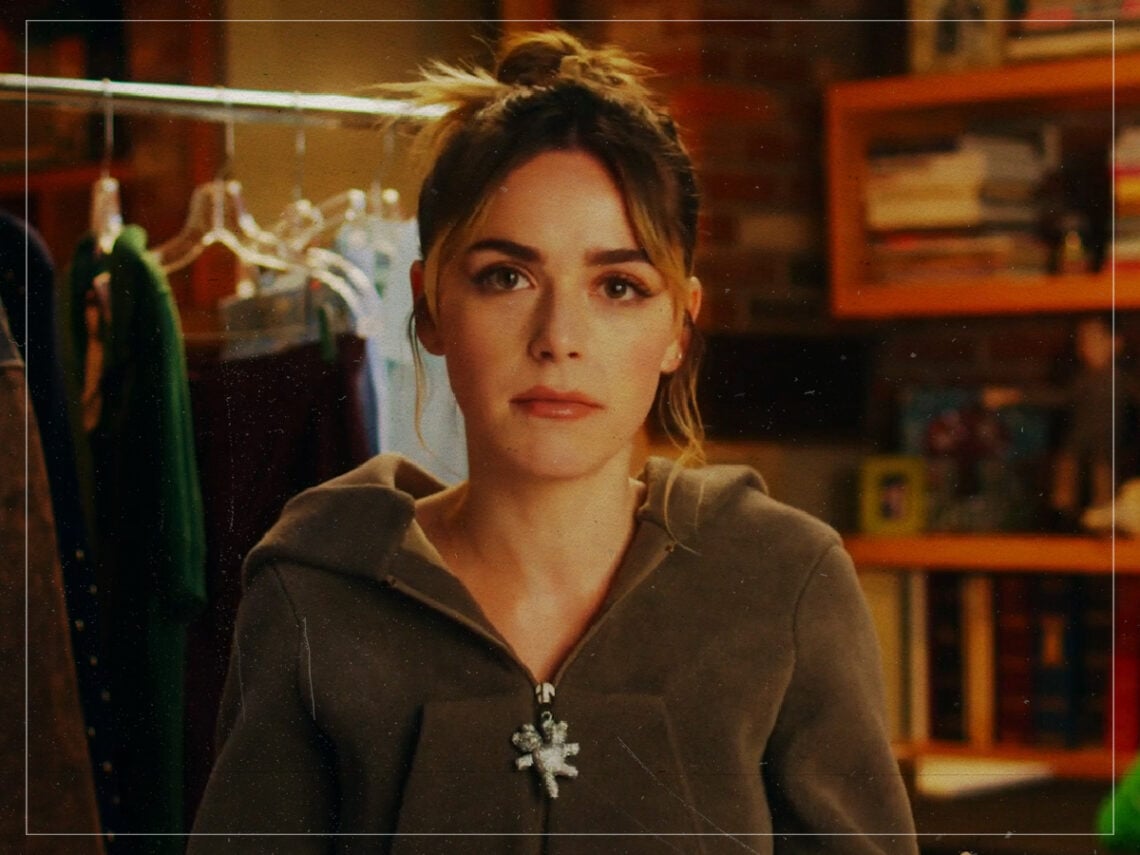
The first movie that “disturbed” Kiernan Shipka: “I was sick when I watched it”

She might only be in her mid-20s, but Kiernan Shipka has been around for a very long time, first breaking through in Mad Men in the mid-2000s.
In the show, she played Sally Draper, the young daughter of the main character, played by Jon Hamm, and following that, her career fluctuated until she firmly established herself as one to watch with a series of hit movies and TV shows. She did star in the utterly atrocious Red One, but we’ll forgive her; she is still young, after all.
In 2015, she appeared in the horror film The Blackcoat’s Daughter, a favourite of modern horror maestro Mike Flanagan’s, which follows two young women stranded over the winter break at a prestigious prep school. Shipka plays another girl who is being haunted by an evil spirit, and, as you can imagine, this doesn’t end well for her schoolmates.
The Blackcoat’s Daughter was the feature film debut of Osgood Perkins, better known these days as the director of Longlegs, as well as being the son of Psycho legend Anthony Perkins, who planted his flag firmly in the ground with this creepy mystery.
In an interview with Rotten Tomatoes, Shipka revealed that a film Perkins had asked her to watch in preparation for the movie went on to become one of her favourites.
“Eraserhead by David Lynch,” she said, “That’s a movie that I actually had to watch for Blackcoat’s Daughter. It’s one of Oz’s favourite movies. I was sick when I watched it the first time, but I’ve never seen anything that kind of like stuck with me and disturbed me in a cooler, more powerful way. I really, really enjoy that movie.”
As The Blackcoat Daughter was Perkins’ debut, Eraserhead was the first feature-length outing from the great David Lynch, and it finds Jack Nance playing Henry Spencer, a young man living in a strange, near-apocalyptic industrial landscape. His life is turned upside down when his meek girlfriend Mary, played by Charlotte Stewart, gives birth to a strange alien child that won’t stop crying. Mary leaves Henry alone with the baby, forcing him to confront his fear of parenthood head-on, but that’s the straightforward version, anyway; this is Lynch we’re talking about, who never does anything by the book.
Few debut films are as strong a mission statement as this one, as Eraserhead contains everything that would come to define Lynch’s work over the next five decades: the narrative is presented in a dreamlike state, blurring the lines between reality and fantasy while emphasising the similarities between the two. The film contains several bizarre creatures, including a woman who lives behind a radiator, as well as music, black and white cinematography, and heavily open-ended metaphors, making it one of Lynch’s most adventurous and captivating projects and a must-watch for even his most fairweather fans.
Eraserhead does what all good horror should, it leaves the audience feeling unnerved while also speaking to a higher truth. It’s clear proof that you don’t need an insane budget or big stars to make a truly excellent first impression, and Skipka was absolutely correct to study it.
