


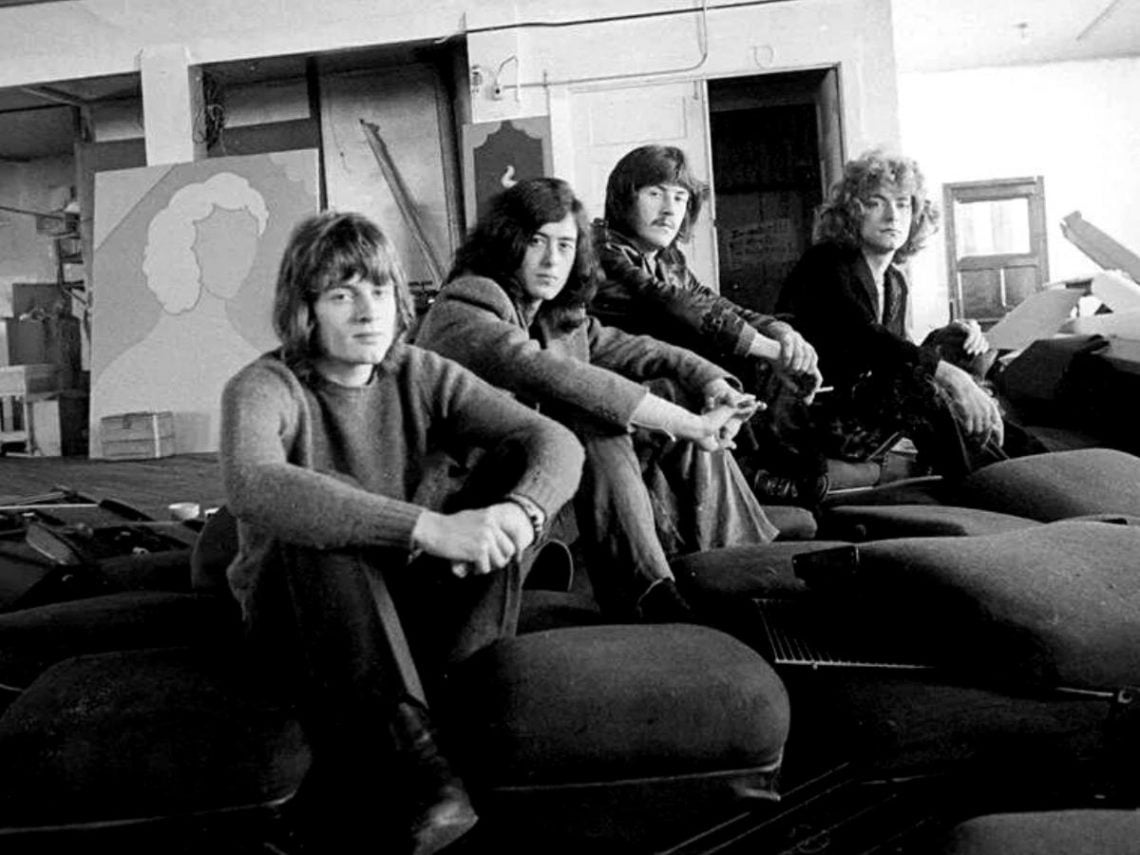
The first Led Zeppelin album not to feature any covers

There are very few rock bands who can say that they haven’t taken some form of inspiration from Led Zeppelin. From Aerosmith to Motley Crüe to Soundgarden, every single rock band that came after Zeppelin were trying to capture that same primal energy. If you really wanted to be pedantic, Zeppelin were almost a glorified cover band.
When the band first started rolling, Jimmy Page was still mining the same type of blues traditional songs that he was playing with the Yardbirds. Once he started to jam with session workhorse John Paul Jones and found blues belter Robert Plant, the core sound of Zeppelin began to fall into place.
Despite having some of the most beloved rock songs to their name, it took a while for Zeppelin to come up with an album of all original material. Their first four self-titled releases all had blues traditionals that were either played straight or reimagined in a completely different way.
Although something like ‘Whole Lotta Love’ may be the cornerstone of the band’s career, they actually mined the first few lyrics from Willie Dixon, which Plant attributed to being “happily paid for” once Dixon’s estate sued the band for copyright infringement.
While the band’s untitled fourth record featured some of the sturdiest songs they would ever write, they were still drawing from blues traditions on the final track ‘When the Levee Breaks’. It made the sound of a dam bursting sound like the most apocalyptic thing in the world.
For their fifth record, Houses of the Holy, the band began unearthing different textures and presented their first album of all original material. As Plant remembers: “We really did attempt to break the mould of the previous Zeppelin albums to create something as diverse as possible”. In the years since their beginnings, though, the band’s sound has gone well past the blues tradition. Across this record, the band toy with different influences on every single song, making a James Brown pastiche on ‘The Crunge’. They also set the benchmark for arena rock on ‘The Song Remains the Same’, which would lend its name to the band’s first live album.
While there is still plenty of rock to be found on Houses of the Holy, the standout moments of the record come when the band are trying out new styles. Sticking to acoustic guitars, ‘Over the Hills and Far Away’ is the same breezy folk song that Zeppelin had been perfecting on tracks like ‘Going to California’. ‘The Rain Song’ might be the purest example of the band’s folk tendencies paying off, with Page switching to an alternate tuning and finding chords that would never have worked on a traditional guitar.
‘D’Yer Ma’ker’ was also a first for the band, being a stab at reggae rock that broke up the monotony of one rock cut after another. There are even a handful of songs on here that don’t even have a genre, such as the weird bluesy stomp behind ‘Dancing Days’ or the thunderous sounds of ‘No Quarter’, the latter of which would go on to become the forerunner of heavy metal.
Despite the diverse track list, the album draws to a close on familiar territory with ‘The Ocean’, which was inspired by Plant comparing the sea of people in front of him to an ocean. The album may have got back into the usual Zeppelin formula, but this was the breakthrough that took Zeppelin from bluesy troubadours to one of the most daring songwriters working in rock.
While Zeppelin had a set blues formula for most of their albums, Houses of the Holy proved that they didn’t even need a formula to kick ass.

Never Miss A Beat
The Far Out Led Zeppelin Newsletter
All the latest stories about Led Zeppelin from the independent voice of culture.
Straight to your inbox.