


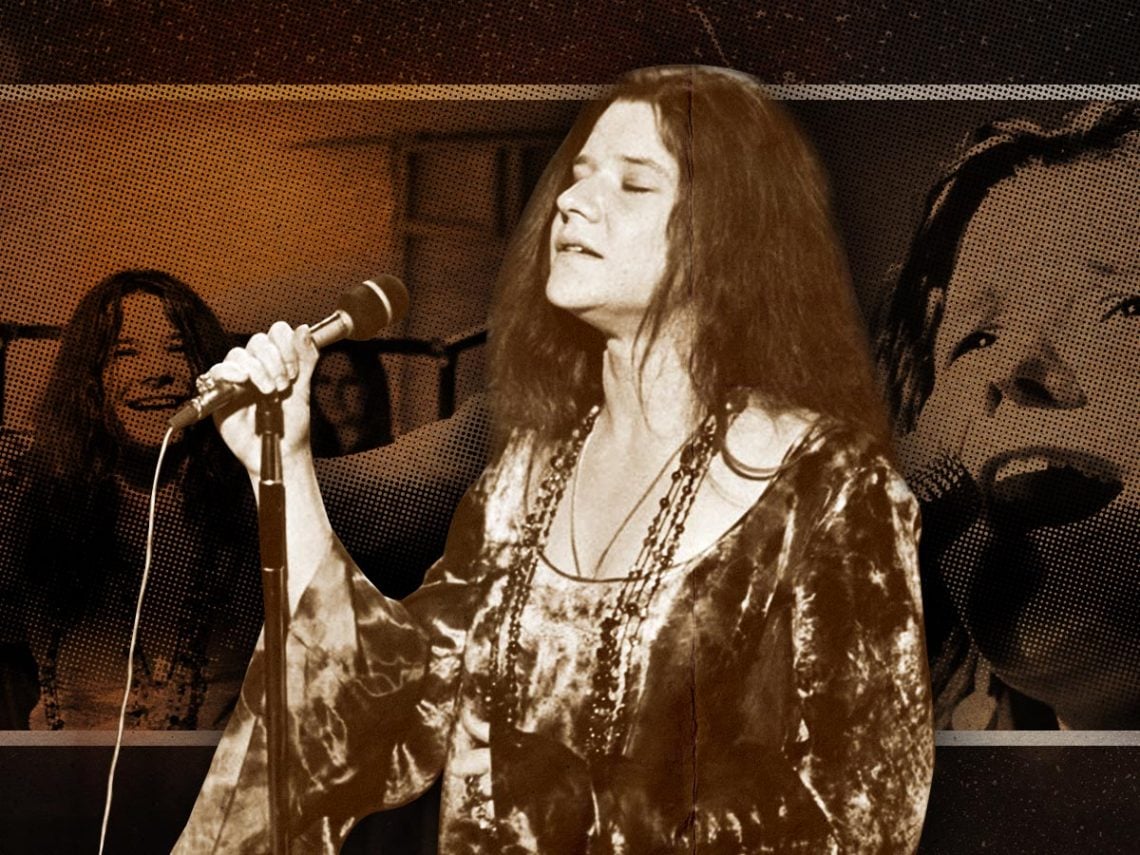
Inside the final days of Janis Joplin

Known for her incredible stage presence and powerful voice, Janis Joplin was one of the biggest countercultural music icons of the 20th Century. She came to prominence after playing at the 1967 Monterey Pop Festival and subsequently recorded two albums with the psych-rock band Big Brother and the Holding Company, the latter of which, Cheap Thrills, came out in 1968.
However, by the time the Summer of Love in 1968 was done and dusted, Joplin had developed a penchant for sex, alcohol and heroin. She began the 1970s by forming a new band called Full Tilt Boogie, hoping to emulate her prior success with Big Brother and the Holding Company, and they went to Los Angeles to record a new album.
The new album was titled Pearl, and during the recording sessions, the other members of Full Tilt Boogie insisted that, despite Joplin’s habits, she was hard working and only drank or used drugs after the day’s work at the Sunset Sound Studio was complete.
During that time, Joplin was staying in Room 105 at the Landmark Hotel on Franklin. On October 3rd, 1970, Joplin had nearly finished Pearl and spent the day listening to the instrumental track for ‘Buried Alive in the Blues’ with the intention of laying down the vocal the following day.
Later that evening, Joplin went for a few drinks at Barney’s Beanery (a later favourite hangout of Quentin Tarantino) before heading back to her hotel room to get high on heroin. Joplin reportedly used a ‘popping’ technique of shooting up, which releases heroin into the system at a slower rate. She went downstairs to buy some cigarettes and have a few more drinks.
Upon returning to her room, Joplin began to feel the effects of the booze and the smack and fell unconscious, falling to the floor and hitting her head against the room’s dressing table. She lay there for 18 hours until the Full Tilt Boogie manager, John Cooke, became concerned at her lack of appearance at the recording studio.
Cooke eventually went by the Landmark Hotel and found Joplin dead on the floor. Coroner Thomas Noguchi determined that Joplin died of an acute heroin overdose, although it was said to be accidental. Peggy Caserta, Joplin’s close friend, insisted that Joplin had not died of a heroin overdose but of blunt head trauma, although it is difficult to argue against the official ruling of the coroner.
Joplin was cremated, and her ashes were scattered over the Pacific Ocean from an overhead plane. Pearl was eventually released posthumously in January 1971, serving as an eternal reminder of Joplin’s talents. The album has since been certified quadruple platinum, proving the love that Joplin’s fans have had for her ever since.
