


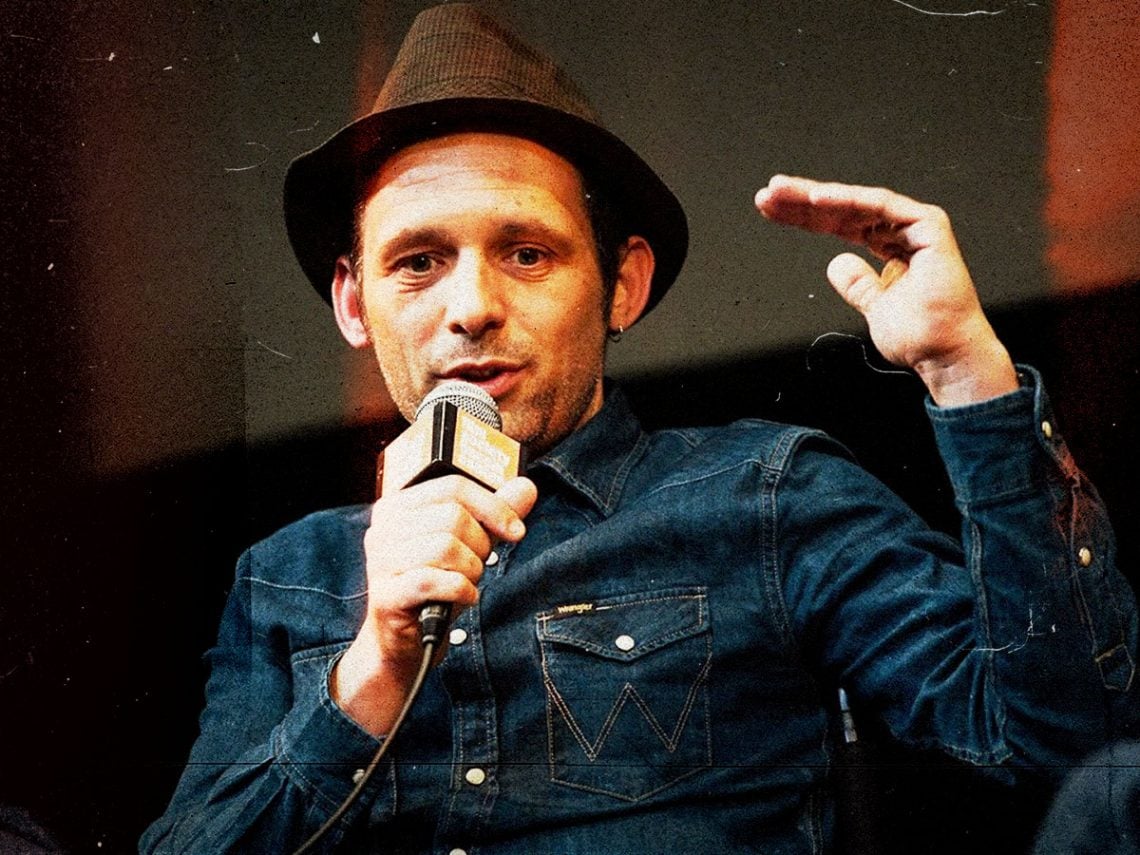
The filmmaker Mark Jenkin said “exists outside of time and space”

Cornish director Mark Jenkin established himself on the British film scene with the 2019 movie Bait, showcasing his ability to weave unique narratives by combining traditional and avant-garde filmmaking techniques. By using hand-processed black-and-white 16mm film, Jenkin set out an aesthetic that distinguished his work from his contemporaries.
Narratively, Jenkin explores social issues and pokes at the minutiae of the human experience. By using little dialogue, stories are presented through visual means with reliance on the medium of cinema to express their themes. Following Bait with Enys Men, Jenkin further proved his promise as one of the most exciting British filmmakers on the contemporary circuit.
Jenkin once named his top ten favourite movies of all time and included works from the likes of Nicolas Roeg, Robert Bresson, Ingmar Bergman, Agnes Varda and Terrence Malick, showing that he clearly holds a distinct passion for some of the greatest filmmakers of all time. But there was one he gave particular attention and praise to.
With reference to Andrei Tarkovsky, Jenkin told Criterion, “For me, Tarkovsky’s films exist outside of time and space. I can’t imagine how a film like Mirror sat within the cinema of its time. I’ve chosen it because I find it to be the most extreme example of what he was trying to do with personal filmmaking.”
“What you see and hear is so specific that there’s no way of properly understanding what he’s referring to, but you can feel the authenticity of it,” the director added. There are few artists in the realm of European cinema as significant as Tarkovsky, and though his films Solaris and Stalker are perhaps the most celebrated, it’s Mirror that holds the highest esteem in Jenkin’s heart.
Mirror was released in 1975 and featured some autobiographical pieces of Tarkovsky’s life, including poems written and read by his father, Arseny. The non-linear narrative tells of the memories of a dying poet as he explores key moments from his life and the nature of life in the Soviet Union. Typical of Tarkovsky, it’s presented in a beautiful visual style that’s almost dreamlike in its approach.
“Mirror is a perfect example of what Bresson meant when he said it’s more important to feel a film than to understand it,” Jenkin signed off. “If a film is inauthentic, it will never get under your skin, but if it is authentic, then it will stay with you regardless of whether you understand it.”
Check out the trailer for Andrei Tarkovsky’s Mirror below.
