


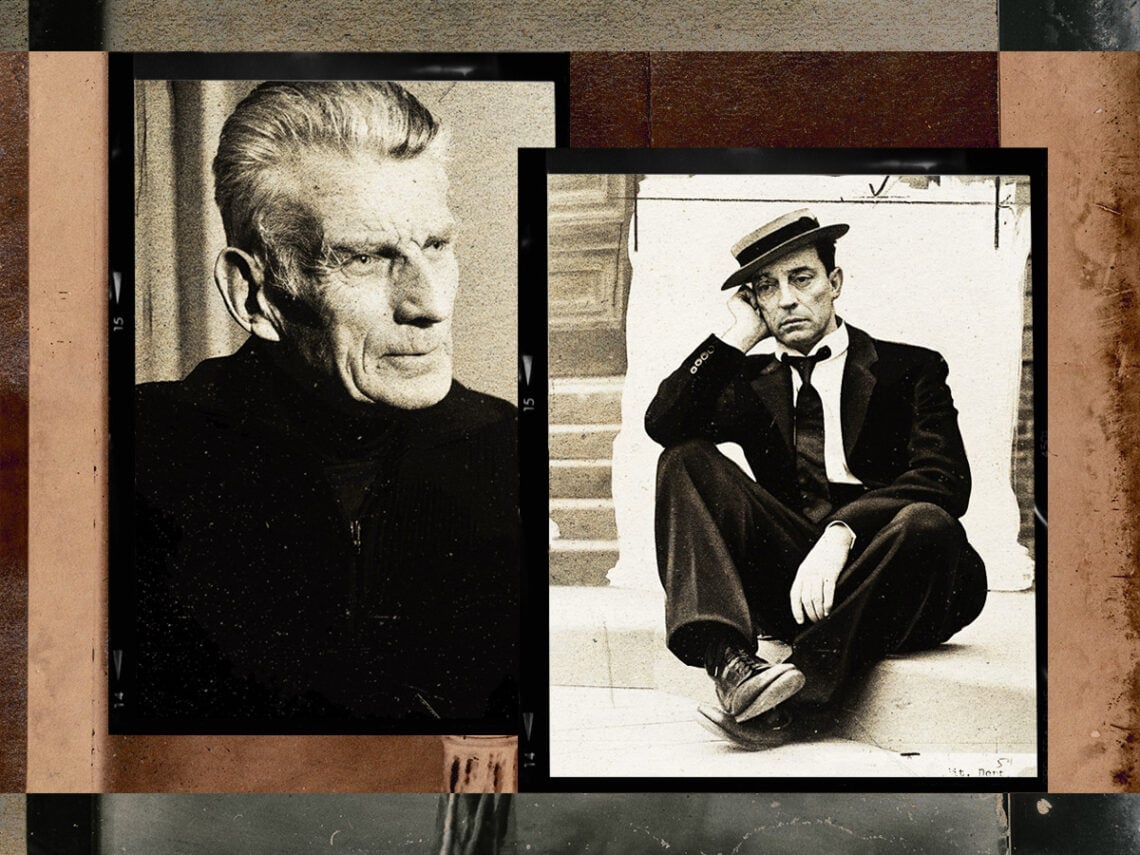
The film created by Samuel Beckett and Buster Keaton

There’s a real literary air to Ireland, with the likes of James Joyce, Oscar Wilde and Samuel Beckett all hailing from the country. The latter, internationally recognised as one of the most significant playwrights of all time, wrote several tragicomic masterpieces, including Waiting for Godot, Endgame, and Malone Dies.
Beckett only made one foray into the world of cinema, though, writing the screenplay for the 1965 short picture entitled Film. The Irish playwright had been interested in movies but never quite got the chance to work properly in the medium, even though he’d once asked Russian filmmaker Sergei Eisenstein if he could be his assistant.
To bring Film to life, Beckett sought out the talents of silent film legend Buster Keaton after the likes of Charlie Chaplin and Jack MacGowran turned the project down. Alan Schneider took charge of directing the avant-garde piece of cinema.
The film was commissioned by Barney Rosset of the American publishing imprint Grove Press. Rosset once offered his thoughts on Film’s production in Tin House. “The first person Beckett wanted for the only major role in Film was the Irish actor Jack McGowran,” Rosset wrote. “He was unavailable, as was Charlie Chaplin.”
Rosset went on to explain how Beckett had first met Keaton after he agreed to star in his short. He wrote: “He found Buster living in extremely modern circumstances. On arrival, he had to wait in a separate room while Keaton finished up an imaginary poker game.”
According to Rosset, Beckett had found Keaton somewhat “inaccessible”. Becket had said in an interview: “He had a poker mind as well as a poker face… He had great endurance, he was very tough, and, yes, reliable. And when you saw that face at the end… Ah. At last.”
“[Film is] about a man trying to escape from perception of all kinds, from all perceivers, even divine perceivers,” Beckett himself had explained. “There is a picture [on the wall] which he pulls down. But he can’t escape from self-perception. The man who desires to cease to be must cease to be perceived. If being is being perceived, to cease being is to cease to be perceived.”
Unfortunately, some of those involved in Film were not pleased with the final results. “Sad to say, our ‘deep focus’ work in Film was unsuccessful. Despite the abundant expertise of our group, [an] extremely difficult shot was ruined by a stroboscopic effect that caused the images to jump around. Today it would probably be much easier to achieve the effects we wanted to capture. Technology is now on our side.”
Check out part of Samuel Beckett and Buster Keaton’s Film below.
