


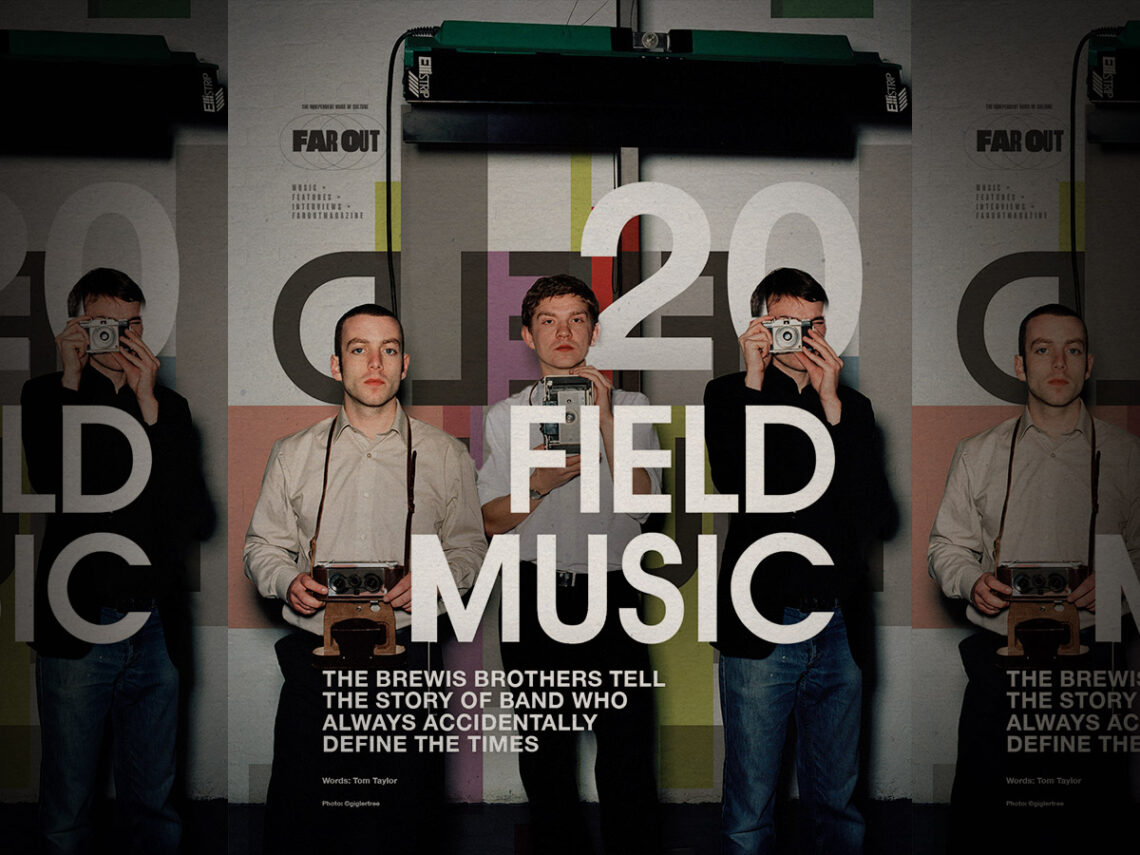
Field Music at 20: The Brewis brothers tell the story of band who always accidentally define the times

In a few days’ time, Field Music are set to begin a run of shows for the 20th anniversary of their self-titled debut album.
A few months after they conclude, they are set to embark on a second leg of gigs as a Doors cover band under the moniker, The Fire Doors. These respective tours represent two disparate moments. And the group never expected to arrive at either when they first started in Sunderland with the ambition to simply “release an album”.
Recently, I spoke with a band of a similar ilk – working-class lads from the northeast wanting to chance their hand at a bit of off-kilter indie – and they explained the lofty fees tied to their own debut. ”We do everything on mates rates and as cheap as possible,” they said, “But you’re still looking at £8,000 to £10,000 for our record from start to finish.”
Yet, in Field Music’s debut album, the arc of the band and their present position, these cash-strapped upstarts can find hope beyond the horrid expenses they face.
Listening back to the 20th anniversary edition of Field Music, the defiance behind the album feels even more apparent than it did when it slunk its angular way onto the scene like a geometric Paul Bracewell back in 2005.
It’s an oddball, and it doesn’t fit in, like many glorious records from Talking Heads 77 to Lovers Not Fighters before it. But it was never really concerned with fitting in to begin with. “We knew we were going to release something, we just didn’t know how,” David Brewis explains. This was a certainty that the fledgling band had arrived upon in the early mid-2000s after years of unrequited class and neglected attention.
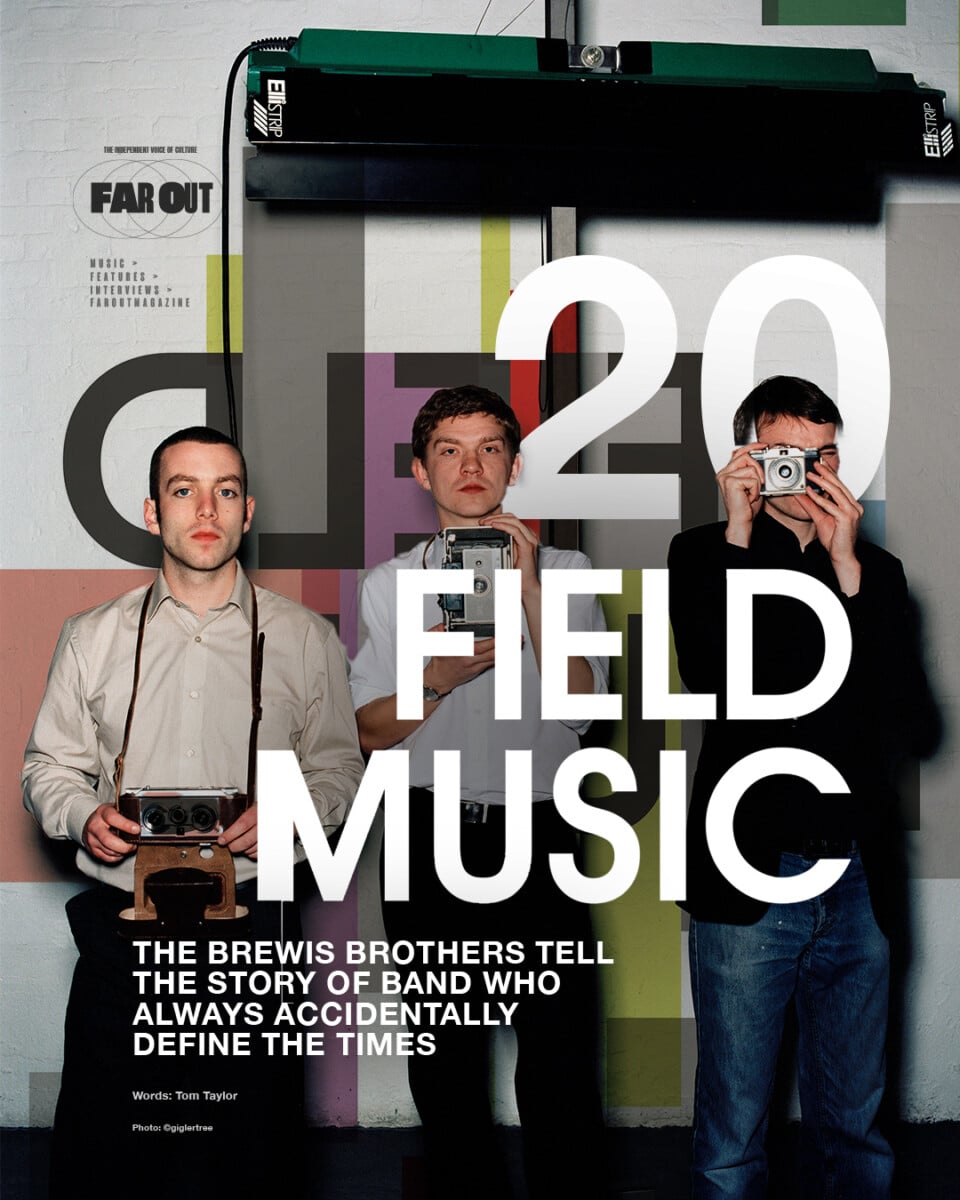
“By that time, we’d been around the fringes of the music industry for quite a long time,” David says. On that note, his brother Peter adds, “I was like 26 years old, and I was in no mood to try and get signed anymore.” Thankfully, as is often the case in the northeast music scene, a realm often considered ‘too far north’ for the jurisdictional conventions of any supporting industry, the Field Music brothers had been following the trail of a maverick.
Pete Dale formed Milky Wimpshake in Newcastle back in 1993, and like a musical Karl Marx, his mantra was something close to: control your means of production. So, over the years, while gigging and floating around the Sunderland scene, the Brewis brothers, following Dale’s (anti-)heroic lead, had been accruing the vital parts of a hodgepodge home-from-home studio.
“In 2001, we set up a practice room. It was a shared room for us, The Futureheads, our friend Peter Stebbing, and Laura Staniland, and the eight of us clubbed together to have this recording space, or rehearsal space. For us, we were thinking about it like a studio. And that’s where we recorded the whole of the first album,” David explains.
The mission was simply to create ‘something’ and say, “There’s the bare bones of an album. If anybody wants to put it out, let me know. And if not, then fine, forget it. We’ll just do it ourselves.”
In the end, this bold approach found them perfect partners in Memphis Records. Much like the constitution of Field Music, the label is “two brothers who sit around struggling to make decisions collectively,” but ultimately, “Put out stuff that they like.”
In an inadvertent way, both of those sentiments define the sound of Field Music. For a DIY debut album, the record is awash with a sense of colliding creative decisions, resulting in a strange beast brimming with the passions of art without compromise.
However, when it comes to ‘uncompromising’ and ‘art’, hotheads with snarling spirits and quickfire resolve are facets often evoked – that certainly wasn’t the case here. In fact, the charming strangeness of the sound is partly borne from the dallying journey of the band.
They weren’t musical Mackem protigees growing up, they simply plodded away on a “battered piano in the garage that smelt of cat piss”. And it took “The Bangles appearing on Top of the Pops” for them to gain any desire to actually learn how to play instruments as they approached their teens. Then, they circled each other’s bands for a while, existing as contributors to separate entities.
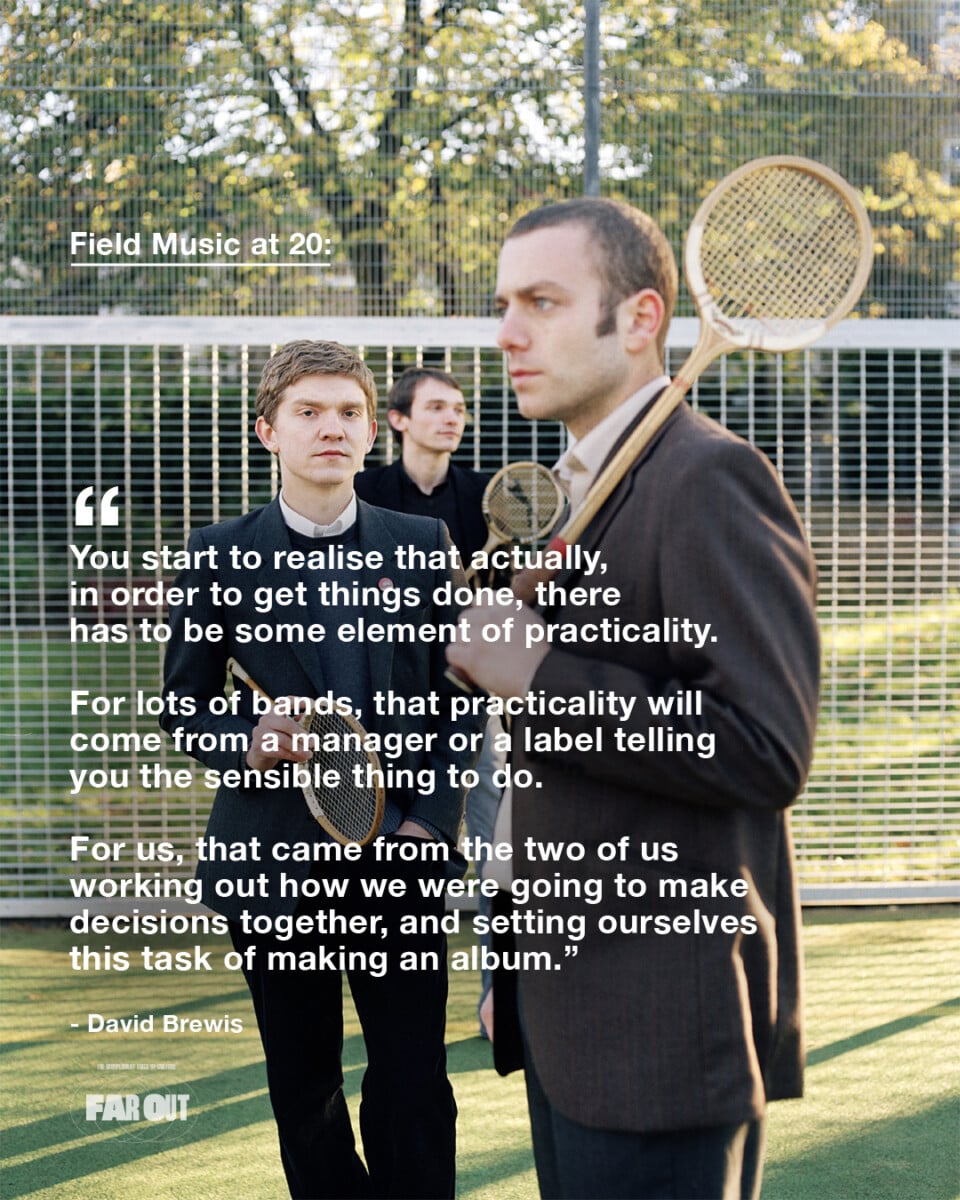
All of this, as David explains, proved to be a “quite good learning experience, because we ended up playing with loads of different people. But you start to realise that actually, in order to get things done, there has to be some element of practicality. For lots of bands, that practicality will come from a manager or a label telling you the sensible thing to do. For us, that came from the two of us working out how we were going to make decisions together, and setting ourselves this task of making an album.”
He continues, “We thought, ‘We’ve been waiting around to make an album for a really long time. If we properly do this together, we can just do it, and we don’t need a label, and we don’t need a studio, and we don’t need… we basically don’t need anyone else.”
And so, along with Andrew Lowther and Tom English (who would soon depart when Maximo Park blew up), Field Music were formed from this fractured/harmonious attitude, as was the studio space, and their own collective scene in Sunderland. Their schismatic sound followed suit.
That attitude still abounds 20 years later. A few eyebrows might have been raised when they formed a Doors cover band, but really, that surprise was merely a symptom that people hadn’t been paying attention to the continued plight of the industry, and Field Music’s defiant story within it.
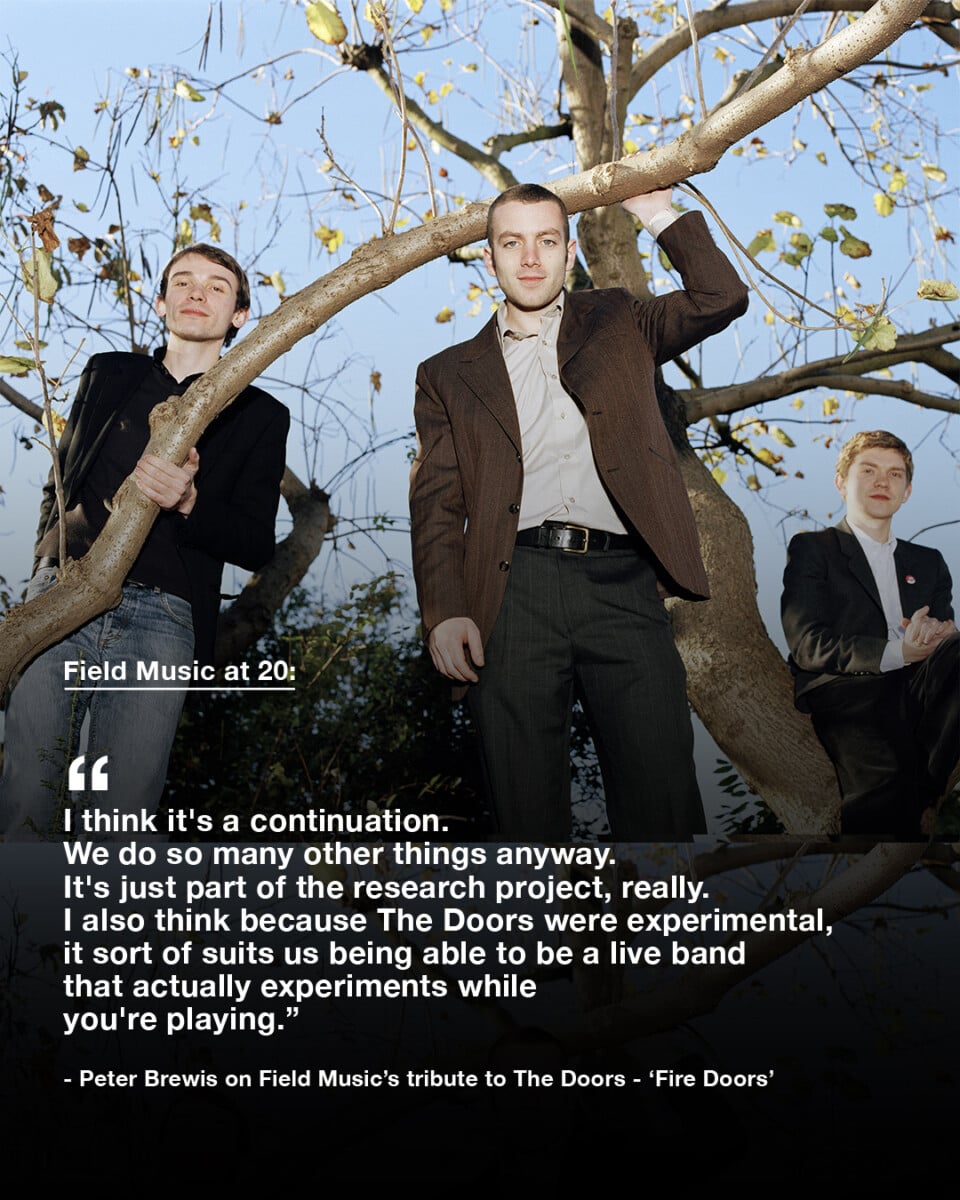
“I think it’s a continuation,” Peter agrees. They’ve always done what they need to keep releasing art. “We do so many other things anyway. It’s just part of the research project, really. I also think because The Doors were experimental, it sort of suits us being able to be a live band that actually experiments while you’re playing,” he says.
That mix of breezy experimentation and bold defiance exemplifies the band. They are the wispy guile of a Sean Hughes punchline with the resilient backbone of a Bosnian centre half. Their debut, even 20 years later, built upon this quirky juxtaposition of DIY punk and complex playfulness and still feels soaringly singular.
And yet, it was cobbled together between procrastinating badminton matches, as the studio that they had set up just so happened to be in a Monkwearmouth community centre. Stranger still, this sacred space got so scary in the evening that they had to mix the album in their parents’ spare room, necking brew after brew in rare comfort and safety.
This piecemeal process of fleeting inspiration, endless cuppas, a mild-mannered middle-finger to the music industry, and cobbling together playing styles without a great deal of know-how, led to an album they endearingly term as “anxiously exact”. That resonated. As does their following, refreshingly honest decree, “I think that represented us at the time,” Peter explains.
“I think we thought, ‘I am going to be a working-class intellectual, but now I think, ‘Maybe I’m not working-class, and I’m definitely not an intellectual,” he adds. And David quips, “Represents us at the time! I’m basically still like the opening three chapters of The Secret Diary of Adrian Mole. I’m only just entering my flipping cappuccino years.” That quirky and sincere disposition still makes them a band plenty are still more than interested in hearing in whatever guise they choose to exist.
It also makes Field Music at 20, the band themselves, and The Fire Doors, for that matter, a vital, earnestly odd addition to modern culture. After all, few things weirdly capture the zeitgeist quite like a DIY debut that oddly defined the true heart of an era, and the formation of a covers band that defines the truth of another – and all from a band that never expected to do either, only ever hoping to “release an album”.
You can check out the band’s forthcoming tour dates below and find their reissue here:
- 07 Nov – Leeds @ Brudenell Social Club
- 08 Nov – London @ Islington Assembly Hall
- 14 Nov – Sunderland @ Fire Station
