


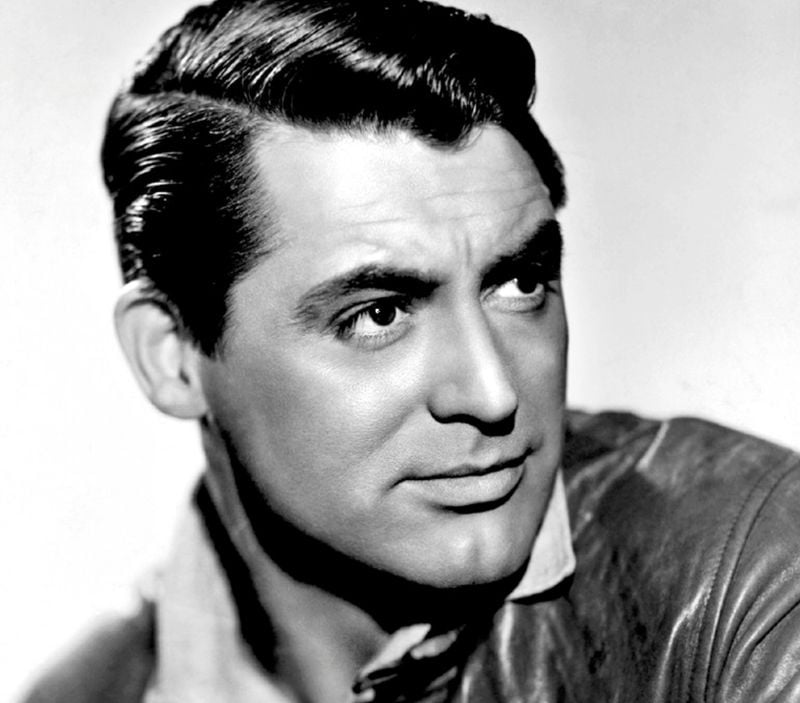
The female co-star who got paid more than four times the salary of Cary Grant

Cary Grant was one of the biggest movie stars of his day, and he was paid accordingly. Aside from a few failed attempts at retirement, he was one of the highest-paid actors in Hollywood for nearly three straight decades, thanks to his work in screwball comedies and Alfred Hitchcock classics. Even now, nearly five decades after his death, he remains the poster boy of the Golden Age of Hollywood.
Based on his fame, and the fact that the gender pay gap was significantly worse in the 1930s, ’40s, and ’50s than it is today, you might assume that Grant always earned top money compared to his female co-stars. In general, this was true. No matter how equal in size and importance their roles, the male star almost always deposited more in the bank. But in one film, Gant was paid a staggering 70% less than his famous leading lady.
In 1935, he appeared in the romantic comedy Sylvia Scarlett, which was directed by George Cukor. He played Jimmy Monkley, a con artist who goes into business with the titular Sylvia, played by Katharine Hepburn, who is passing herself off as a man. It’s a strange film and was potentially nearly a century ahead of its time, but it’s likely that if it had been released today, it would not have been well-received either. Tonally confused and messily executed, it was never destined to be a classic in any era, even though its themes are worth exploring.
At the time, Hepburn was one of Hollywood’s highest-paid stars, male or female. She had already earned her first Oscar and was riding high on the success of Alice Adams. But Sylvia Scarlett flopped hard at the box office and served as one of the final nails in the coffin of Hepburn’s perceived bankability. It was particularly catastrophic for the studio because they had paid her $50,000 ($1.1 million in 2025), anticipating that it would be a knockout success.
Grant, meanwhile, was paid a paltry $15,000 ($350,000 in 2025). Hepburn had also been promised a large share of the profits, but more than five decades later, it still hadn’t earned back its $1m budget. Had it been a success, that pay discrepancy would have been even more astounding.
It was a pivotal moment in both their careers. Grant was about to become a major star and a box office certainty, while Hepburn was on the cusp of being labelled ‘box office poison.’ By the time they worked together two years later on Bringing Up Baby, Grant fetched a higher salary, $75,000, than Hepburn’s $72,500. By 1940, for their fourth and final collaboration, their trajectories had diverged even further.
Hepburn had left Hollywood altogether at that point and sought refuge in the theatre. Trying to break back into movies, she offered to sell the rights to the play The Philadelphia Story for a pittance if she could star in it. Her salary was $75,000. Grant, meanwhile, was in a position to make some pretty lofty demands. Thanks to Hepburn’s relatively low salary, he threw caution to the wind and requested a whopping $137,000 ($3.1m today). Even cheekier, he insisted on top billing.
Recognising that she was in no position to argue, Hepburn agreed to his terms. Such a rancorous preamble to production might have actually improved the results of the film. In it, Hepburn and Grant play a divorced couple who bicker their way back into love, and their spiky chemistry is the key to its charm. It remains one of their greatest pairings and one of the best romantic comedies of all time.
