


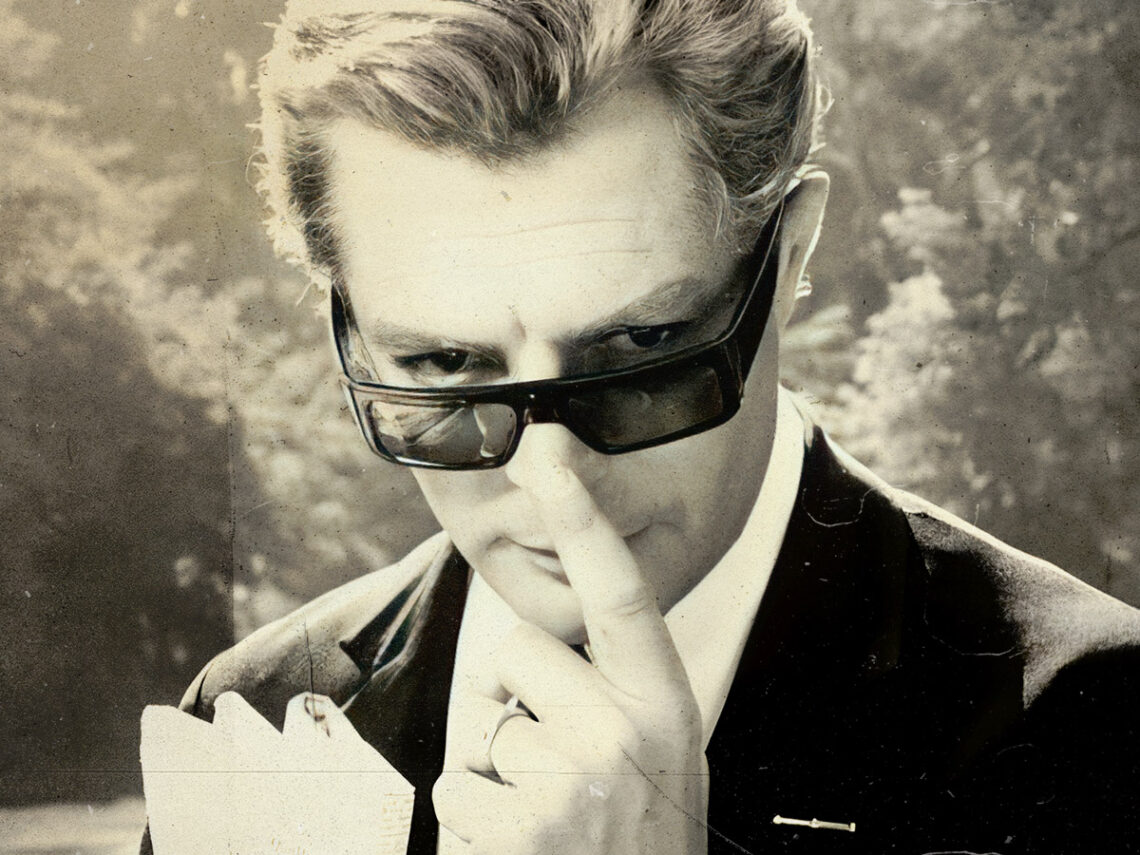
Federico Fellini’s favourite Federico Fellini movie

A visionary filmmaker whose contributions to the world of cinema have left an indelible mark, Federico Fellini is widely considered one of the best to ever sit behind the camera. Regarded as one of the most influential and innovative directors in film history, Fellini’s career spanned several decades, and his work effortlessly blurs the lines between fantasy and reality with unique flair.
The director’s ability to deliver dreamlike movies is, in part, owing to his early life. Not only fascinated with the surreal life of the circus but the young Fellini was obsessed with illustration and started out his creative career as a cartoonist before transitioning into screenwriting.
Making his directorial debut with Luci del varietà in 1950, Fellini’s career would only gather pace during the decade, releasing his highly influential La Strada in 1954, which won him an Academy Award for ‘Best Foreign Language Film’. “When I start a picture, I always have a script, but I change it every day,” Fellini once said of his approach to filmmaking. “I put in what occurs to me that day out of my imagination. You start on a voyage; you know where you will end up but not what will occur along the way. You want to be surprised.”
Fellini added: “I am not a movie director who consciously plots the movements of the camera because they are very natural. Imagination is everything. The picture is in my head, and I just try to make it.”
The 1960s produced only more impressive feature movies, including 1960’s La Dolce Vita and 1963’s 8½, a movie considered to be one of the greatest ever made. In fact, it’s such a well-loved film that even Fellini would select the title when asked to pick his ten favourite pictures of all time.
It is in this movie that terms such as “Fellinian” come to the fore as he displays his unique vision for moviemaking. 8½ is a perfectly pointed surrealist comedy-drama and a metafictional exploration of creative stifle. A director is struggling to make an epic drama, but his quest for creation is negotiated by doctors telling him to rest for his own well-being. Under pressure, he reverts to childhood fantasies.
8½ is a cathartic representation for every artist who feels creatively blocked. It’s bizarre in its subject matter and compromises reality and fiction as strict binaries, echoing the director’s struggle as he is forced to choose between the two: one comforting and the other an uphill battle.
Considered one of the greatest films given to the medium, 8½ is unmissable for film or art fans, and Fellini was clearly aware of the movie’s impact.
