


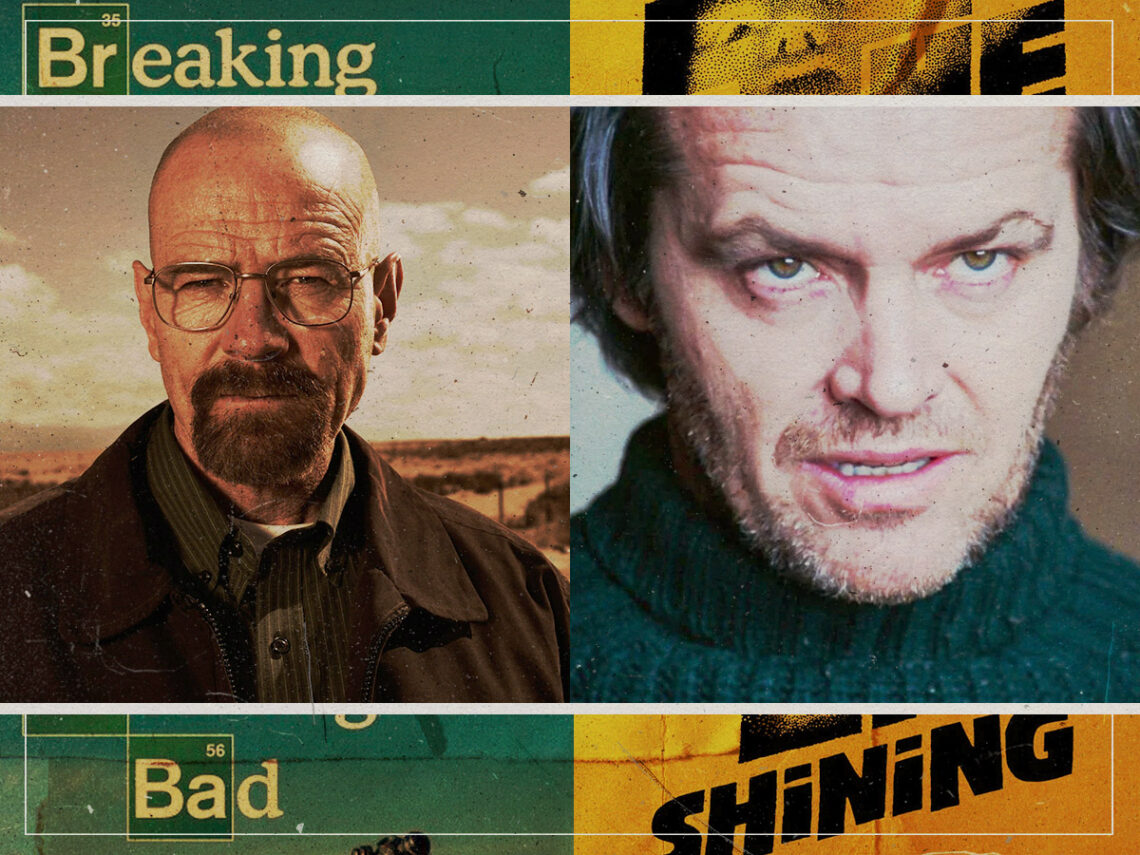
A descent into chaos: The fascinating parallels between ‘The Shining’ and ‘Breaking Bad’

It is hard to argue that Breaking Bad isn’t one of the most addictive and thrilling television shows ever made. After debuting in 2008, it was only a matter of time before people were calling it a masterpiece, and it’s not hard to see why. Created by Vince Gilligan, the show descends into pure chaos and adventure as Walter White – an unassuming chemistry teacher – starts up a meth lab in the hopes of leaving his family financially stable following his cancer diagnosis.
When we first meet Walt, he’s a struggling family man who must work two jobs to get by, and soon, his life gets even more miserable when he finds out he has cancer. Walt seems like your average man, yet by the end of the series, he’s transformed into a full-blown psychopath, letting pure ego and excessive financial gain drive him away from all forms of sense and morality. He engages in countless acts of violence and murder – even going as far as poisoning an innocent child – so that he can remain the reigning king of the drug world.
It is terrifying to witness Walt’s morals slip away, his need for power allowing him to transform into an unrecognisable, tragic figure. He finds it easy to lie, constructing a second life that he keeps secret from his family for a considerable amount of time. Despite everything, Gilligan plays with the audience in such a complex way, forcing us to consider how far we’ll go alongside Walt – how long it’ll be before we no longer feel an ounce of sympathy or understanding for the protagonist.
Walt does so many terrible things, yet it still feels like losing an old friend when he inevitably dies. There are moments where we can’t help but feel sorry for the mess he’s found himself in before quickly remembering that he’s made this bed himself; therefore, he must lay in it.
Many shows and movies influenced Gilligan when creating Breaking Bad, such as The Godfather and Once Upon a Time in the West. One less-talked-about influence that actually draws significant parallels is The Shining, directed by Stanley Kubrick.
Adapted from Stephen King’s novel of the same name, Kubrick’s film is much more preoccupied with the supernatural than Breaking Bad – everything that happens in the latter is grounded in reality. Yet, at its core, The Shining is also a story about the descent of man, in which the protagonist transforms from a lowly family man into a ruthless, amoral figure.
Like Breaking Bad, The Shining asks us how long we’ll side with Jack by having him continuously glance at the camera for just a nanosecond at a time, pulling us into his psyche and establishing a connection between us and him. While this doesn’t happen in Breaking Bad, the show does a fantastic job of getting us to side with Walt by ensuring that he is jovial and unintentionally funny enough to appear relatable and familiar, and thus, we often root for him.
While Jack and Walt aren’t entirely alike, they transform into heinous characters by the end, and both die as a result. Meanwhile, they both have a wife and son who must be protected from them. The Shining and Breaking Bad depict the complications of a troubled relationship, with Skyler and Wendy facing serious incidents of domestic abuse at the hands of their partners. They both come to fear their husbands, failing to recognise them as the men they once knew.
This is most prominent in the “Here’s Johnny!” scene in The Shining, where Wendy finds herself stuck in the bathroom while her axe-wielding husband slashes through the door, ready to kill. She slices his hand with a knife, catching him off guard. In Breaking Bad’s highest-rated episode ‘Ozymandias’, Skyler and Walt come to blows, with the former pulling a knife in a similar style of defence, also slicing her husband’s hand. Like Wendy protecting her son Danny from Jack, Skyler attempts to protect Walt Jr from Walt. Both are ultimately successful, while the men succumb to their deteriorating mental states.
Those are the main parallels that run between Breaking Bad and The Shining, although there is even one episode that pays direct homage to Kubrick’s film, which fans were quick to notice. In ‘Sunset’, the code name KDK-12 is used over a CB radio, the same one used by Wendy in The Shining. Potentially, then, Gilligan was actively inspired by the film, which, like Breaking Bad, expertly depicts one man’s mental disintegration, much to the terror of his family.
