


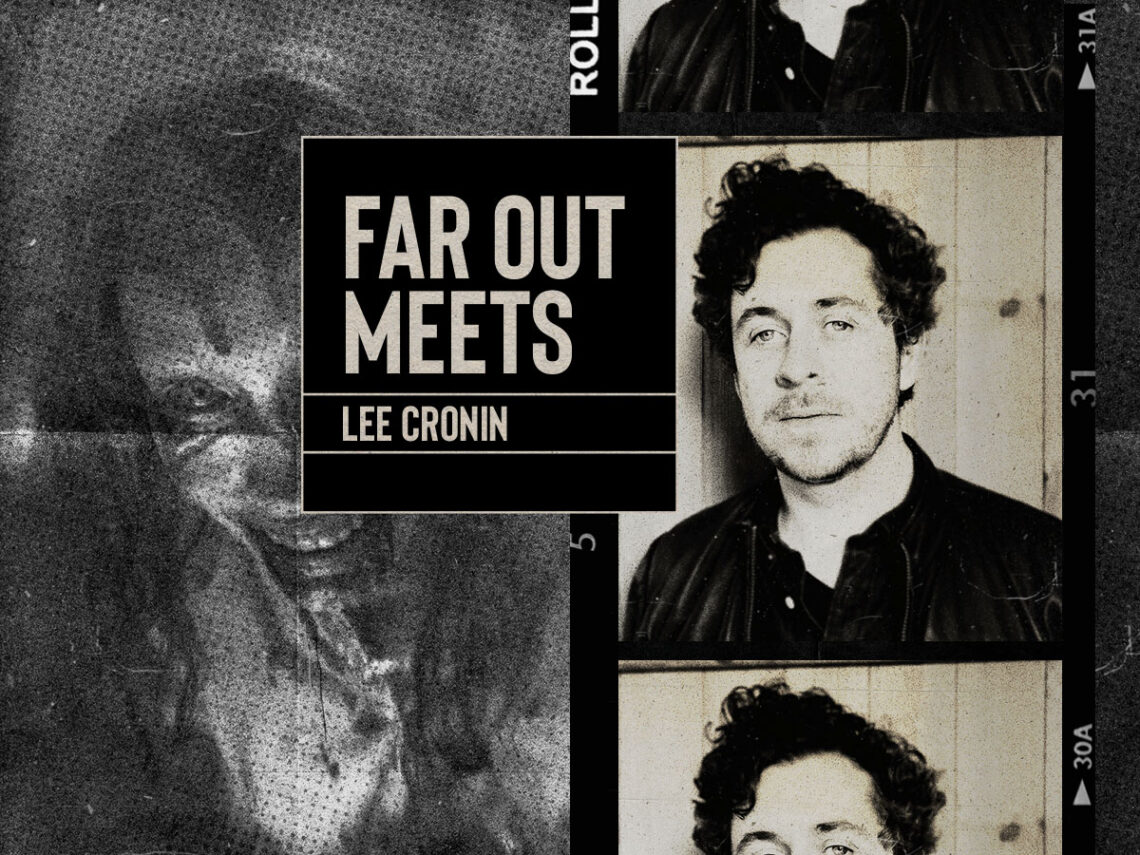
Far Out Meets: Lee Cronin, the playful filmmaker taking on ‘Evil Dead Rise’

I’d love to say that I met Lee Cronin, the Irish filmmaker behind the latest instalment in The Evil Dead franchise, in a creaky cabin in the woods, where dirt carpets the wooden floorboards, and a flesh-coated Necronomicon resides in the basement. Alas, considering that Cronin’s film is the first since 1992’s comedy-horror-caper Army of Darkness to take place outside of a dark, remote cabin, it’s probably fitting that we discussed the ins and outs of his new film through the wonders of modern technology.
“The top floor of a high-rise building in LA is kind of as far away as you can get from a cabin in the woods,” the director states, wanting to present his film as being distinctly different from the original trilogy, helmed by Sam Raimi in the late 20th century. “It wasn’t that I wanted to run away from the cabin, but I just wanted it to have a different context. I think, actually, one of the big differences with this movie, and the ones in the past, is, in the past, it was about people going to an unfamiliar place where there is danger and something evil. In this story, we’re in a very familiar place, inside a family home on a Friday evening”.
Whilst much is familiar about Cronin’s Evil Dead Rise, with the fleshy Necronomicon returning along with the demonic zombies known as Deadites, his new film feels entirely revolutionary at the same time. Bringing the ancient horror of the beloved franchise to the safety of a contemporary family, his latest instalment tells the story of Beth (Lily Sullivan), a young woman who travels to LA to visit her older sister Ellie (Alyssa Sutherland), a single mother struggling to raise her children.
From this starting point, the familiar red ooze and sticky gore of the franchise takes hold, with Cronin keen to maintain some levity among the horrifying events, particularly after Fede Álvarez’s jet-black 2013 remake of the 1981 original. Wanting to capture Raimi’s DIY playfulness instead of Álvarez’s more cynical approach, Cronin admits: “Like, the 2013 film I really love, but it’s kind of midnight black. It’s a little mean-spirited. Despite the fact that there are children in danger in this movie, major, major danger, this one, I think, still has a little bit more entertainment factor”.
Whilst moments of midnight black violence are hard to get away from, especially when the villains of the franchise are flesh-eating ghouls who find it personally thrilling to self-mutilate, Cronin’s aim was to reproduce the freneticism of the original films. “I always loved the kind of relentless energy of the movies and the independent spirit behind them,” Cronin praised, accentuating his love for such elements ahead of the franchise’s visceral horror.
Indeed, as the conversation went on, it became increasingly clear that Cronin wasn’t the kind of filmmaker who focused on visceral horror set pieces with the same level of gruesome detail as the Jigsaw killer. Whilst he might name Steven Spielberg’s Jaws, Stanley Kubrick’s The Shining and the 1987 sequel, Evil Dead 2, as his all-time favourite horror flicks, our conversation repeatedly comes back to Peter Jackson’s playful horror sandbox, Braindead, from 1992.

“That film has come up a little bit, it does have a little bit of a Braindead quality. It’s not as madcap at all, but there is a little bit of a Braindead influence in there,” Cronin admits, shortly before he reveals his thinking behind the infamous cheese grater moment that caused a stir on social media after the release of the first trailer.
The moment sees a possessed Deadite take a cheese grater to the leg of Sullivan’s Beth, with the trailer teasing a cringe-inducing moment that results in the calf becoming fleshy “leg-uine” as the director eloquently states. “OK, well, I think we’ve all grazed our knuckles on a cheese grater and gone, ‘Oh, God, imagine if that was worse’,” Cronin recalled, revealing the origins of the grisly moment: “I remember, I wanted to have this fight scene that takes place in the film in a kitchen. Then once I did that, I was like, I need some weapons. There’s more than just the cheese grater in that scene, there’s a couple of other pretty brutal elements and some slightly slapsticky stuff”.
Moving distinctly away from the rusty razor blades and blunt machetes of Álvarez’s 2013 film, Cronin went about injecting a little more fun into the franchise, much like Jackson’s playful ‘90s classic that treats the human body as if it was pliable Playdough that could be stretched, bent and smushed. “There’s, like, someone smacking someone in the face with a big cooking pot,” the director says of the film’s intended levity, “I put in a big like ‘gong’; the film’s got its own tone there”.
“I think post-Covid, there’s been a return to spectacle and to the entertainment factor,” Cronin states, as the conversation turns to the arrival of ‘elevated horror’, a divisive term used to describe modern genre flicks that stand for something more than mere carnival frights. “I think horror has always been an elevated aspect of genre in how it operates,” he adds, “for me, actually, it’s more a little bit like tonality, like I would say that the use of the phrases was through a period where we had a lot of existential horrors, that maybe were less about spectacle”.
“But that’s why I’m excited for people to watch this movie,” he exclaims: “because it’s just a horror thriller ride. You know, it’s not, and it has themes, and it has metaphors, but it doesn’t try and drown in them. I think some movies of recent years, in the past, are really just horror movies from the dread factor. I’m not getting scared watching these films, necessarily. They’re more existential than spectacle”.
Whilst themes of psychological fragmentation may exist within Sam Raimi’s original trilogy, the spirit of the 1980s horror series was born from an appreciation for playful independent cinema. In the very same vein, Cronin’s latest takes the ungodly terror of the series and shoves it into the claustrophobic remits of a contemporary LA apartment, making for a 90-minute rollercoaster that questions what one would do if an ancient malevolence arrived at your doorstep armed with a trusty cheese grater.
