


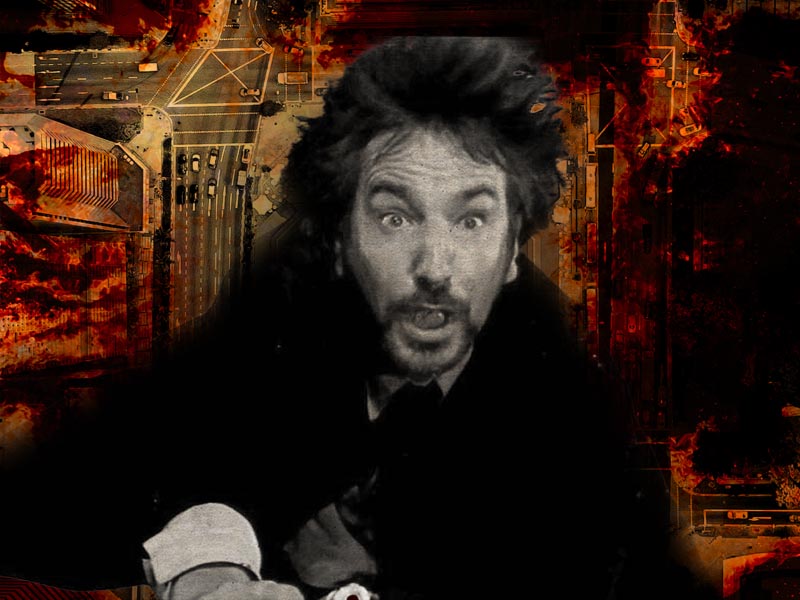
Exploring the cinematic curiosity of villains being killed by gravity

How do you defeat one who seemingly cannot be defeated? Slaying the likes of Darth Vader, the dark overlord of the Star Wars galaxy or Saruman, the evil onlooker of the Lord of the Rings series, is no easy task, with no mere mortal able to take them down. Where swords, magic powers and conventional firearms have no effects on such behemoths, Gravity is indeed the kryptonite of villains across the cinematic universe.
Whether it’s a city highrise, a slippery clifftop or even a terrifying cosmic void, villains across the landscape of cinema have always had a fondness for falling off of high places. Often attributed to the films of Walt Disney, the trope has been coined the ‘Disney Villain Death’ with a countless amount of theatrical antagonists falling dramatically to their deaths after a particularly evil speech declaring their ‘victory’.
Evidence of such goes back to the very start of the company’s history too, with the Evil Queen of 1937s Snow White and The Seven Dwarfs tumbling off the edge of a storm-battered cliff, with her demise solidified by the heft of a boulder undoubtedly squashing her into a vile horizontal slice. Such is later repeated when Maleficent meets her fiery end in Sleeping Beauty, with variations on the Disney Villain Death occurring multiple times throughout the 20th century.
This was later revived in Disney’s ‘Bronze age’, with films of the late 1980s and 1990s reviving the trope, putting an end to the villains of Tarzan, The Lion King, The Hunchback of Notre Dame and Aladdin, each meeting their demise with variations of the same cliche.
Though, by this time at the end of the 20th century, the trope had caught on, and it wasn’t just Disney using the dramatic climax for their benefit.
Used multiple times throughout the Batman, Star Wars and James Bond universes, the trope was also utilised in Alfred Hitchcock’s Vertigo, the classic satire RoboCop, Bruce Willis’ festive action movie Die Hard, and the sci-fi sequel Star Trek III: The Search For Spock, to name just a handful. Written into classic literature, and even present in one of cinema’s earliest films, Robert Wiene’s 1920 iconic Cabinet of Dr. Caligari when Cesare appears to fall from the hilltop, this form of narrative demise was established long before Disney claimed it for their own.
Whilst variations of the trope may exist, with the T-1000 in James Cameron’s Terminator 2: Judgment Day falling into molten metal, Captain Hook of Disney’s Peter Pan precariously landing in the jaws of a crocodile and Alex Verona of Crank getting his neck broken in mid-air by a mental Jason Statham (ridiculous we know), they all abide by the same central concept; gravity always wins.
For Disney, having their animated villains fall from power and into the plummets of obscurity, where details of their presumably brutal landing are left to the imagination, makes total sense. Especially if the hero of the story offers a “take my hand!” before their nemesis stubbornly refuses, after all, this provides one last act of heroism without the messiness of having cold-blooded murder on their hands.
Still, you’d think such explicit action movies as Die Hard, and RoboCop might show the demise of their main antagonist? Though, not showing their death provides for two things, firstly, the possibility that they may impossibly return in a sequel, and secondly, the horrific, existential realisation that they may indeed still be falling, forever paying for their evil deeds rather than meeting a sticky, bloody end at the hands of the hero.
So, if you ever find yourself battling a monstrous 7-legged neon-orange brute, make sure you’re on top of the Empire State building, or Niagara Falls, or somewhere else terrifyingly tall.
