


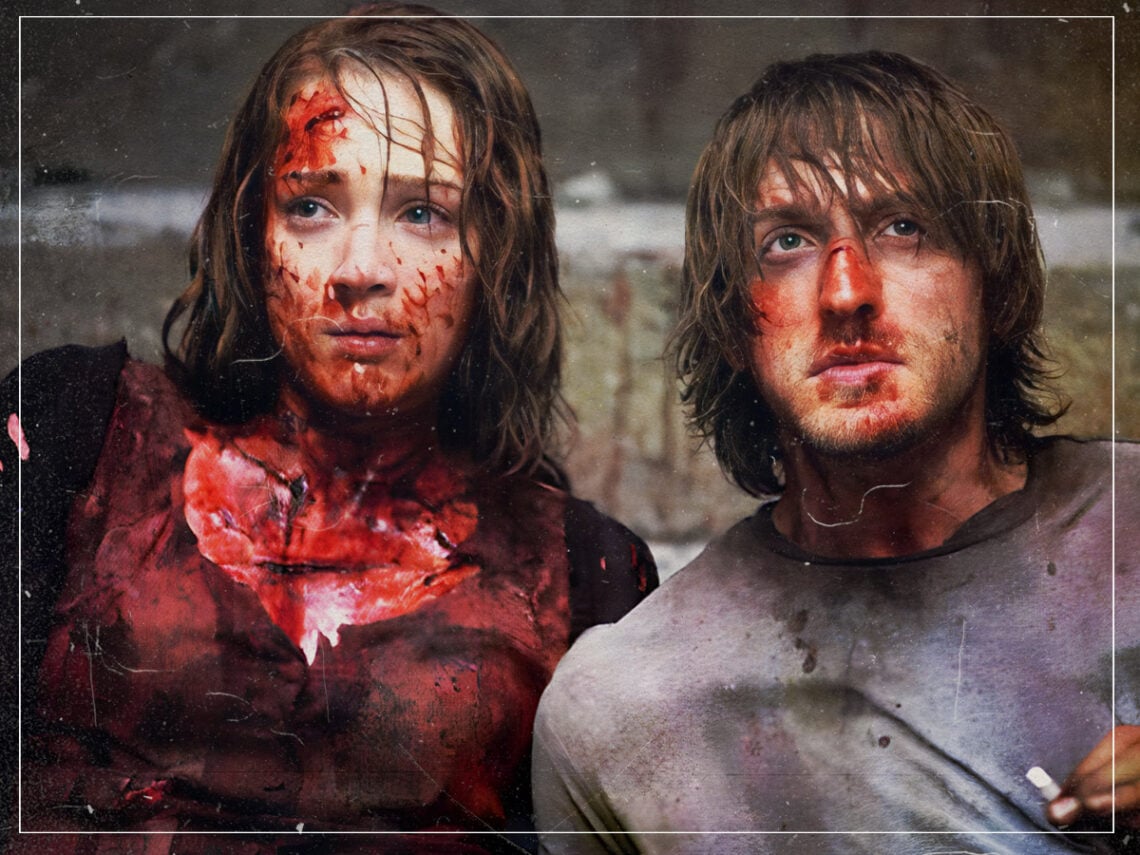
Explaining the insane ending of ‘The Cabin in the Woods’

The more popular to the point of ubiquity a genre becomes, the harder it is to create something completely unique and unlike anything that’s ever existed before. It still happens on occasion, though, with The Cabin in the Woods one of the most memorable examples that shook horror to its foundations.
Written in three days by producer Joss Whedon and first-time director Drew Goddard, the impetus was to pen a glowing love letter to horror that also tore it apart piece by piece. As the latter told Filmmaker Magazine, “We kept finding ourselves questioning the genre, asking ourselves, ‘Well, why?'”
As a result of exploring what makes the target demographic tick, Goddard opted to give them exactly what they wanted for the first half of the film, before tearing up the rulebook and upping the ante for a third act that made a concerted push to upend decades upon decades of convention.
Five college-age friends head off to the titular shack, only for eerie goings-on to occur. So far, so standard, at least until it transpires that scientists nestled deep underground are manipulating their experience for reasons that aren’t initially clear but eventually revealed to be increasingly self-aware.
The people in charge of the facility have been trying to complete a ritual that staves off humanity’s destruction. However, leaving Fran Kranz’s stoner Marty alive went completely unnoticed until he reappears to save Kristen Connolly’s Dana from being killed by a zombie.
Having discovered the subterranean entrance to the complex, the two survivors boldly make the call to journey downwards and discover exactly what’s going on. Stumbling upon creatures of myth, folklore, and legend imprisoned in cells, the manipulation winks to the formulaic nature of horror, where any beast can be dropped into a story even vaguely resembling The Cabin in the Woods‘ first two acts to yield much the same results.
Purging the system, the employees end up being devoured by the very creatures they’d imprisoned, all while trying to ensure Marty dies first so that the sacrifice of the virginal Dana can complete the ritual as intended. Sigourney Weaver then appears as the exposition-spouting Director, who explains that ancient evil deities need to be appeased by the routine and regular sacrifice of a chosen few.
Within the context of the film, it doubles as a sly nod towards literal film directors adhering to a standard set of archetypes and tropes in horror, with stereotypical jocks, stoners, and promiscuous characters being re-canonised as the Harlot, the Scholar, the Athlete, the Fool, and the Virgin. By extension, the entire genre is boiled down to a monologue, which is an entirely accurate one.
Deciding that the world isn’t worth saving after all, Dana and Marty opt to ride out the blood-soaked storm as the gigantic hand of a vengeful ancient god begins emerging to wreak havoc on the world. Throwing one last twist in for good measure, The Cabin in the Woods even opts to misdirect a misdirect, with the two remaining protagonists turning their noses up at following horror’s tried-and-trusted approximation of a happy ending by having them meet their doom the second it looks as though they might make it to the end credits alive.
