


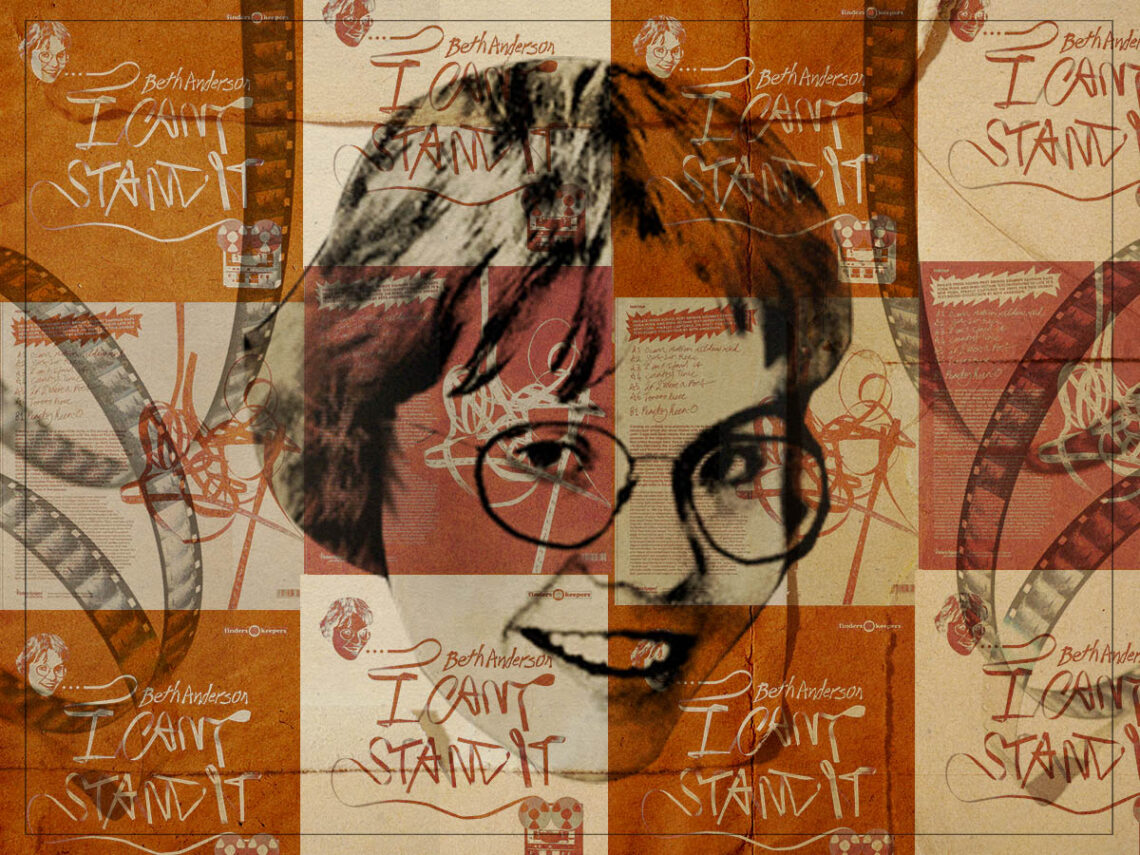
‘I Can’t Stand It’: Proto-punk, poetry, and the world of Beth Anderson

New York City has always boasted a particularly vibrant art scene, going back to the very early 20th century. However, the dark and seedy city that New York had become by the 1970s only seemed to inspire more creatives to set up shop there. Whether it was the confrontational punk rock scene of the Lower East Side or the blossoming hip-hop scene of the Bronx, every avenue of that concrete jungle had something interesting going on. Inevitably, many of these artists and scenes have since been lost to obscurity, and that seems to be what happened in the case of Beth Anderson.
Originally from the city of Lexington, Kentucky, Anderson arrived in New York during the 1970s and quickly found a home within its underground art movement. Having studied piano from a very young age, Anderson was already a gifted musician, but by the time she rolled through NYC, she had begun composing a specific style of experimental music that she dubbed ‘swales’. In essence, these pieces of music were akin to sonic collages, with Anderson composing multiple pieces and then stitching together samples of them to create one piece of music.
On top of these strange compositions, Anderson would often overlay poetry, disjointed literary passages, or spoken word segments. Musically, it is difficult to think of any comparisons that can be drawn between Anderson and any other musician or composer. Ultimately, she probably operates in a space somewhere between the Nihilist Spasm Band and Suzanne Ciani, but even those comparisons do not do justice to the stunning originality and experimentalism of Anderson’s work.
If you think back to the New York music scene of the 1970s, it was a period in which musicians across the five boroughs were striving for originality, particularly within the punk scene. However, punk quickly became little more than a fashion trend, producing a wealth of bands that all sounded, more or less, the same. In contrast, Anderson always strived to create things that were entirely new, and different to what everybody else in New York’s art scene was creating at the time.
Perhaps this dedication to innovation provides some answers as to why Anderson’s music was rarely afforded mainstream attention, or even widespread releases. She had been creating these musical swales for years, but it was only in 1980 that she managed to get them released out into the world on vinyl. A 45 rpm release of her incredible proto-punk composition ‘I Can’t Stand It’ was, for a long while, the composer’s only official release.
Although she had largely flown under the radar during the early years of New York punk experimentalism, ‘I Can’t Stand It’ was quickly adopted by the city’s no-wave movement. No-wave, as a scene, always rewarded originality and experimentation, and composers like Anderson were utterly essential to its development and endlessly diverse sound.
As if her credentials as an experimental composer were not enough for those in the no-wave scene, ‘I Can’t Stand It’ featured distinctive, driving back-beat provided by Theoretical Girls’ Wharton Tiers, who would later work with the likes of Sonic Youth and Dinosaur Jr, who were both heavily influenced by New York’s no-wave movement, and Anderson by extension.
Throughout her life and career, Beth Anderson has operated on an entirely different plane of existence from her contemporaries; she is always looking to create music that challenges the boundaries of acceptability and what we view as music. Although she has remained a largely obscure figure throughout much of her life, her work had a tendency to fall into the hands of those who needed to hear it. Even today, compositions like ‘I Can’t Stand It’ remain some of the finest works in the extensive field of experimental and avant-garde music.
