


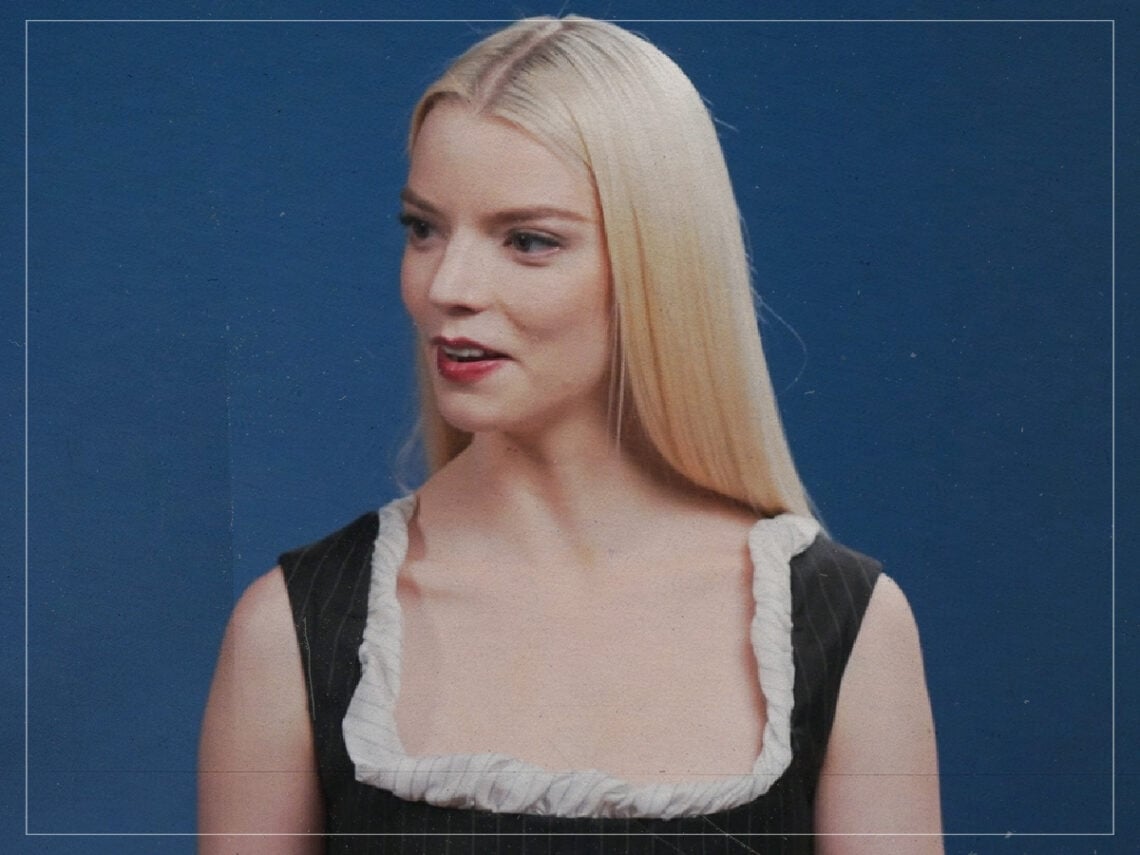
“That’s the legitimate thing”: the exact moment Anya Taylor-Joy “officially” became an actor

At what point does an actor know that they’ve ‘made it’?
Maybe it’s when they’ve earned a nomination from a prestigious institution like the Academy or the Golden Globes, or perhaps it’s something a little less illustrious.
Anya Taylor-Joy knew she’d levelled up in her career when she was offered a specific role, even though, at this stage in her life, she’d already appeared in Robert Eggers’ acclaimed horror film The Witch, winning several small awards for her incredible performance, and the commercial hit Split alongside James McAvoy, yet we all have our own ideas of what is considered a career peak, even if, to others, it wouldn’t mean all that much.
For Taylor-Joy, it was the opportunity to star in a BBC period drama that impressed her more than anything, making her feel like she’d really achieved something. It’s almost a rite of passage, particularly for a British actor, to star in a period television series broadcast on the BBC, and while Taylor-Joy isn’t technically British, the Miami-born actor had an unusual upbringing, dividing much of her time between Buenos Aires and England as a child.
She was no stranger, then, to the classic period dramas which have come to define British TV over the decades, like the indelible 1990s version of Pride and Prejudice starring Colin Firth as the wet-shirted Mr Darcy, or the beloved Downton Abbey. But Taylor-Joy’s first BBC period drama role wasn’t a Jane Austen adaptation or even one set in England, for that matter.
Rather, it was The Miniaturist that allowed Taylor-Joy her BBC period drama break, with the actor telling Allure, “Doing BBC period drama is – when I first heard I had the job, I was like, Oh, my gosh, I’m officially an actress. That’s the legitimate thing.”
Set in the Netherlands during the 17th-century, Taylor-Joy played Petronella, a woman who begins receiving items from a miniaturist to fill a doll house, with this mystery unlocking key secrets about her new, strange life as a married woman, and while the series was pretty well-received, the actor soon found an even bigger break with a pretty iconic BBC period drama, Peaky Blinders.

Playing Gina Gray across eleven episodes, Taylor-Joy was able to further fulfil her fantasy, and it seems like period dramas suit her pretty well. Carrying on the lineage of BBC adaptations of classic Austen dramas, the actor then got to portray the matchmaking heroine Emma Woodhouse in a film version of Emma, directed by Autumn de Wilde as well as appearing in the ’50s and ’60s-era Netflix hit The Queen’s Gambit.
Taylor-Joy might’ve since earned a Golden Globe for the latter, as well as appearing in many hit movies, but for the actor, nothing felt as good as landing her first role in a BBC period drama. It might not have been the most successful, nor did it feature a particularly star-studded cast, but at least she got to be part of something that has such an important legacy in the realm of British television (which is the best kind of TV, right?).
