


Every ‘Saturday Night Live’ sketch adapted into a movie

In the hallowed halls of Saturday Night Live, there have been thousands of sketches that have cropped up across the show’s nearly 50-year history. Everything, from beloved recurring segments to one-off weirdos to reviled controversy starters, has been put on television, but there’s an even rarer category: the Saturday Night Live film adaptation.
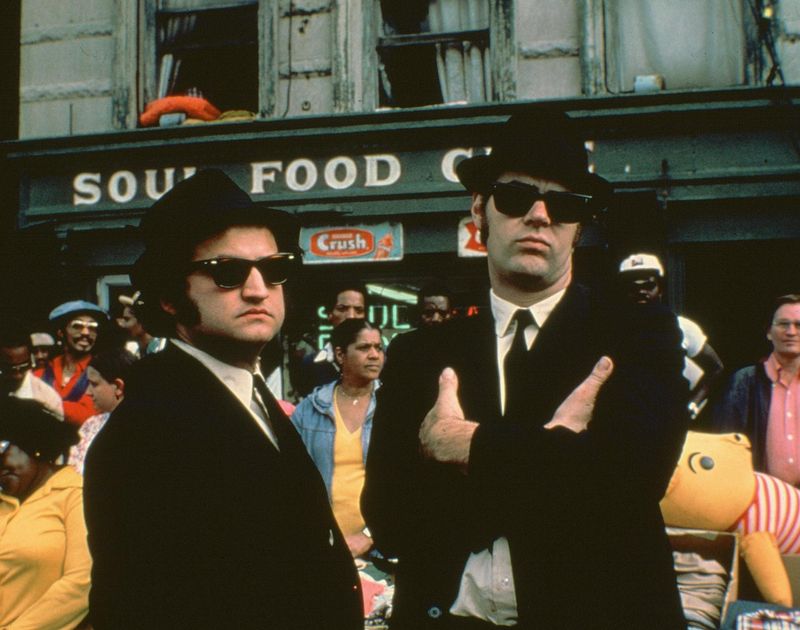
Starting with the 1980s picture The Blues Brothers, Lorne Michaels has set about producing films for some beloved, and not so beloved, characters that originally appeared in SNL sketches. Although the original rate of production was minimal, it didn’t take long for SNL movies to become commonplace.
Throughout the 1990s, you could see a new SNL movie nearly every year (sometimes twice in one year). Whether it was oversaturation or simply a lack of quality material, movies based on SNL sketches soon gained a reputation for being mind-bogglingly bad. Sometimes they deserved less hate than they got, but by the end of the 1990s, the hot streak of SNL-based movies was over.
In total, there have only been 15 big-screen adaptations of classic Saturday Night Live sketches. They range from beloved comedy classics to underappreciated cult films to some of the most reviled movies of all time. The only film that we’ve excluded is Billy Crystal’s Mr. Saturday Night, as the sketch originally appeared in the 1984 HBO comedy special A Comic’s Line.
Check out the rest of those films in chronological order down below.
Every Saturday Night Live movie:
The Blues Brothers (John Landis, 1980)
The first SNL film adaptation also became the one that set the precedent for all others to come. The Blues Brothers is a lot of things: a gonzo road movie, a musical revue, and an action film. But mostly, it’s just an excuse for John Belushi and Dan Aykroyd to bounce off each other for two hours.
With a massive budget just for cocaine and enough cars to make the biggest demolition derby ever caught on film, The Blues Brothers is one of the most gleefully anarchic comedies ever released. It was a massive hit, and it remains beloved as the original gold standard for SNL movies.
Wayne’s World (Penelope Spheeris, 1992)
The 1980s was a tumultuous period for SNL. Constantly shifting personnel and pervasive threats of cancellation made the decade a difficult one in Studio 8H. But by the end of the 1980s, a renewed sense of stability made SNL extremely successful once again.
Nothing embodies that better than Wayne’s World, the iconic sketch that became SNL‘s biggest silver screen success story. Soon, SNL adaptations would become frequent fixtures at movie theatres, but none of the subsequent attempts has had the same goofy and affable charm as Wayne’s World did.
Bob Roberts (Tim Robbins, 1992)
In 1986, Tim Robbins produced a short film for SNL featuring the character of Bob Roberts, a blowhard far-right businessman who used folk songs and protest music to convey his messages. Robbins kept wanting to revisit the character, and eventually, a big-screen adaptation turned Roberts into a politician seeking to unite the right through song.
Bob Roberts exists somewhat outside the realm of SNL adaptations: it was never a recurring sketch, and Robbins aimed for biting satire over traditional sketch comedy. Still, Bob Roberts remains one of the greatest SNL movies, becoming more prescient with every passing political crisis.
Coneheads (Steve Barron, 1993)
Although it was only in its early stages, SNL films could do no wrong in the early 1990s. With the success of Wayne’s World and the continued cult fandom around The Blues Brothers, Dan Aykroyd decided to revive a decades-old sketch for the next feature film adaptation from SNL.
Coneheads was the moment it all went sideways. Hackneyed, laboured, and unfunny, Coneheads popped the once-promising bubble surrounding SNL movie adaptations.
Wayne’s World 2 (Stephen Surjik, 1993)
After the success of the first Wayne’s World movie, Mike Myers and Dana Carvey jumped right back into Wayne’s World 2. Unfortunately, the pair’s chemistry had become strained through disagreements, leaving a slight tension in the air that is palpable on screen.
That being said, Wayne’s World 2 is goofier and sillier than its predecessor, containing enough laughs to justify its existence. It would be the best SNL adaptation for a while.
It’s Pat (Adam Bernstein, 1994)
Julia Sweeney’s signature SNL character Pat had a one-joke pitch: was he/she a he or a she? It would have taken some Herculean efforts to stretch that out over a full-length runtime, but it was decided that Pat was worth rolling the dice on in 1994.
It’s Pat is more bizarre than it is bad. Featuring cameos from goof-rock legends Ween and uncredited script rewrites from Quentin Tarantino, It’s Pat could have been the most surreal and insane SNL adaptation. Instead, it chickens out at nearly every turn, leaving everyone on screen awkwardly trying to sell its now-horribly dated premise.
Stuart Saves His Family (Harold Ramis, 1995)
Al Franken had one of the most extensive resumes at SNL. As a writer and featured player during the show’s original run, Franken was tagged to be Lorne Michael’s successor in 1980 before a sketch attacking NBC president Fred Silverman cost him the job. Franken would return in 1985 but permanently left the show after losing out on hosting Weekend Update to Norm Macdonald.
Around the same time, Franken decided to adapt his recurring character of Stuart Smalley for the big screen. Stuart Saves His Family isn’t the trainwreck that its reputation makes it out to be, but it bombed so hard that SNL began to reduce its rate of adaptations significantly.
Blues Brothers 2000 (John Landis, 1998)
Everything about Blues Brothers 2000 is confusing. From its title that jumps the gun by two years to its reliance on John Belushi stand-ins to a plot that is somehow even less organised than the original, Blues Brothers 2000 is among the least necessary sequels of all time.
A Blues Brothers film without John Belushi was always going to fail, but Dan Aykroyd and John Landis forged ahead anyway. Unfunny jokes and a meandering two-hour runtime certainly didn’t help, but when everyone from John Goodman to a literal 12-year-old is trying to replace Belushi’s schtick, it becomes clear that Blues Brothers 2000 was doomed from the start.
A Night at the Roxbury (John Fortenberry, 1998)
Something bizarre was happening at SNL in the late 1990s. Will Ferrell was easily the biggest star on the show, but when it came to making the leap onto the silver screen, Ferrell was relegated to second banana duty. His first trip into this niche came when he and Chris Kattan starred in the film version of A Night at the Roxbury.
Although it received negative reviews upon its release, A Night at the Roxbury is probably the most ridiculous movie that ever came from an SNL sketch. That doesn’t necessarily make it good, but it does make it surprisingly watchable, especially when you focus on Ferrell’s rising stardom.
Superstar (Bruce McCulloch, 1999)
A year after A Night at the Roxbury, Ferrell was once again tasked with supporting one of his fellow cast members in a feature film. This time, it was Molly Shannon and her perpetually clumsy Catholic schoolgirl Mary Katherine Gallagher in Superstar.
Once again trashed by critics, Superstar has just about everything a film needs to be revived as a cult classic: surprisingly sly jokes, famous cameos, and a radioactive reputation just begging to be resurrected. It’s probably not in the cards, but there are worse things you can do with 80 minutes than spend it with Superstar.
The Ladies Man (Reginald Hudlin, 2000)
Tim Meadows probably wasn’t meant to be a movie star. He’s got a classic supporting actor quality where he elevates a film every time he shows up, whether it’s in Walk Hard: The Dewey Cox Story or Mean Girls. Unfortunately, he blew his only chance at becoming a leading man with The Ladies Man.
After cutting his teeth making cameos in Coneheads, Wayne’s World 2, and It’s Pat, Meadows brought his sex expert Leon Phelps to the big screen. Without the right plot or quality jokes, however, The Ladies Man falls incredibly flat. These days, it’s probably only good for seeing Julianne Moore play a horny clown.
A Mighty Wind (Christopher Guest, 2003)
After The Ladies Man, it was assumed that SNL put a pause on movies throughout the 2000s. That’s not exactly true: SNL films just got away from the SNL association. Take Christopher Guest’s musical mockumentary A Mighty Wind, which didn’t seem to have any connections to SNL on its surface.
As it turns out, the trio of Guest, Harry Shearer, and Michael McKean originally created The Folksmen for a 1984 SNL sketch. Guest simply dusted the band off 20 years later and surrounded them with his standard company of players, including Catherine O’Hara, Eugene Levy, and Fred Willard.
Harold (T. Sean Shannon, 2008)
Another film that rarely comes up when discussing SNL movies is Harold, the 2008 comedy starring Spencer Breslin as a high school student experiencing early-onset male pattern baldness. Written and directed by former SNL writer T. Sean Shannon, Harold had a history that originated in Studio 8H.
Shannon’s original sketch, The Adventures of Harold, appeared in the final episode of season 29. From there, Shannon directed a short film based on the character before finally getting a feature-length adaptation. It remains perhaps the most obscure of all SNL-related films.
MacGruber (Jorma Taccone, 2010)
After nearly a decade in the wilderness, Saturday Night Live finally had a character worthy of putting on the silver screen once again. This time, it was MacGruber, the overconfident and under-skilled MacGyver parody played to witty perfection by Will Forte.
Directed by Lonely Island alum Jorma Taccone, MacGruber represented the first high-profile SNL adaptation in ten years. Despite being bolstered by Forte’s beyond-committed performance, MacGruber bombed, and we haven’t seen an SNL sketch on the big screen since.
