


Every movie referenced at the end of Damien Chazelle’s ‘Babylon’

Historically, any story that dissects the history of Hollywood in all its glory is a shoo-in at the Academy Awards. Looking back at the last decade of the awards show, the likes of David Fincher’s Mank, Quentin Tarantino’s Once Upon a Time in Hollywood, and Damien Chazelle’s La La Land have each been nominated for ‘Best Picture’. So, when Chazelle released Babylon last year, it was predicted to be a big Oscar hit.
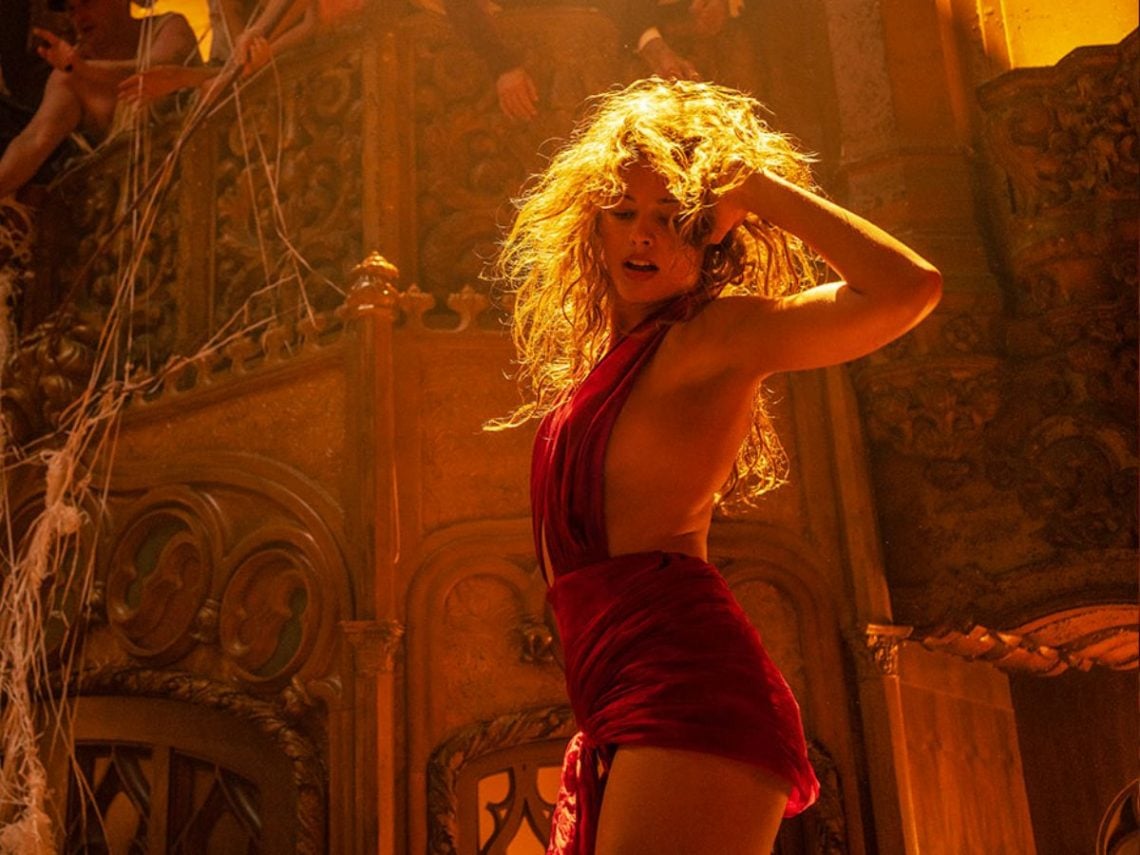
Starring award darlings Margot Robbie and Brad Pitt, the divisive frenetic drama tells the story of the ambition and excess of early Hollywood. Tracing the rise and fall of multiple characters during an era of depravity, Chazelle’s film is scored to a familiar jazz soundtrack that thumps a racing pulse and helps to drive a story that flounders for over three hours, saying nothing particularly innovative.
This might explain why the movie has been largely snubbed by the awards show, given nominations only for three technical categories: ‘Best Achievement in Production Design’, ‘Best Original Score’ and ‘Best Achievement in Costume Design’. Aside from this trio of nods, the film has been ignored from all the major categories, including ‘Best Picture’, ‘Best Director’ and more.
Of all the movie’s outrageous moments and frivolities, it is the climactic montage scene that is getting the internet talking. Lured in by the magnetism of the movies, Diego Calva’s Manny Torres visits a cinema to watch Singin’ in the Rain, enraptured by the progressive feat of creativity, the character is then treated to a century-spanning montage of numerous iconic films from across the history of the moving image.
Interpreted as a celebration of cinema by some and the reflection of a long-troubled industry by others, the sequence includes a collection of eclectic movies that span the whole spectrum of world cinema. Starting at the dawn of the moving image, the montage begins with the pioneering work of Eadweard Muybridge in the late 19th century, whose series of cabinet cards, in the form of The Horse in Motion, paved the way for modern filmmaking.
As the frantic sequence, scored to Justin Hurwitz’s sizzling soundtrack, increases in speed, we are treated to short clips from some of the greatest filmmakers of the early 20th century, including D.W. Griffith, Charlie Chaplin and Oscar Micheaux. Making sure to include each and every major innovation in the history of cinema, Chazelle picks movies like The Wizard of Oz, which introduced wider audiences to Technicolor, as well as more obscure short films like 1979s Sunstone, a pivotal release of early computer animation.
Going through the final sequence of Babylon, we’ve compiled a list of every movie referenced. Listing every movie in the chronological order in which they appear in the montage, take a rapid tour through film history below.
Every movie referenced at the end of Babylon:
- The Horse in Motion (Eadweard Muybridge, 1878)
- Cat Galloping (Eadweard Muybridge, 1887)
- The Arrival of a Train (Auguste and Louis Lumière, 1895)
- Annie Oakley (1894) – Thomas Edison’s earliest Kinetoscope
- Birth of the Pearl (F.S. Armitage, 1901)
- A Trip to the Moon (Georges Méliès, 1902)
- Ali Baba and the Forty Thieves (Ferdinand Zecca, 1902)
- The Great Train Robbery (Edwin S. Porter, 1903)
- Little Nemo (Winsor McCay, 1911)
- Intolerance (D.W. Griffith, 1916)
- The Champion (Charlie Chaplin, 1915)
- The Vampires (Louis Feuillade, 1915–1916)
- Joan the Woman (Cecil B. DeMille, 1916)
- Within Our Gates (Oscar Micheaux, 1920)
- Voice of the Nightingale (Ladislaw Starewicz, 1925)
- Le Ballet Mécanique (Fernand Léger, Dudley Murphy, 1924)
- The Jazz Singer (Alan Crosland, 1927)
- Black and Tan (Dudley Murphy, 1929)
- Hollywood Review of 1929 (Charles Reisner, 1929)
- Piccadilly (Ewald André Dupont, 1929)
- The Wizard of Oz (Victor Fleming, 1939)
- Ivan the Terrible, Part 2 (Sergi Eisenstein, 1944)
- Tarantella (Mary Ellen Bute, Norman McLaren & Ted Nemeth, 1940)
- Love Letter (Kinuyo Tanaka, 1953)
- Pather Panchali (Satyajit Ray, 1955)
- Duck Amuck (Chuck Jones, Merrie Melodies, 1953)
- This is Cinerama (Mike Todd, Michael Todd, Jr., Walter A. Thompson and Fred Rickey, 1952)
- Ben-Hur (William Wyler, 1959)
- Un Chien Andalou (Luis Buñuel, 1929)
- Psycho (Alfred Hitchcock, 1969)
- Dreams That Money Can Buy (Hans Richter, 1947)
- Meshes of the Afternoon (Maya Deren, Alexandr Hackenschmied, 1943)
- The Passion of Joan of Arc (Carl Theodor Dreyer, 1928)
- My Life to Live (Jean-Luc Godard, 1962)
- Lucia (Humberto Solás, 1968)
- NY. NY. (Francis Thompson, 1947)
- Borom Sarret (Ousmane Sembène, 1963)
- Le Ballet Mécanique (Fernand Léger, Dudley Murphy, 1924)
- The Black Vampire (Román Viñoly Barreto, 1953)
- 2001: A Space Odyssey (Stanley Kubrick, 1968)
- Week-End (Jean-Luc Godard, 1967)
- Matrix 1 (John Whitney, Sr., 1971)
- 0–45 (TV Cultura de São Paulo, 1974)
- Sunstone (Ed Emshwiller, Alvy Ray Smith, Lance Williams, Garland Stern, 1979)
- Raiders of the Lost Ark (Steven Spielberg, 1981)
- Tron (Steven Lisberger, 1982)
- Terminator 2: Judgement Day (James Cameron, 1991)
- Jurassic Park (Steven Spielberg, 1993)
- The Matrix (Lana and Lilly Wachowski, 1999)
- Avatar (James Cameron, 2009)
- Persona (Ingmar Bergman, 1965)
